


Bird Sightings
11/10/2026 – A Great Morning of Migration
By Thomas Weston
Today was always going to be the calmest of the week. A chat at Wildlife Log last night was not just about the aurora, but also some predictions for the next day. There were species thrown around, and to be fair, most of them arrived, bar the winter thrushes.
Census started well, with Wren was being the first species seen on the route, and 15 seen in total. There was a hive of activity overhead, with the calm conditions favourable for migration. However, a band of light rain arriving from the west was obvious to the eye but distant enough not to affect the island, or the migrants, at least to begin with.
As a result, I wandered down to Millcombe and heard two Brambling in the trees at both ends of the valley. I bumped into Jimmy and Chris, both visiting birders, who had seen the Hawfinch again. The confusingly simialr 'tiks' from Robins were enough for them to lose it, and it was nice to refind the bird sat in the tops of the trees before attempting to migrate with some Chaffinches. The Hawfinch came back pretty soon after, circling the valley and dropping in again. A nice little rarity, only obscured by Water Rails calling, making it, at times, pretty difficult to hear where the Hawfinch dropped down. With an additional Water Rail at St Helens Copse, we now have at least five in the area.
On approach to the Ugly, Ravens cronked and called to each other and a flyby Woodpigeon was of note due to the species' current scarcity value. Out in the Landing Bay, 8 Shags, 6 Oystercatchers, and a Rock Pipit were the only species seen.
In the valley, 22 Robins (almost 50 logged today), 12 Dunnocks, 2 Goldcrest, 9 Chiffchaff, and 13 Blackcap were seen. I missed the reported Ring Ouzel but found 7 Blackbirds in the area. Overhead, vismig was very good. Most birds were migrating along the east sidelands, or heading up Castle Hill. In the time I was in Millcombe, I saw 17 Chaffinches (almost 100 logged today), 61 Swallows, single House Martin and Grey Wagtail, and 16 Siskin all heading south. There were 172 Meadow Pipits on census (400 logged for the day from all observers' records) heading south, with passage again all on the east coast. One flock of six pipits held a single Lapland Bunting. The bird called a few times and was seen in flight, headed on south, whilst the pipits turned back north, only to try again soon after.
It was amazing to see how narrow the flow of passage was. As soon as I walked anywhere beyond the Church, visible migration ceased and only a couple of feeding flocks of Meadow Pipits were noted. Overhead, vis mig was still good though, with 5 alba wagtails and 29 Linnets the first migrants seen. I was lucky to bump into the Snow Bunting at Rocket Pole Pond, and 3 Golden Plover overhead were very nice to see, before they flew off the south coast. Large gulls were moving too with 12 Great Black-backed Gulls, and 39 Herring Gulls (100 seen today) heading south. Over by Old Light, and heading cross the Airfield, 8 Skylark, another Lapland Bunting over Stoneycroft, 5 Reed Bunting, a single Snipe, a single Goldfinch and a couple of bush-hopping Stonechat were the best. By the time I got to Quarry Cottages, the light rain was just about to hit, so migration stopped pretty suddenly. The Jack Snipe photographed at Quarter Wall Pond was not there when I passed, but I did see a fly-by female Merlin. In the Village, 11 Mallards were spotted and a female Sparrowhawk was harassing the 20 House Sparrows and the 72 Starling.
An afternoon of admin, taking nets down in Millcombe, and then checking the Storm Petrel chicks with Eleanor. We now have only 6 chicks left, though the summer seabird season continues for sure, as our smallest Stormie chick is still nowhere near ready to go.
10/10/2026 – A crisp morning
by Greg Lee
Cold today, with the wind remaining quite strong into the night leading into a cool and crisp morning. So, with that in mind, I was pleased to be out on census in a uniform outfit of green and black, with my green RVRC trousers and my green hoodie hopefully making me stand out less to the birds. On my way down into Millcombe, I came across several of our visiting birders including Paul Holt, whose local patch is just down the coast from Sandwich Bay at Samphire Hoe. As we were peering into Secret Garden staring intently for any signs of movement, the familiar "pee-yew" of flying Siskins caught our ear and three birds flew into the Valley. I still remember the first time I saw Siskins, my grandfather had given me a VHS tape of the RSPB guide to British garden birds narrated/presented by none other than Sir David Attenborough and I watched this quite religiously as a small child. When the Siskin section came on, I was enamoured by the green and yellow plumage of these smart finches and desperately wanted to see one. So I was delighted on a late afternoon in winter to come across a small flock feeding in an Alder tree in the car park at Tewkesbury Abbey. Many years later and I still feel joy hearing these birds passing overhead.
As well as these, I also kept hearing a high-pitched "zeee" call which made me consider that a Hawfinch could be in the vicinity, however, I couldn't be sure with all the Robins and Dunnocks squeaking around the valley. As I took the path towards the Casbah, I came across Jimmy Hair, who relayed that he had sighted a Hawfinch perched at the top of the valley near Government, a very nice find and the first of the autumn season, after a couple of birds in the spring. The rest of census on the plateau of the island was pretty quiet, with the wind really drowning out a lot of sound, although a Reed Bunting was heard near Quarter Wall. Down at the Terrace, even though it was quite sheltered, there were only a few Chiffchaffs, Blackcaps and Goldcrest.
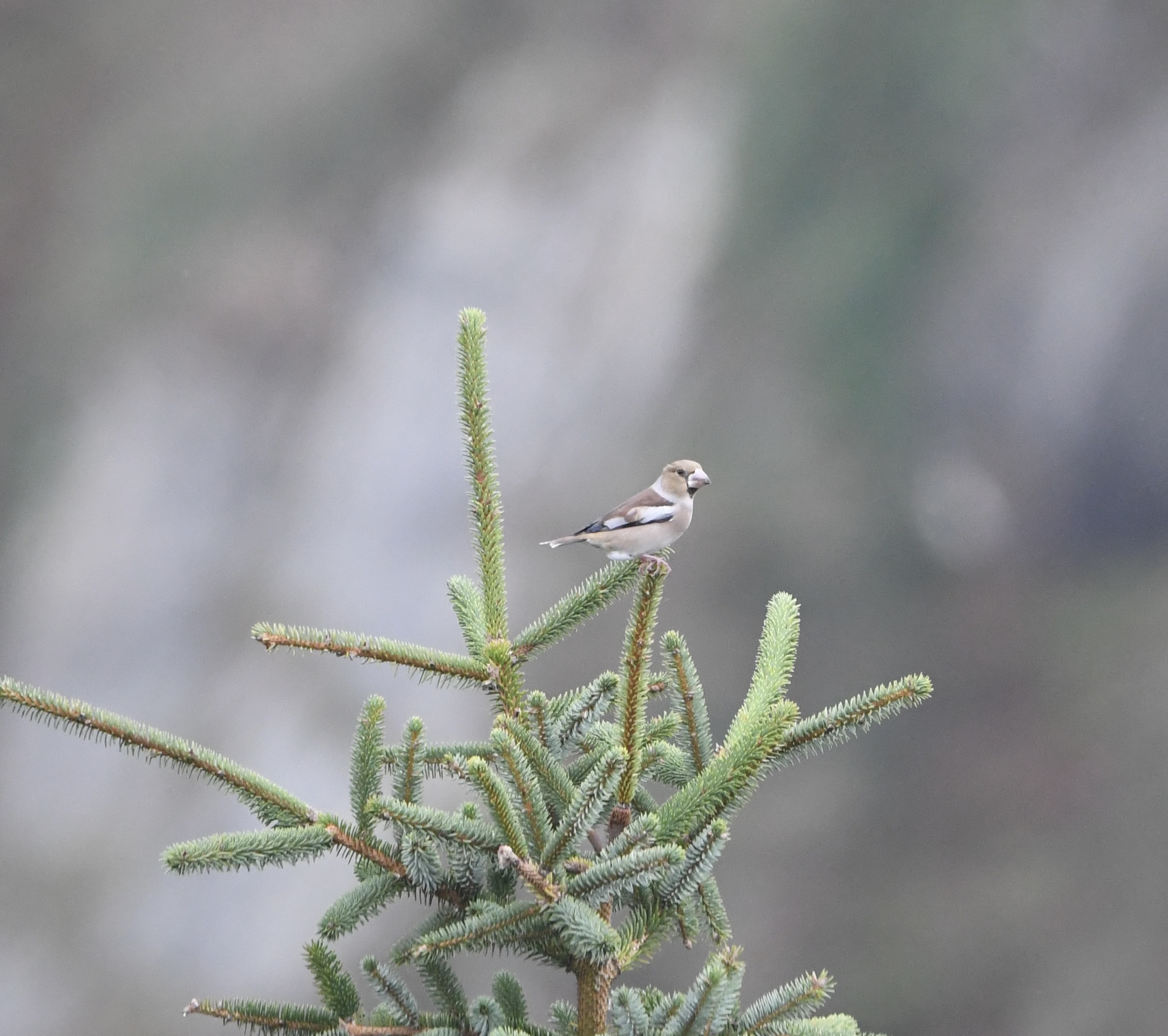 Hawfinch by G.Lee
Although I hadn't seen it on census, late morning saw me return to the Rocket Pole area to see the long-staying Snow Bunting, which had taken a shine to this corner of the island, a very lovely bird and quite unbothered by my presence. Usually, this time of year, I would associate this species with low-lying shingle and sandy coast, particularly in the east, but birds do turn up in surprising places, including my local patch on Cleeve Hill sometimes. The rest of the day saw a mix of recycling, office jobs and rest before a KP shift in the evening.
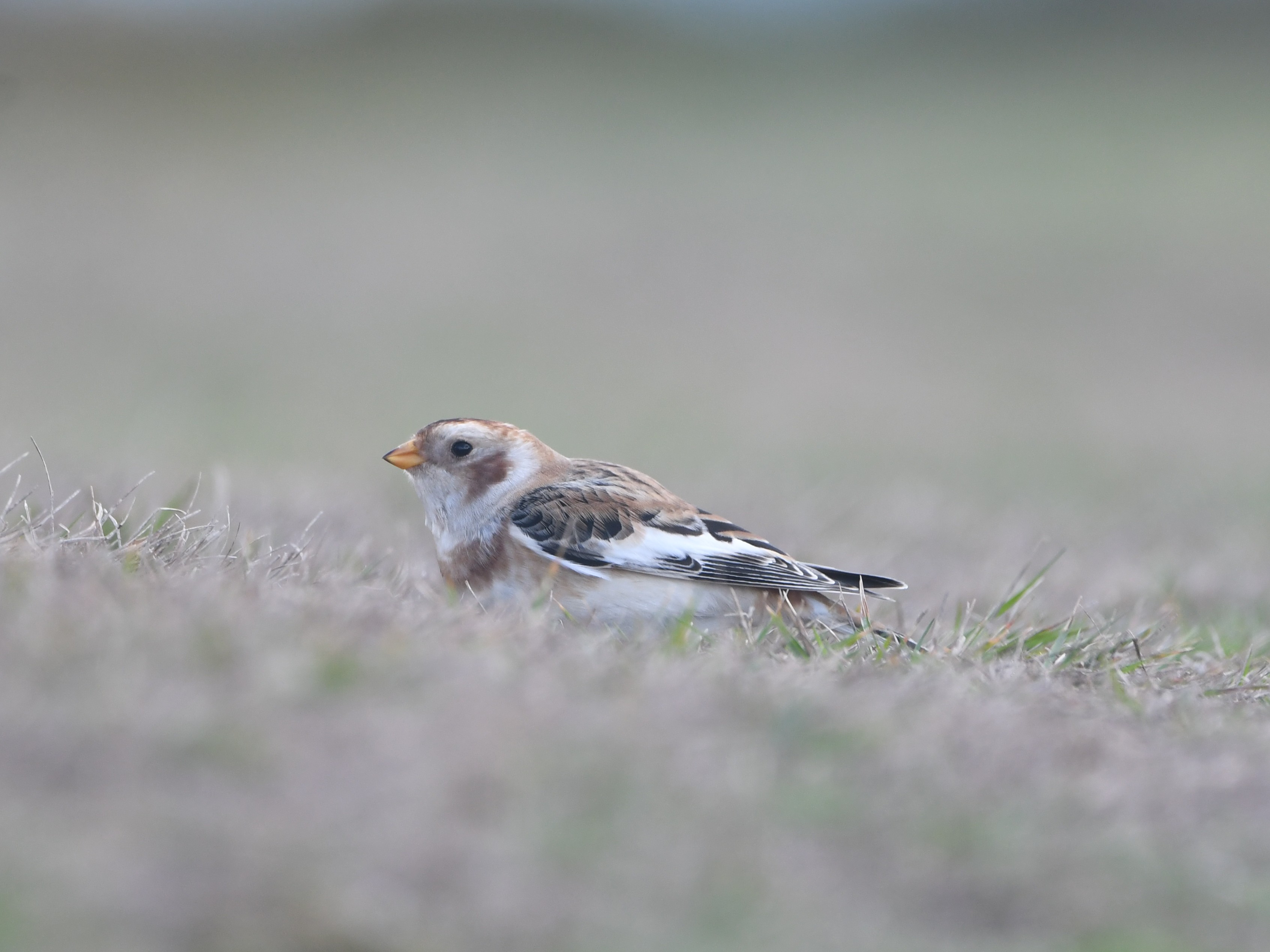 Snow Bunting by G.Lee
Other sightings around the island included a Redwing in Millcombe and the long-staying Yellow-browed Warbler at the Quarries.
09/10/2026 – A Day to Eat Cake and Drink Tea
By Thomas Weston
An extremely wet morning on which Eleanor and I decided it would be a good idea to do census... With Greg ill, and luckily staying in bed, we took it on ourselves to get up, eat croissants with tea, before heading out to brave the weather. On the route, we firstly noted the local Carrion Crows – they were braving the weather and sat feeling sorry for themselves in the fields around the Village. Meadow Pipits decided today was probably not the best time to migrate and with 17 noted, it was not much to write home about. The regular 5 Blackbirds in Millcombe, sums up the current thrush migration. Where are the deluge of Redwing, and the first few Ring Ouzels?
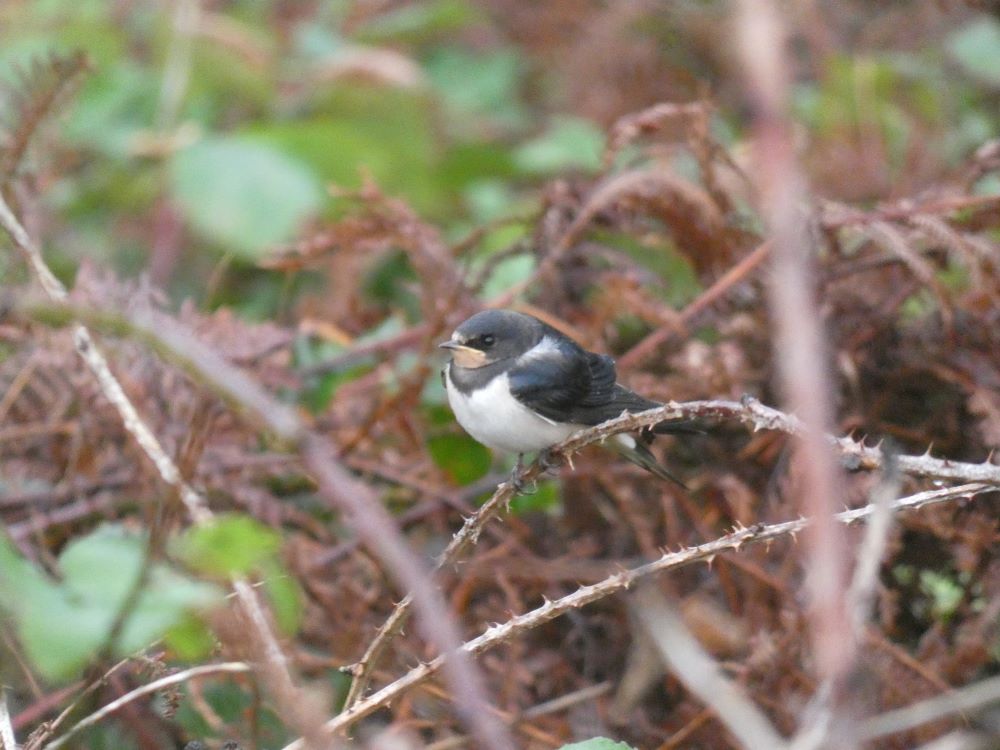 Swallow in Millcombe by Thomas Weston
The Swallows definitely looked like they wanted to be in Africa right now, as they sat – some motionless – on the brambles and flew centimetres away at your feet looking for food. A sad look on their faces too did not help the situation. In Millcombe, we struggled to pick out many birds in the wind and rain. A single Dunnock, 10 Robins, 4 Wrens, 3 Chaffinches, and a Woodpigeon were some of the best of the residents. Migrant-wise, it was slow, with 6 Goldcrest, 2 Chiffchaffs, 9 Blackcap, a ringed Firecrest, and the most unusual species of the morning, a quiet Yellow-browed Warbler at the top of the trees around Battlements. Offshore a flock of 3 Gannets and 4 Shags were the only birds. Walking around the plateau did not add too much to the selection, with a couple of Skylark flushed from underfoot, a Lesser Black-backed Gull with 9 Great Black-backed Gulls on the Airfield, and 8 female and 3 male Mallards in Barton Field.
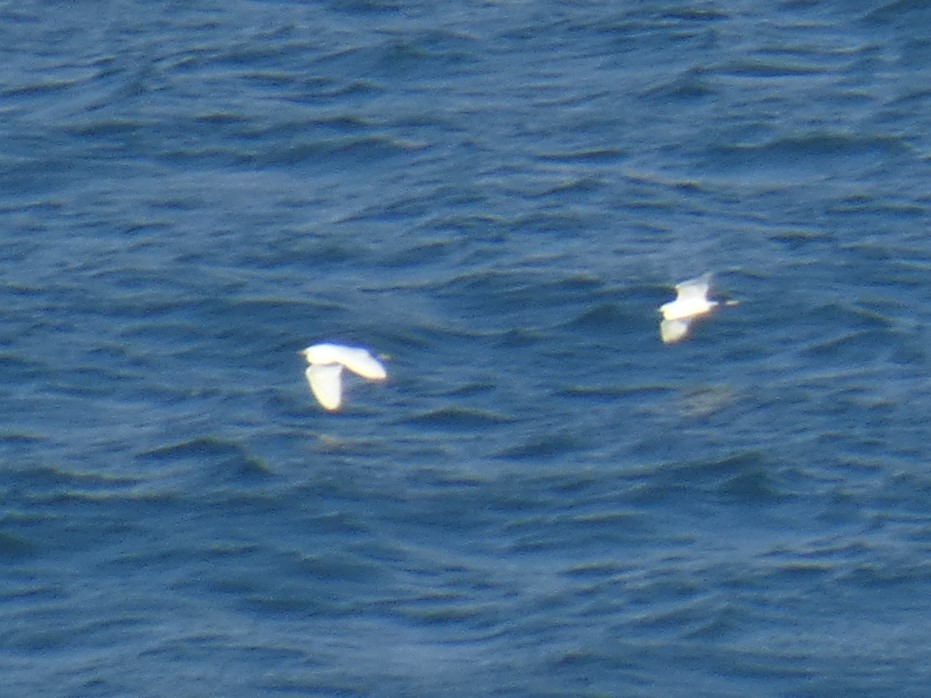 Little Egret from the Terrace by ThomasWeston
The rest of the day off was spent making cake, drinking tea, writing a report for the Large Gull Survey (which somehow crashed and deleted so you will have to wait for that)! before heading off for a walk in the evening once the wind died down a tad and the sun came out. On our adventure down to Millcombe and along the Lower East, a couple of additional Goldcrest were of note, including two on the Terrace. No sign of any more Yellow-browed Warblers, but there were two Little Egrets spotted by Eleanor flying in from midchannel, before coasting, and heading north off the island. In addition during our wanderings, a Spotted Flycatcher was in Millcombe, 2 Snipe were flying around in the wind, a Sparrowhawk was spotted on the down pipe to one of the Barton cottages, and a nice flock of 20 Oystercatchers were below Millcombe with 44 Great Black-Backed Gulls at North End.
Amazing news came in of a Manx Shearwater chick ringed on the island on the 19th August 2026. It was found dead on a beach in Brazil, some 9000km away just 46 days later. It is great to know the bird got close to its wintering grounds, but a shame it ended up being found dead on a beach. Hopefully not the first of many!
8/10/26 – A Less Eventful Day!
by Kirsty Cox
When I saw that today was my day for writing the blog, I was concerned that it may be another eventful day but luckily today has gone a lot more to plan!
It started as usual with some office admin, catching up with seal ID and emails, including liaising with the Devon Wildlife Trust Marine Strandings Network. Sadly there have been a lot more pup deaths than usual this year and this has been the same across Devon and Cornwall, so I have been organising sending them the data that we have been collecting.
After toast I went to feed the chickens. It was my last day with this responsibility and I’ll miss seeing them every day and having a bit of chicken therapy time!
Then it was off on pup check. It has been a quiet few days with the pups as there have been no new arrivals but it is nice to see the pups that are on the beaches doing well and developing as they should.
Part way through my pup check route I went down to meet the boat to take up my position as 'pup police'. Although we don’t currently have any very young pups in the Landing Bay, we still need people to keep their distance from the weaned and moulted pups and it is a great time to meet people arriving on the Oldenburg and to chat to them about all things seal.
After completing pup check and processing the photos, it was time to head back to speak to people as they were walking back down to the boat. Boat days always seem to pass so quickly, especially on Ilfracombe days when there are only a few hours between the boat arriving and the boat leaving.
With a bit more ID work completed in the office, it was time to sign off. So, all in all, a much less eventful day than my previous two blog days but that was definitely welcome!
Elsewhere on the island there were continued sightings of a Yellow-browed Warbler as well as a Common Redstart, 2 Lapland Bunting, 4 Redwing, a Spotted Flycatcher and a Tree Pipit.
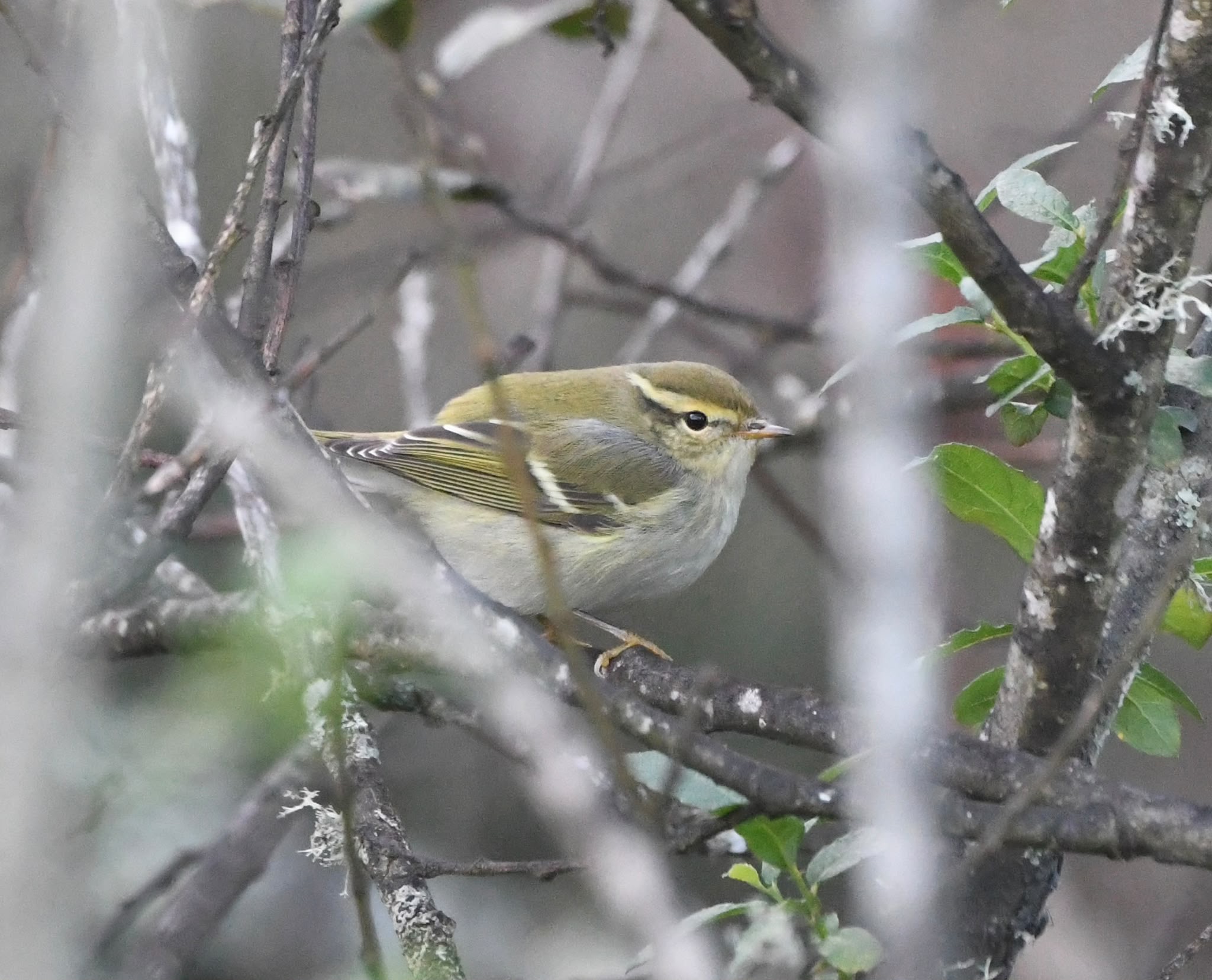 Yellow-browed Warbler by Greg Lee