


By Greg Lee
A very pleasant day on Lundy, with the maximum temperature creeping up to 21.4°C. Sadly, I had picked up a rather unseasonal bug, so I wasn’t in full working condition whilst trying to maintain a consistent source of hydration to fight off the worst of the illness. However, it didn’t stop me having a nose around Millcombe early in the morning where once more I connected with one of the Golden Orioles seen over the weekend, this bird giving a brief flypast at the top of Millcombe before landing in the mature trees. Commoner migrants were represented by a Spotted Flycatcher, Whitethroat, Willow Warblers, House Martins and Swallows. Thomas, who had done census during the morning also reported a Turtle Dove at the top of Millcombe, loitering with the long-staying Collared Dove. I had no such luck tracking down this, sadly, now scarce migrant to Lundy in the heat haze. Perhaps most striking though was a fascinating inversion over the sea, with a blanket of fog covering the Bristol Channel with the cliffs of North Devon still visible over the clouds. Unsurprisingly, in the heat, most of the birds were laying low, so sightings in the afternoon were limited although a Hobby seen at Old Light was a good spot of this migratory falcon.
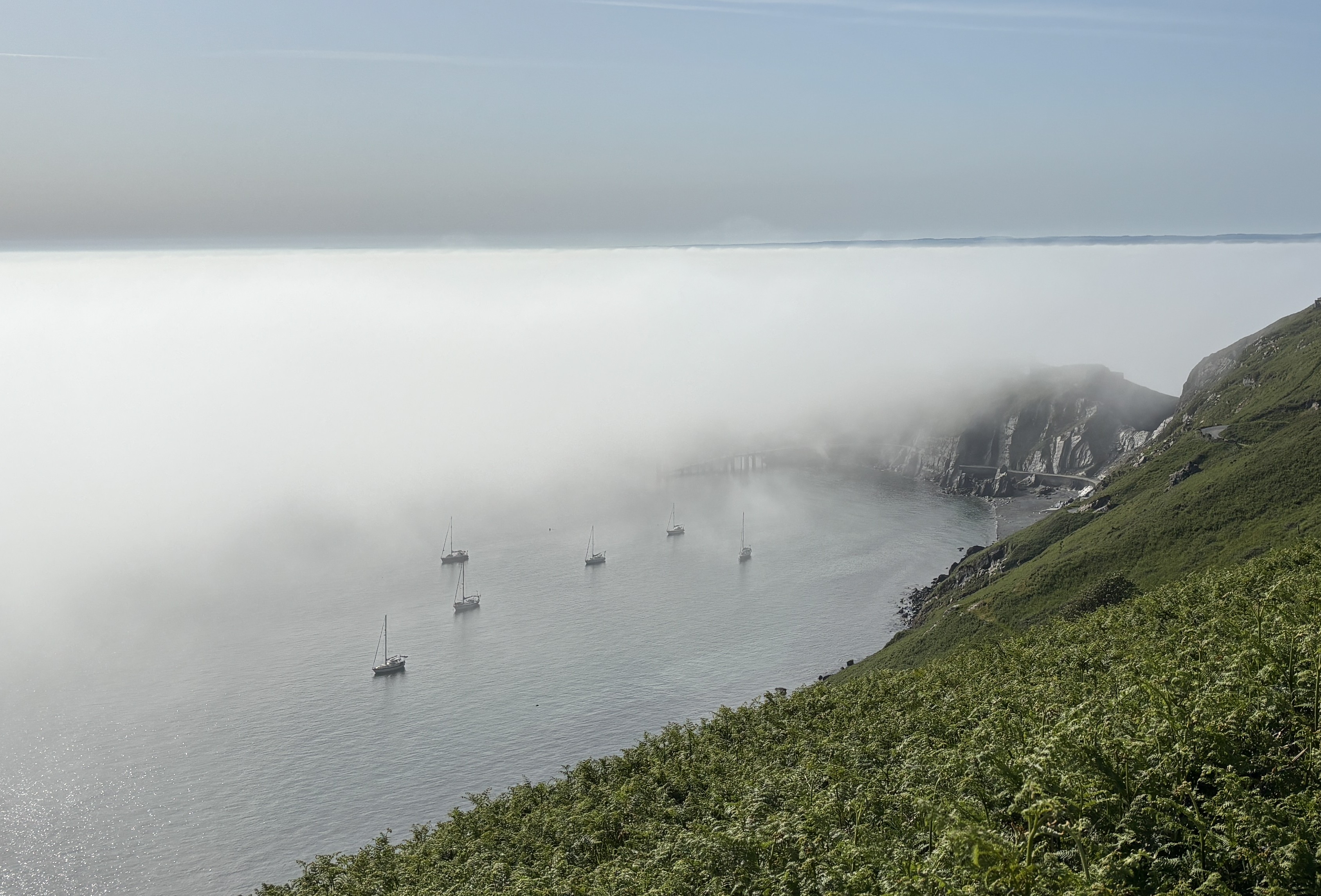 Inversion over the sea by G.Lee
In the afternoon, having seen a report of the Turtle Dove being seen flying from Barton Field, I decided to check the field itself where I was pleased to spot the Turtle Dove feeding quite happily in an exposed area of bare ground, blissfully unaware of my presence. It seems a fair few of these birds have been seen at other coastal headlands over the past week.
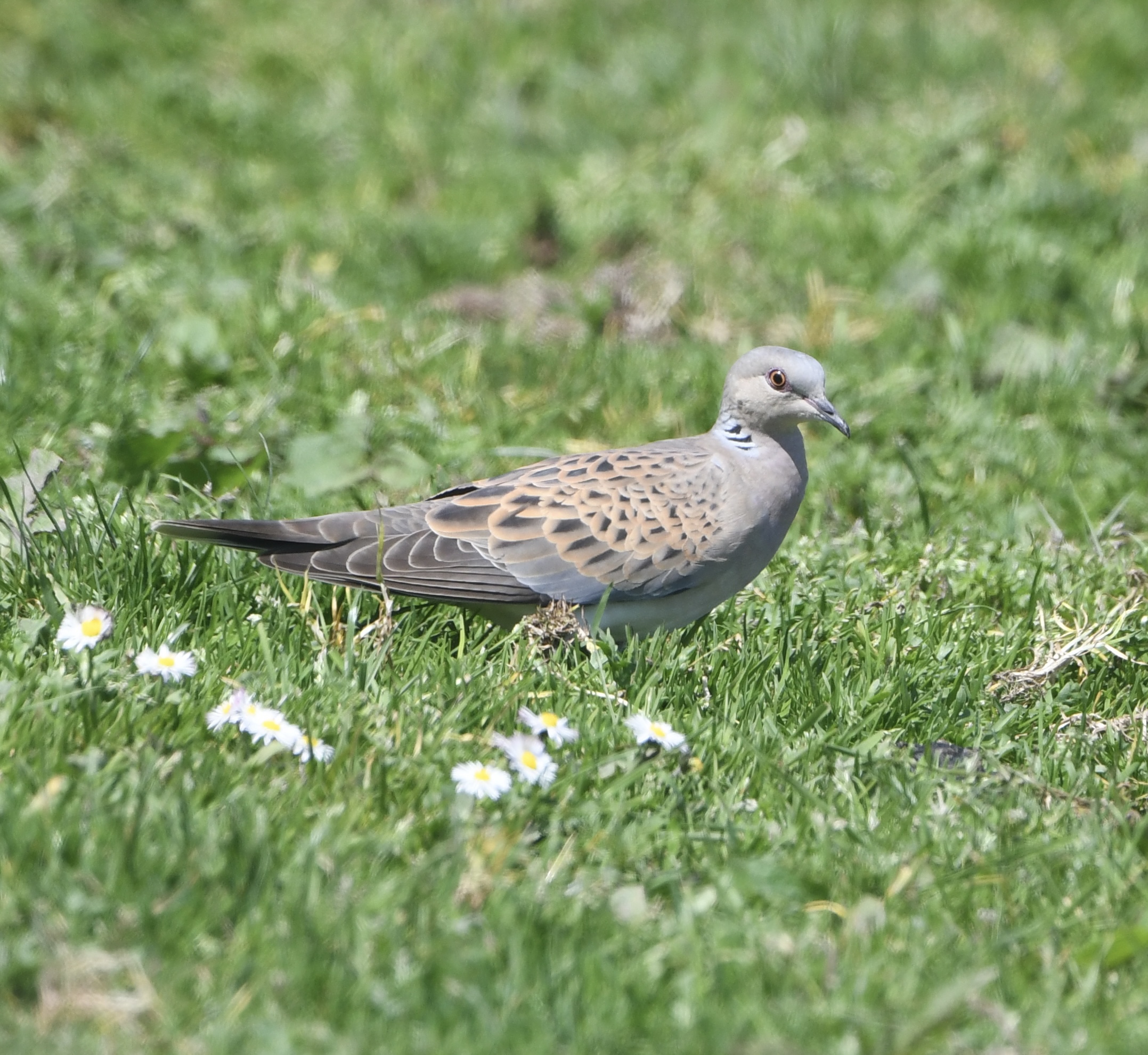 Turtle Dove by G.Lee
On the other hand, the insects were thoroughly enjoying themselves in the heat with no less than 293 Painted Ladies seen across the island, though it was likely there were many, many more. In addition, Small Heaths are starting to appear across the island, and these tiny sun-seeking butterflies of short turf can be readily seen along the coast of the island. In the cooler evening air, I decided to have a short walk over to Old Light, along with many butterflies, every footstep in the long grass seemed to kick up several Diamondback moths, which had also appeared on the warm winds. Looking over the wall near the water tanks, I then picked up a large Dragonfly with a direct and powerful flight motoring towards me from across Ackland’s Moor. Immediately, I noted the green/brown colouration to the abdomen and thorax and the brown eyes along with a slight bronzy colour to the wings identifying it as a female Vagrant Emperor, which had probably arrived with all the other insect migrants on the warm winds. After a brief pause in its flight to investigate the water tanks, it then zoomed off on its way northwards as the light began to fade. A summer-plumaged Golden Plover on the Airfield was an additional bonus, seemingly enjoying the shorter turf on the runway.