


Bird Sightings
20/08/2026 - Thomas Bird Day
By Thomas Weston
The day started last night, on the cliffs catching Manx Shearwaters. Walking along the cliffs picking up the first of the chicks that were thinking of starting migration. The birds, close to their burrows they were born in, were emerging. They started to stretch their wings and pump up the flight muscles for the big flight ahead. The session went well with 9 new chicks, 1 retrap chick from our daytime visits, as well as 2 new and 1 retrap adult.
After some sleep, it was a bird day for me today, and I thought it would be a day I completed census but in fact the rota said Greg!
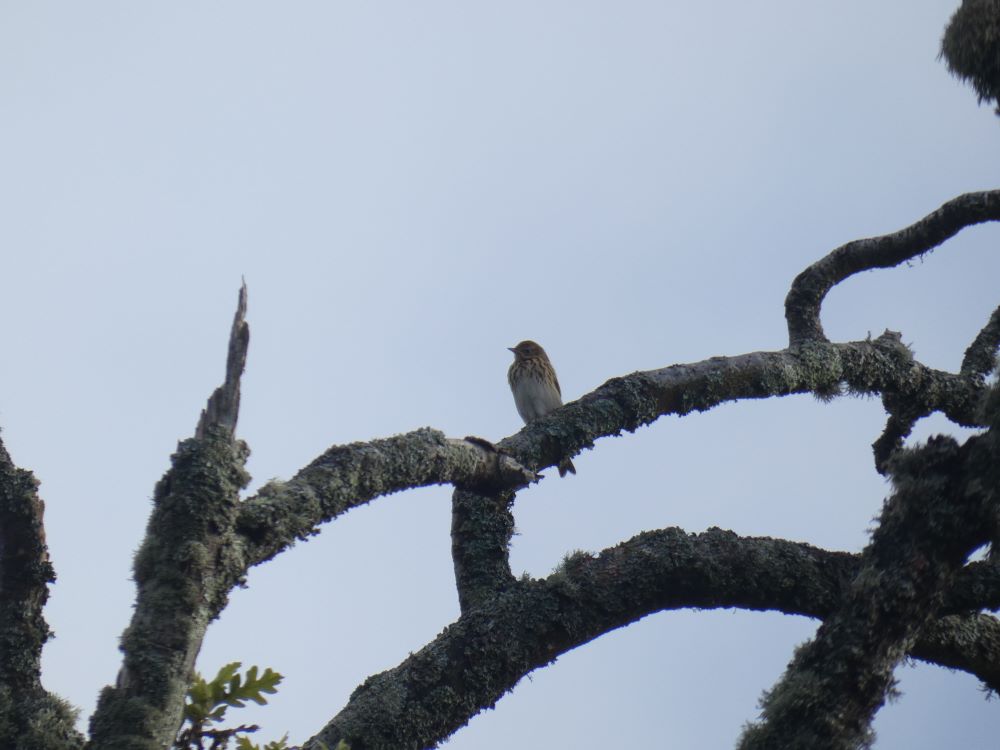 A Tree Pipit in a tree in Millcombe by Thomas Weston
It was quite funny as I had already walked down through Millcombe, taking a look to the Ugly before going passed the Gas Store before realising my mistake. Despite this, it was productive, with a nice showy pair of Tree Pipits who were fresh in, showing well, and perched in a tree. There was a Cuckoo flying around the Valley too, and this was found by Steve originally on his quadbike somewhere near Brambles. My little census journey finished here today, but it was nice to hear what Greg had seen, and also what he had not seen too! Varying numbers of Willow Warblers, and a Water Rail were the two differences that stood out when making a brief comparison. Greg also spotted a flock of Cormorants, and a Sparrowhawk flying around the census route.
An afternoon of admin followed, sorting ringing data and making sure the Bird Observatory data was being kept up to date.
A relaxing evening back at the house resulted in a Turnstone flying around the Village. It was as clear as day, and as with most wading species heard from the house, it sounded like it was flying around in circles. Unfortunately, it means we did not see it again!
19/08/2026 - Fluffy Friends (and family)
By Jessie Dermody
The bird observatory team had lots of interesting records today! Thomas was very happy to see a Grasshopper Warbler in the morning, as well as a Tree Pipit. There were a couple of waders, with a loud Water Rail, plus a showdown between a Whimbrel and a Peregrine near Pondsbury. Our freindly Buzzard was still hanging around in the morning, but did succesfully migrate in the end! Greg also sighted a Juvenile Cuckoo over the terrace.
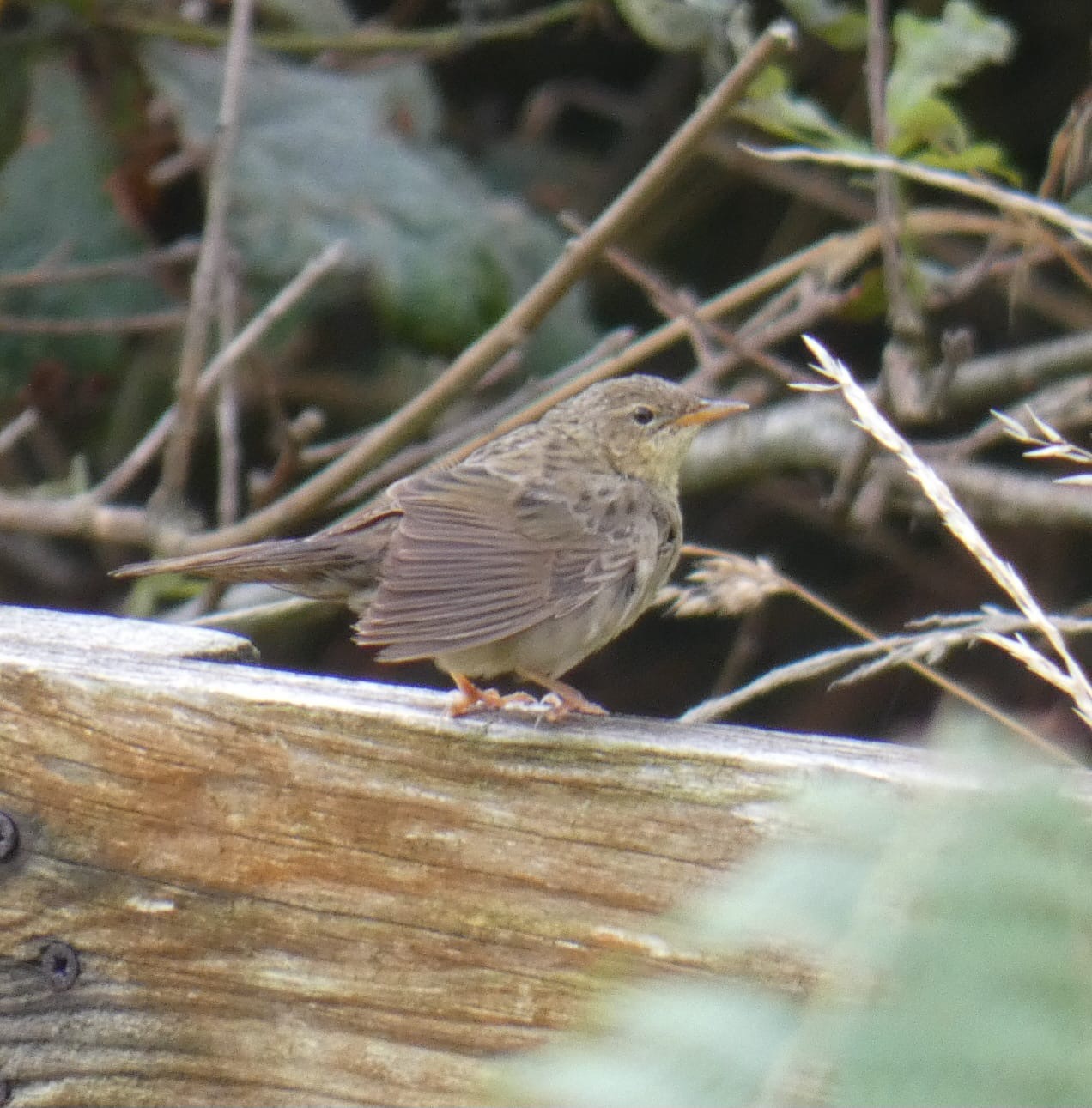 Grasshopper Warbler - Photo by Thomas Weston
Today, we decided to deviate from the usual Fulmar survey method - I took the scope up to the north end with me so that I could get a proper look at the chicks on the rock. This proved to be very helpful! I was able to see quite a few more chicks - a total of 10, as well as 25 adults on the rock. The chicks were also looking quite a lot bigger than the last time I saw them, with their new feathers coming in nicely. Once I had finished counting, I needed to speed back to the landing bay, as my parents were visiting for the day. As I raced back, I spotted 3 clouded yellows. I watched the oldenburg approaching from the islands main track, racing it all the way in.
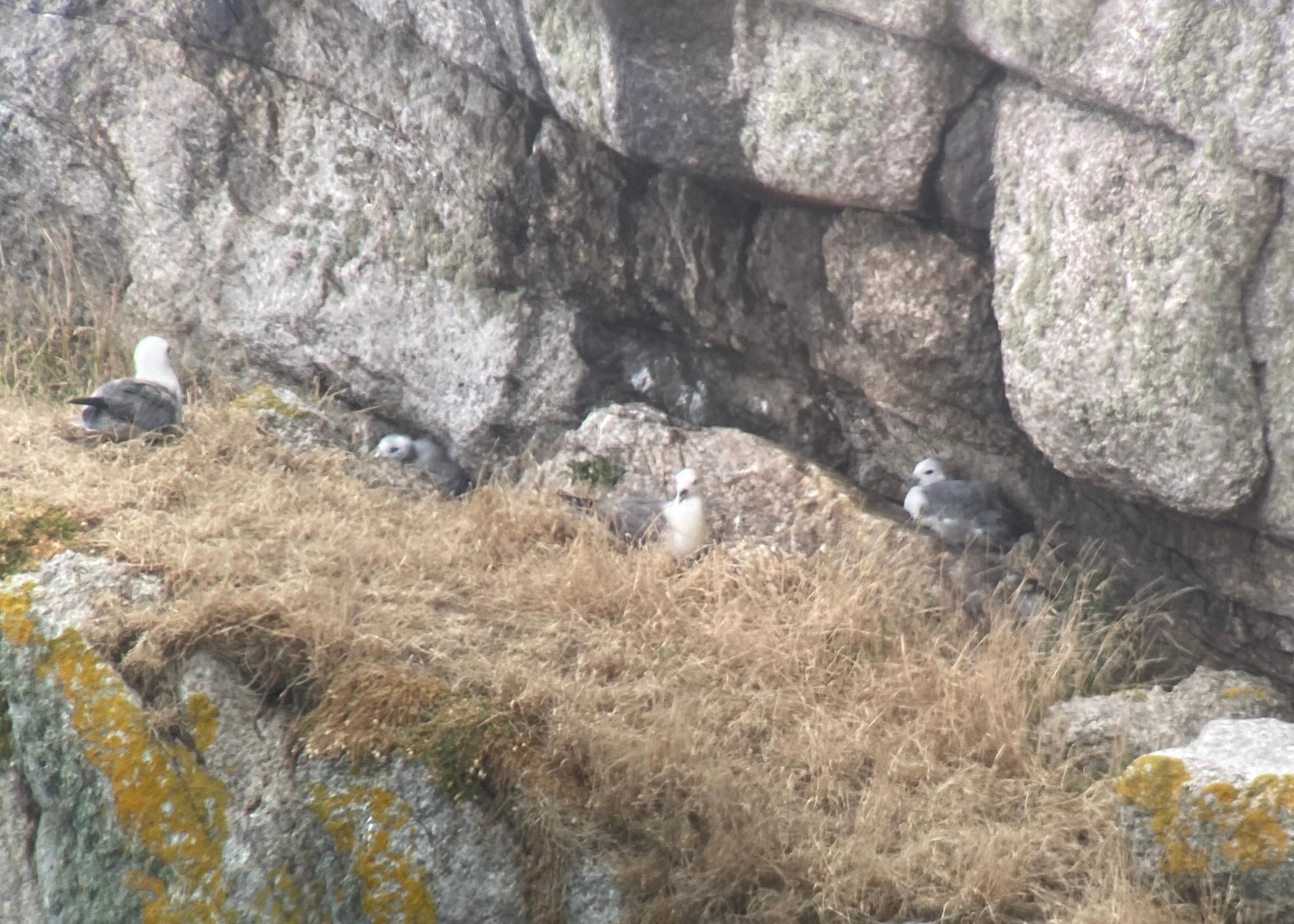 Two adult fulmar with their chicks - photo by Jessie Dermody
I managed to catch my parents on the beach road, rushing them up the goat track to make it to the tavern before the rush. As we enjoyed our pasties, we spotted 2 Gannets out at sea. We then continued through the village towards old light, with a brief stop in to say hello to my next door neighbours. Jaffa-Cake & Raven bait are tame orphaned lambs that have been housed next to the volunteer accomodation. They remain tame thanks to frequent deliveries of fresh green grass.
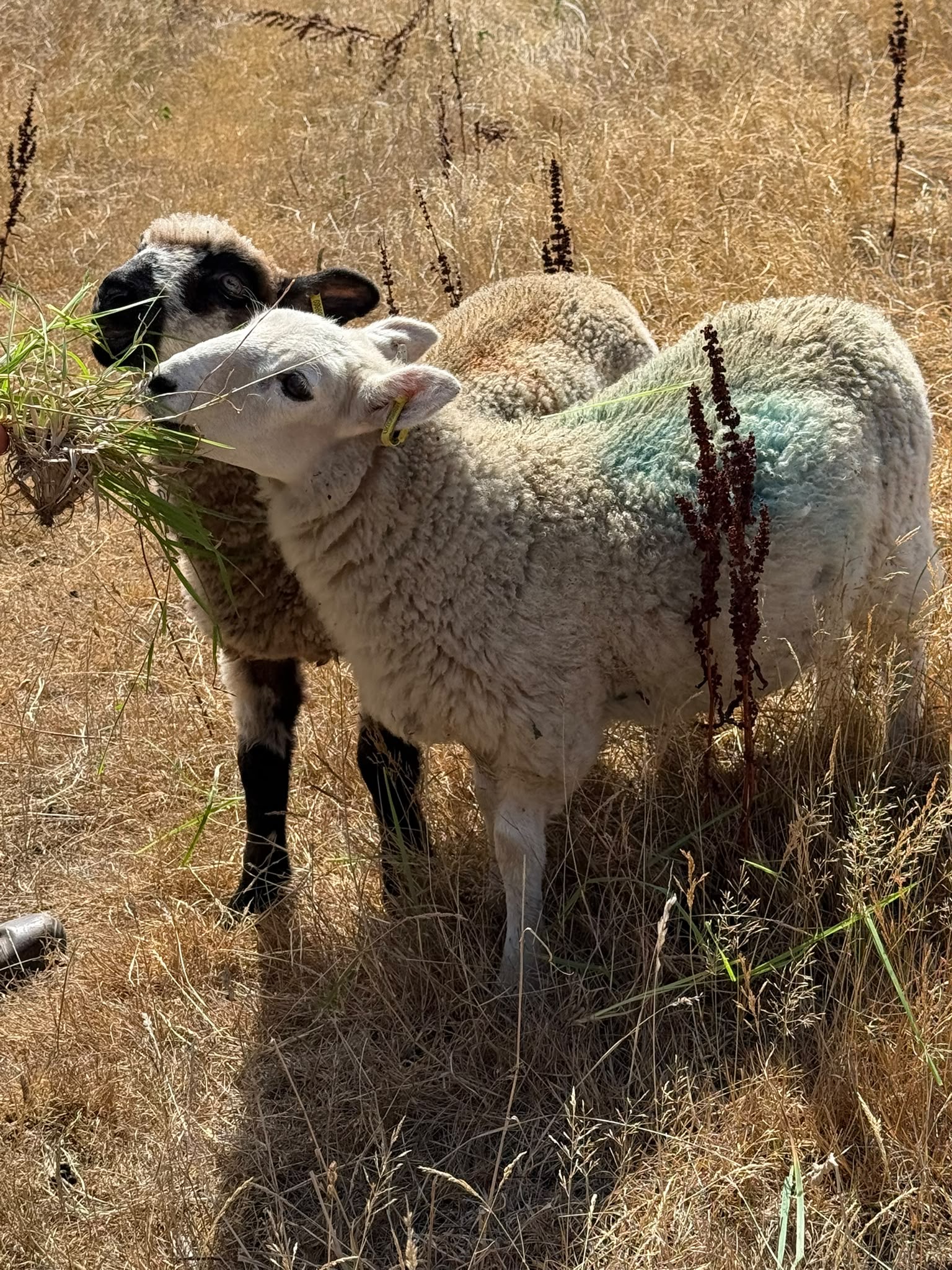 Left lamb with the dark patches is Jaffa Cake, right all white lamb is Raven Bait
.Once I had shown my parents the island from the top of old light, we continued across the island. We were surrounded by butterflies on our way across the airfield, at least 10 Small Heaths and a beautiful Common Blue. As we passed quarry pond we saw a Small Copper on the heather.
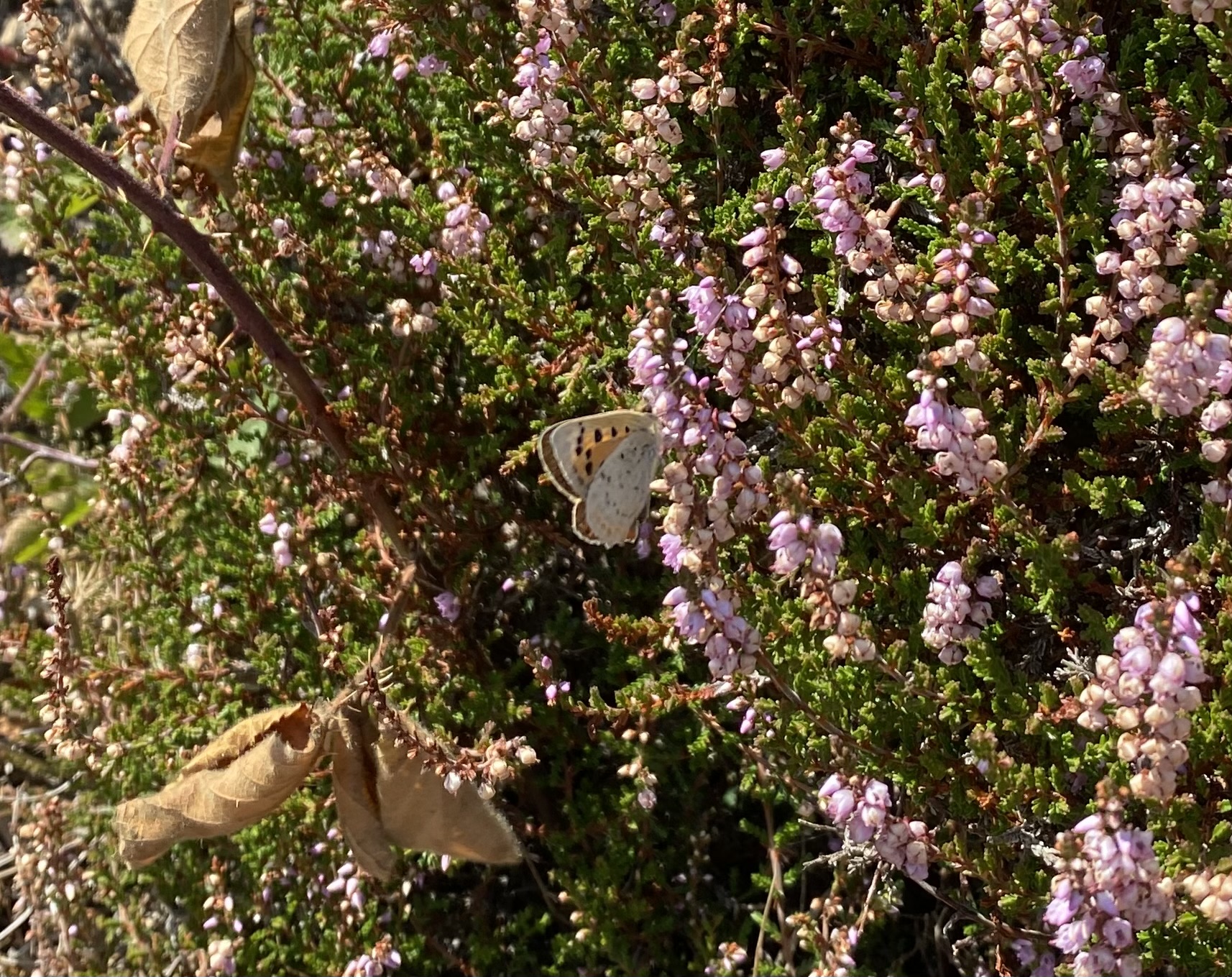 Small Copper - photo by Jessie Dermody
I had to sneak in a quick dip, so we went into the water at quarry beach. Needless to say, I checked the beach thoroughly for seals before we descended. None were present before we went down, but of course, once we were in the water a male and a female appeared. Thankfully, they weren't interested in us so we continued our swim in the shallows. I had my mask on, so I pointed my parents towards several Juvenile Pollack & Rock Cook, as well as a large Ballan Wrasse. On our trek back up the hill, we saw a Red Admiral and a bedraggled Meaodw Brown. We were still rushing, as we wanted to squeeze in another swim before my family departed - but there is always time for seal pups! It was a brief stop on our way back to the boat to check in on Asrai (our first seal pup of the season) and family - they are all doing well.
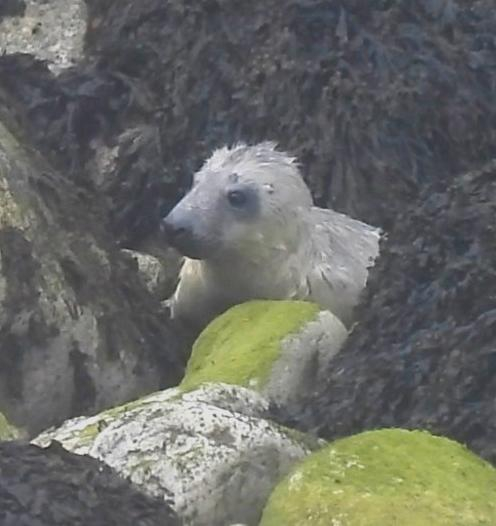 Baby Asrai - A screenshot of a video by Kirsty Cox
After waving off my own family, I jumped in for another quick swim before dinner - when the weather is this hot, you have to swim when you can! I managed to do a little bit of video analysis, recording a beautiful Male Cuckoo Wrasse and a Seal on camera from the last BRUV deployment. Then the conservation team all went out to search for Manx Shearwater chicks getting ready to fledge. It was a succesful night - we ringed 9 birds. A lot of them are sporting beautiful downy hairdo's, but are otherwise looking ready to fly!
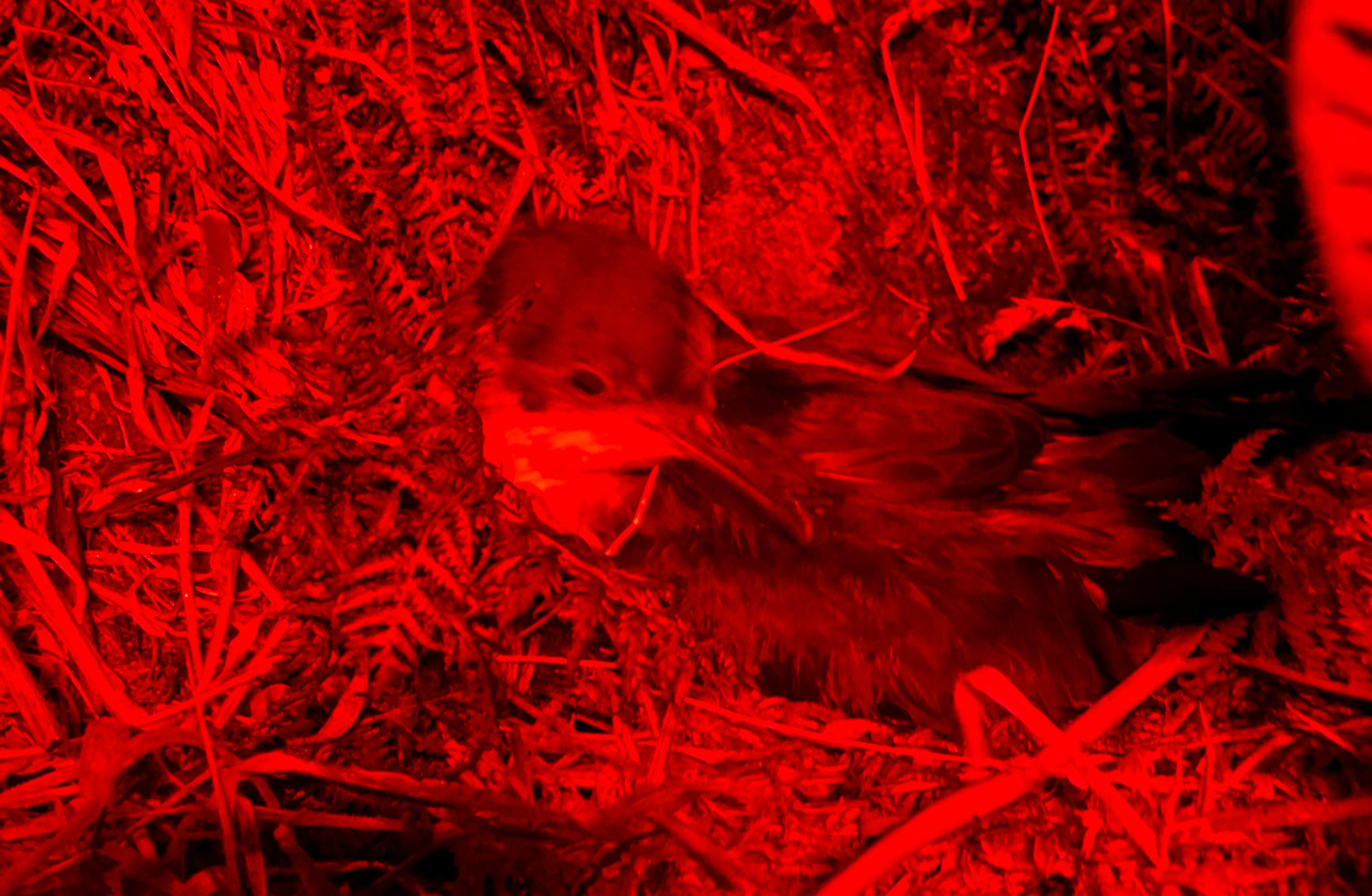 A young manxie sitting outside it's burrow - Photo by Jessie Dermody
18/08/2026 - When Will It Ever Rain?
By Eleanor Harris
Today started off as a low fog surrounding the island a sign that perhaps the rain may arrive. As the island is looking rather barren water is much needed with the increasing shortage, a reminder of the increasing unpredictable summers to come. Walking around the island it is noticeable how the land has changed from the wet ground to lush vegetation and the dry barren landscape. It will be interesting to see what the next few months weather brings to the island.
As it was a boat day a busy day was predicted with all hangs on deck to sort out the 130 plus visitors visiting the island either to stay or as a day trip. I was on a Tavern shift, Thomas was housekeeping and Simon and Tara were sorting the boat all critical roles to maintain the upkeep of the island.
One of the excitement’s of the morning was a Manx Shearwater being found in Smelly Gully just down from Milcombe by Roger and Emma whilst conducting Ranger work. A designated box was brought down to rescue the bird and it was later ringed and taken to a burrow at Benjamins chair. If visiting the island in the next few weeks don’t be alarmed to find baby Shearwaters in odd places as they are attracted to the light. We kindly ask if property lights can be kept to a minimum at night to avoid unwanted guests. 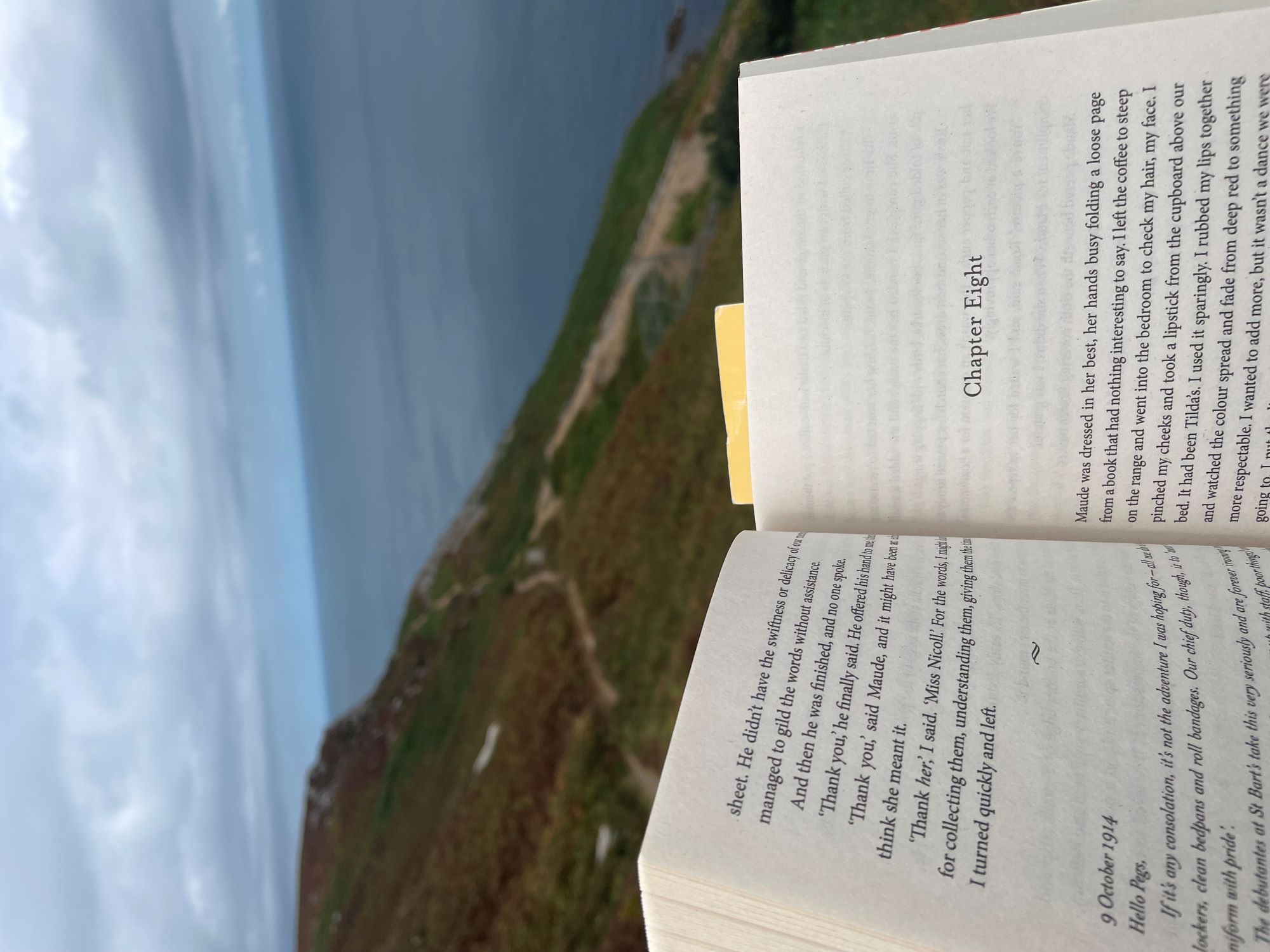 Reading near the Quarries by Eleanor Harris
After a busy morning I decided to go for a walk in my break along the east side to the Quarries and Terrace meandering back past Pondsbury. As it was a glorious day I took my book along for a short reading session in the sunshine enjoying calls of birds and a beautiful stillness. Oystercatcher were calling along the coastline, Robins and Stonechats were singing whilst two Woodpigions flew along the coast.
After a lovely walk I headed back to the village and got ready for work.
17/08/2026 – Fog Returns
By Greg Lee
We were treated to a bit of a rarity in recent times as we headed back from an evening Storm Petrel session in the northern reaches of the island: thick fog! This descended on us just as we left the site and headed our way back to the Village. As the wind was set to be very still, it was perhaps no surprise in the morning that I lifted the blinds to see that the fog had resumed, although it slowly dissipated throughout the morning.
Census today was fairly steady, with predictably little dropping in on the island overnight. A total of 13 Willow Warblers was fairly low for recent weeks, having enjoyed a steady daily passage so far this autumn. Two Sedge Warblers in lower Millcombe were carefully picked out in the vegetation; standing still and waiting for movement often yields some good results at this time of year. A single Spotted Flycatcher up near Old Light was a nice sight in Stoneycroft garden, which rarely fails to deliver some migrants. Although the Buzzard wasn’t a feature of census, the fog had clearly kept the bird from moving over the Bristol Channel as it was seen loitering towards the end of the day. Likewise, the young Grey Heron was investigating Rocket Pole Pond, seemingly not too bothered by my presence nearby.
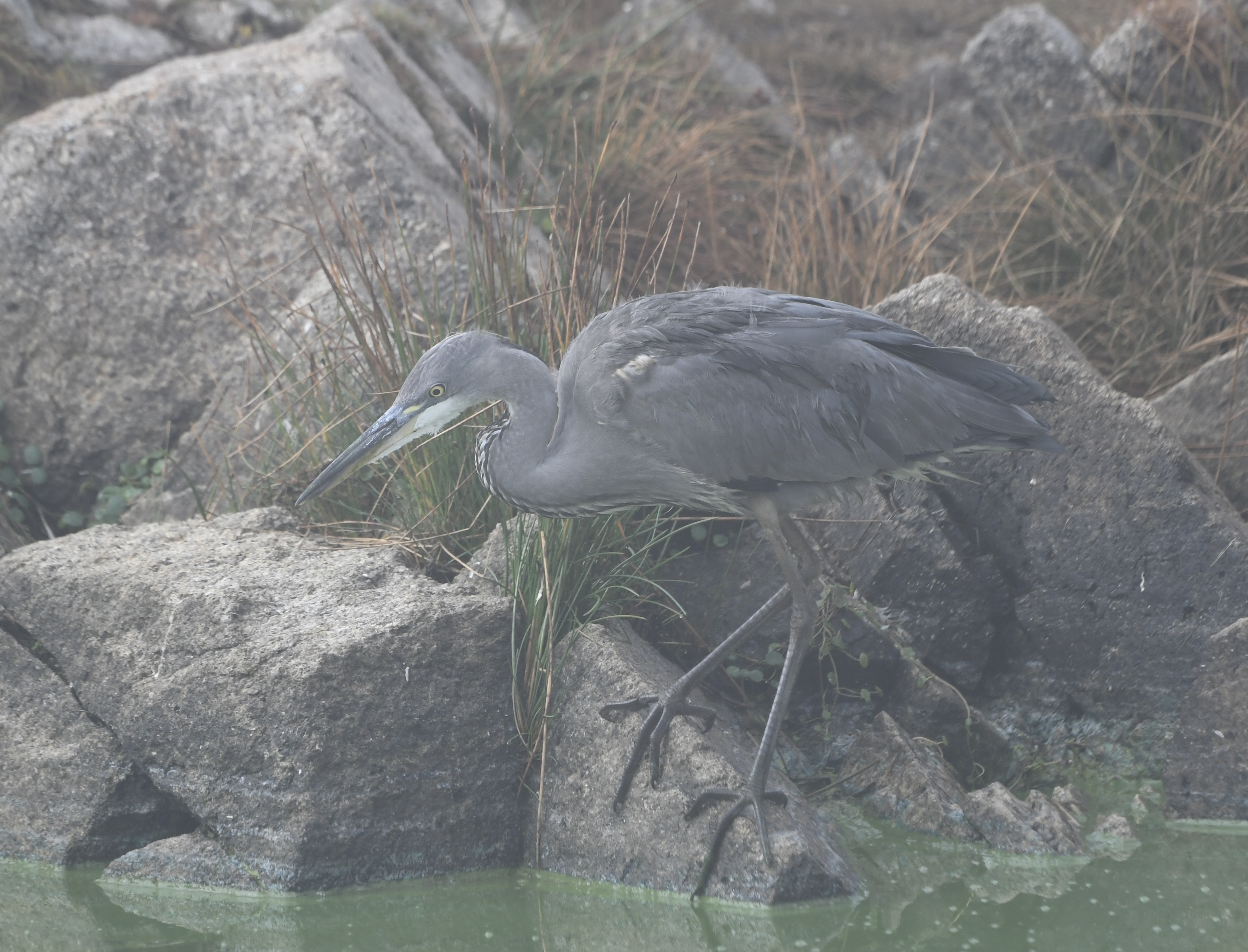 Grey Heron by G.Lee
After census, there was a healthy pile of recycling to sift through, which kept me occupied for the afternoon. It is a never-ending job, but there is definitely a satisfying element to it!