


Bird Sightings
30/08/2026 – Creating Bird Habitat
By Thomas Weston
The day started very wet and windy, a much needed sigh of relief from the island as we have been in drought for so long!
Census
Waterproofs on and I was off on census. The sun came out and it was breezy but nice, not too strong, and seemed calmer than the night. Reaching Millcombe it was quite quiet with a few Goldfinches and Linnets heading around the top of the Valley. In the pines a single Goldcrest peeped, my first for a month or so. Walking to the Ugly, it was nice to see passing Manx Shearwaters, Gannets, and even a Whimbrel too! Very lovely, as we thought most of our Manxies have headed off. Walking down through Millcombe, the wind direction meant that everything was hunkered low and there were some signs of migration. Flocks of Blackcap, Willow Warblers, a few Chiffchaff, Spotted Flycatchers and even a Whitethroat were all seen in the bushes. Our now resident Water Rail in Smelly Gully was calling, like a juvenile Peregrine!!! An odd call compared to the normal squeels and pips. There was a Grey Seal pup on the Landing Bay, and the beach remains closed to let the mum come and visit.
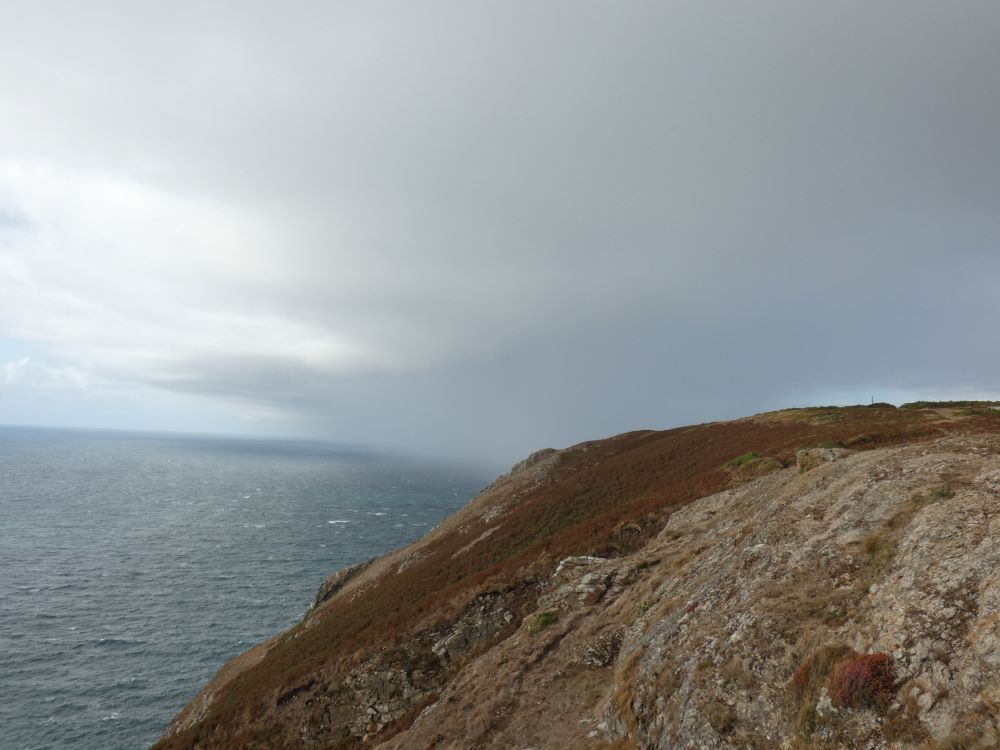 Looking towards South West Point by Thomas Weston
Walking up through the woods and out around St John's Valley, a few Swallows were seen flying around, and a couple of Stonechats were seen in the bushes. Near the Casbah, more Spotted Flycatchers were in the bushes, and a few Dunnocks were noted. Walking to Benjamin's Chair, a flock of Ravens circled over something that smelt dead, and a couple of Wheatears bounced along the walls. There was a squall about to burst, and so the waterproof coat hood came on. A flock of five nominate Yellow Wagtails were on the main track, and a juvenile Ringed Plover was walking around Rocket Pole Pond in the rain. A small group of Meadow Pipits flew around South West Field, and a couple of Linnets were flocking too. Two of the three Whinchats were here and hopping from bracken to bracken.
In the Old Light and Airfield area, a small flock of grounded Lesser Black-backed Gulls were of note. The rain cleared and a small flock of Wheatears emerged on the fence posts. There were no waders on Quarter Wall Pond. However a White Wagtail, Kestrel, Peregrine, and a relatively large flock of Meadow Pipits were seen. Walking back to the Village, there was a Dunlin on Barton Pond, and flocks of House Sparrows and Starlings in the Village itself.
Pondsbury Adventure
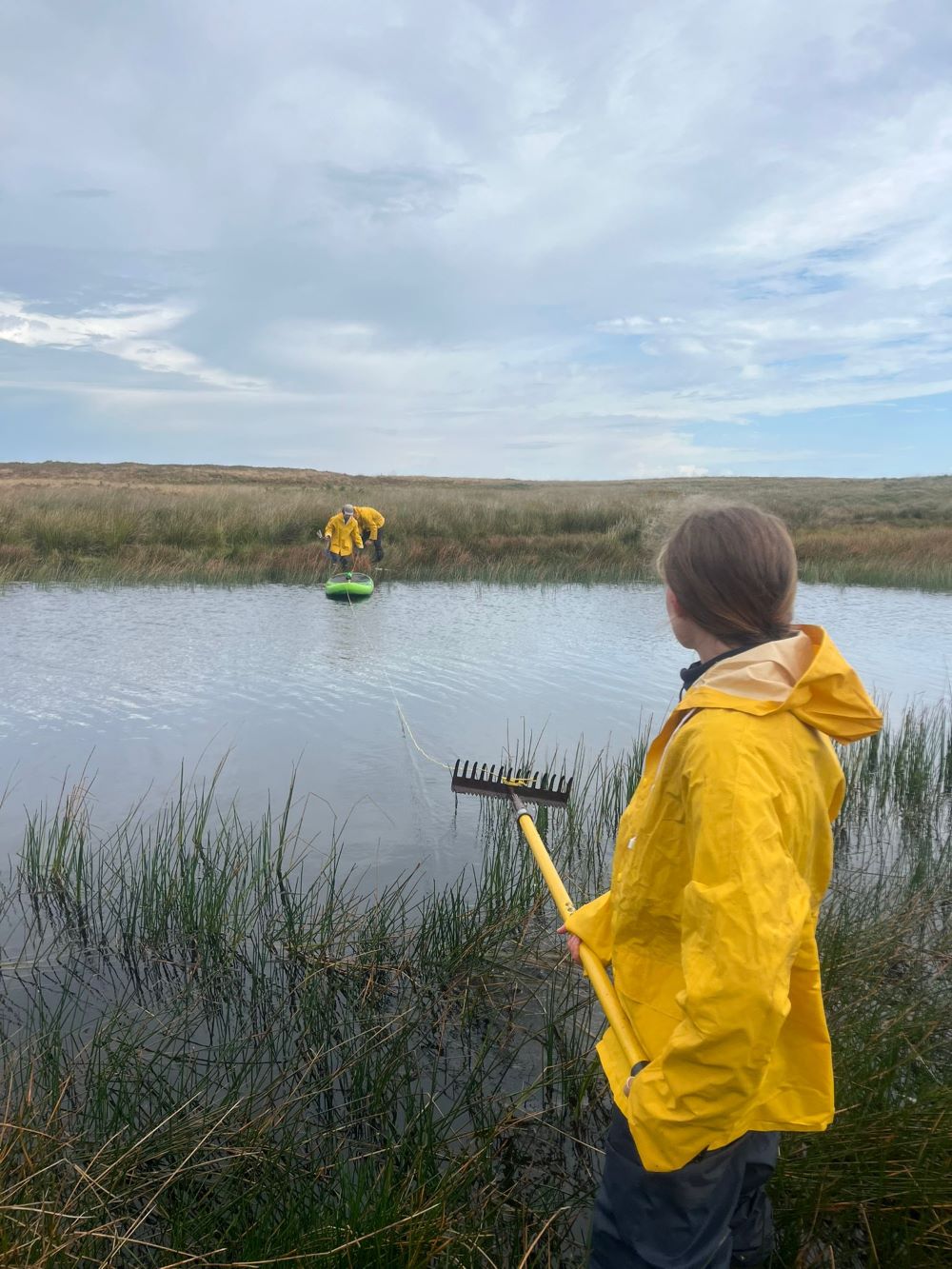 Tara pulling Emma across Pondsbury by Thomas Weston
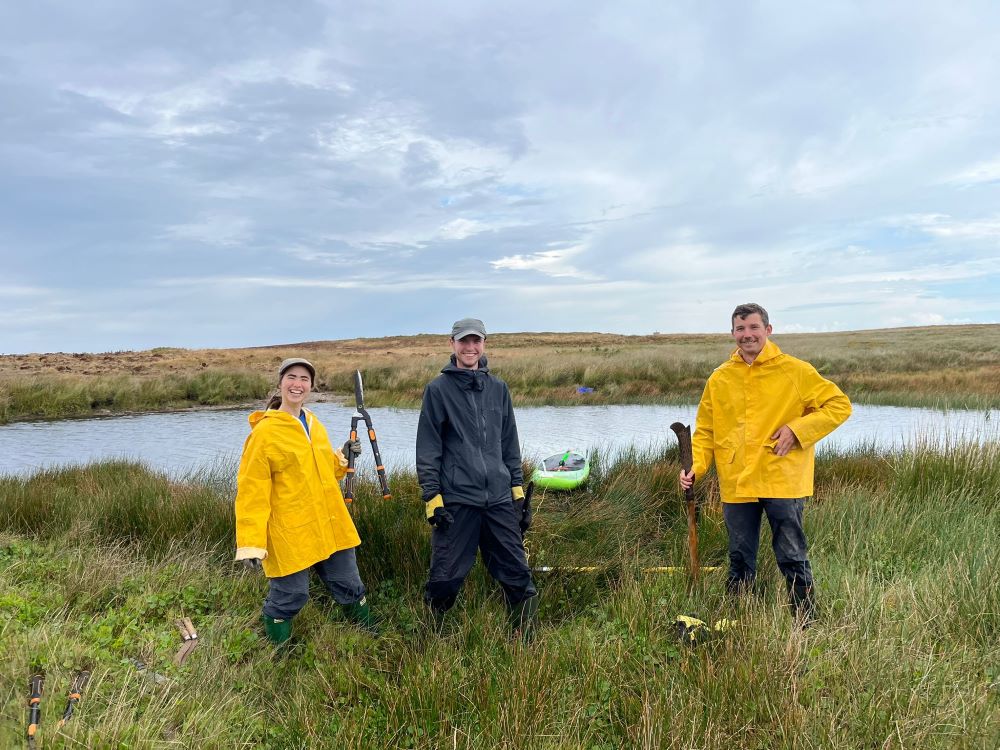 Team Pondsbury on the island, on the island by Tara McEvoy-Wilding
After a break and some toast, Tara, Roger, Emma, and I set off on a Pondsbury adventure to help make some of the island a bit more wader friendly. Equipped with a paddleboard, some loppers, some sturdy gloves, a rake, and most importantly some bailing twine and a climbing rope, we set out to get to the lake. On the main track a pair of Ringed Plover alighted before heading off south-east. A reminder of why we were on this adventure. The islands are not far, but the depth of the water is deep. Not ideal when trying to cross. However, within no time, we made our way onto the islands, being on an island, on the island. We chose the sheltered north side of the island to cut back some of the rushes. It may not have seemed much after an hour or so of work, but we managed to clear roughly a 10m section. The area opened up some nice boggy, muddy fringes, and even a slightly raised section for roosting birds. Our idea was that it would be ready for Snipe, Jack Snipe, and maybe some other fun waders and waterfowl to drop in and rest. Watch this space and keep posted on the blog. We did not touch the islands themselves, as there may be some more unusual species up here and it was rather bouncy too. Only I got a welly full of mud, cow manure, and cold water – all for the cause though! On the way back, we saw the Channel Wagtail female in the Bracken, a flock of over 200 Linnets, and, on passing through the gates, saw a Dotterel flying high south.
Elsewhere
After a lunch break, I searched South West Field for the Dotterel, with no luck. I then walked round to the Castle to see if the Ortolan Bunting was there, also with no luck and then went down through Millcombe to St Helen's Copse to see the Wryneck that Greg had found earlier in the day. Also, with no luck. Having not found those, the 2 Dotterel further north, found by a visitor, were too far for today's bird day and so admin called!
28/08/2026 – Searching for a Bunting
By Greg Lee
It was a slightly quieter census today after the glut of migration yesterday, but there was still plenty to be seen on the morning patrol around the island. What made it quite interesting was dodging the wave of rain showers moving in from the west. Already some of the smaller ponds are holding water, which is quite the relief, though there is some way to go yet! A total of 22 Willow Warblers was quite a nice count, considering the main passage for this species begins to ebb at this time of year, giving way to the likes of Blackcap and Chiffchaff as the most numerous migrants at coastal hotspots in September. A Grasshopper Warbler flushed near Pointless Wall was a nice sighting; in some years, this species can be very thin on the ground in autumn so a few records this month have been appreciated. A Sedge Warbler near Rocket Pole was quite elusive but after having followed its path into the bushes, it finally perched up long enough almost as if to say, “are you happy now?” before zipping over to some bracken, where I left it in peace.
Three Whinchats were also nice to see; back during my years in East Kent, the open habitat and numerous fencelines around Sandwich Bay were often holding good numbers these birds at this time of year. However, on both Bardsey and Lundy, these birds aren’t quite so numerous. A buzzing Tree Pipit over the Airfield also caught my ear.
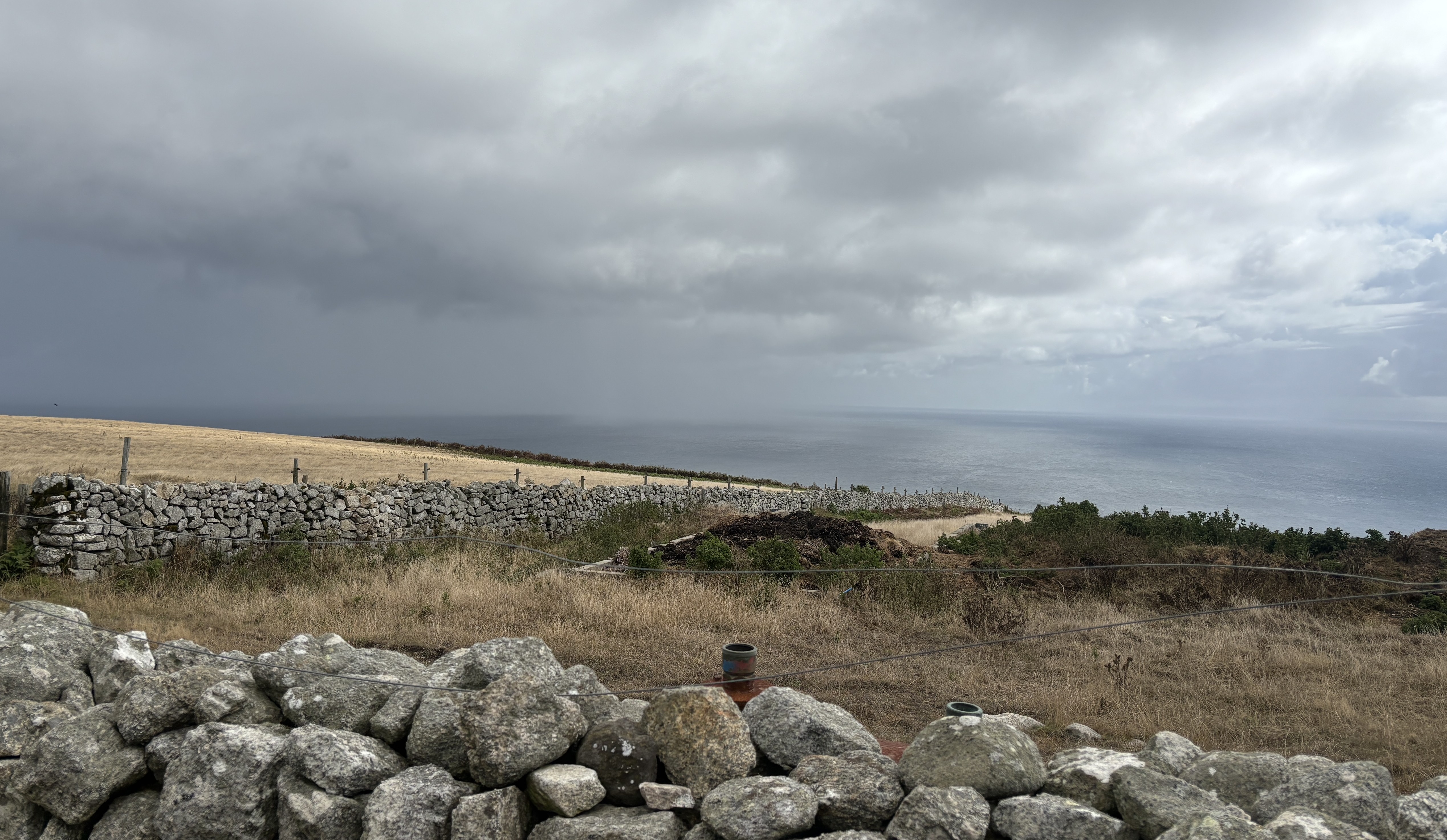 An unsettled backdrop on the East by G.Lee
Yesterday evening, having enjoyed a spectacular sight of 20+ Spotted Flycatchers in Millcombe, I headed up the valley towards Government. Upon arriving in the area, I flushed a slim bunting with dark streaking on the mantle from one of the trees near the nets. I was able to see it go down in an area of long bracken and grass in front of the house but as I neared the area, the bird flew up with a rather weak “plip” call before vanishing over the wall towards the Church. Fortunately, I was able to spot the yellow malar stripe, pale beak and beady black eye with a bright eye-ring, confirming that it was an Ortolan Bunting, my first ever and the second record this year on the island following the flyover Thomas spotted on the 23rd. Sadly, I could not relocate it but my fingers were crossed that today it might reappear, although there are plenty of places for the bird to hide away and feed on the ground. So, as I was doing office work, I was pleased to see that Thomas and Eleanor had spotted the Ortolan Bunting on the track outside the chicken coop in Tent Field. Before I could get on the scene though, the bird had once again flown towards Government and vanished, though Thomas was able to get some nice photographs of the bird perched. Over the following couple of hours, I would check the area periodically but had no such joy, though this was probably not helped by the increasing amount of rain blowing in from the Atlantic. Soon enough, I was needed for a KP shift in the evening but I’m not giving up hope that the bird has settled down somewhere else on the island. Sadly, yesterday's Rose-coloured Starling had also disappeared, having spent just a day on the island.
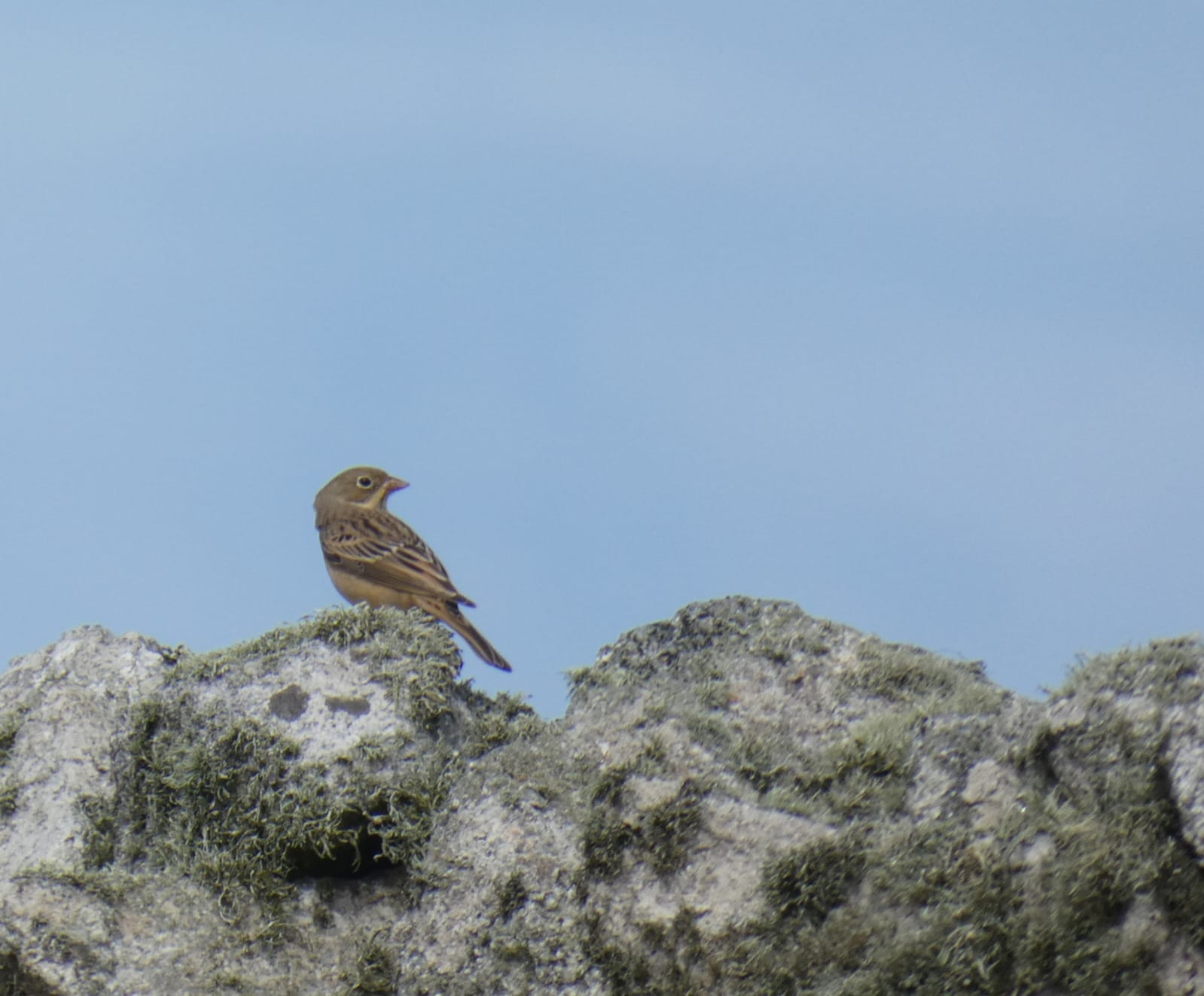 Ortolan Bunting by Thomas Weston
27/08/2026 – Birds, Boat, and Back!
By Thomas Weston
It's amazing how a couple of days off island can make you feel more refreshed. We love the island, but there is always this thing where staff especially say after about 12 weeks, you have to go off, even for a few days. Anyway, the day started with heavy downpours and thunder, something neither the mainland or the island have seen this summer. Is this the end of the summer?
On island, Kirsty got a soaking on her run this morning, but she said it was rather refreshing. We currently have eight pups which are all doing great – four of which have just been seen today at the time of writing!
Greg was on census and had a good mix of species and numbers. He spotted 2 Dotterel who have been around the island for the past couple of days, 30 Willow Warblers, 5 Whitethroats, 4 Blackcap, 2 Sedge Warblers, single Garden Warbler, single Reed Warbler, single Redstart, 4 Tree Pipits, 2 Whinchats, 22 Spotted Flycatchers, 3 Pied Flycatchers, 2 Yellow Wagtails, 2 House Martins, and 2 Dunlins.
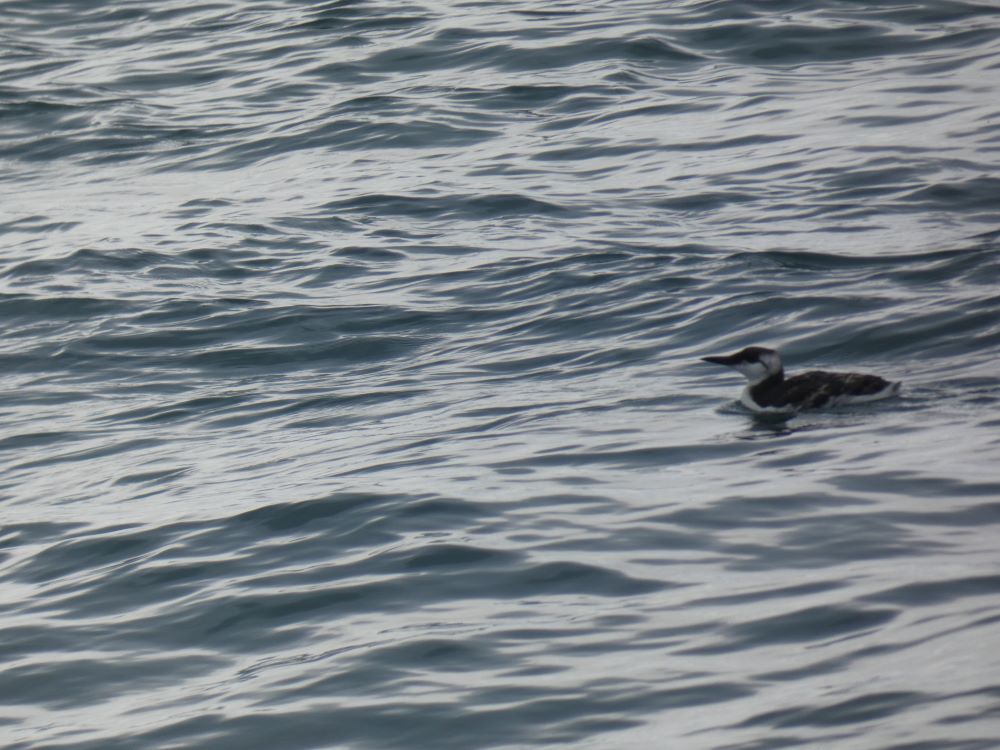 Guillemot from the Oldenburg by Thomas Weston
On our way back there were not massive numbers of birds: 2 Meditterranean Gulls with a flock of 9 Black-headed Gulls were probably the best for the island totals. There were only 2 Fulmars, 3 Manx Shearwaters, and 3 Gannets, but what was most impressive were the 82 Guillemots on the water, who were mostly resting, though a couple were flying past. These species were nice, and a good start back to work. Amazingly, on our return, we glanced up to Millcombe and saw 8 Swifts flying around the Valley and the Village. It is good to see this stunning summer visitor before they head back south.
Also today, we say goodbye to Simon and Kirsty momentarilly, both on holiday for a little and back in the next couple of weeks.
26/8/26 – Seal Disturbance
By Kirsty Cox
Today was the last Wednesday boat of the season and it was a busy one. It also turned out to be an unexpectedly hot day.
I started the day in the office catching up on a bit more seal ID work – there are always more photos to process! I had success in finding one of the Mums from this year in the Lundy catalogue and discovered she had pupped on the same beach here previously, in 2018 and 2019. It’s always really interesting to learn a bit about their history and makes all the time spent on ID work worth it.
We have had several pups arriving over the past week including a couple in the Landing Bay. It is such a busy part of the island that, especially on a day like today, when there are a lot of visitors to Lundy, disturbance is a real concern. Seal pups are very vulnerable as they are completely reliant on their mums and if there is any disturbance from people on the land or in the sea then the mothers will not come onto the beach to feed the pups. It is really important when seeing any seals to keep your distance, always remaining at least 100m away, and to make sure you stay quiet. In order to try and convey this message to the visitors arriving on the Oldenburg today, last night we created a new sign which I put up in the Landing Bay at the start of my East Coast Survey today.
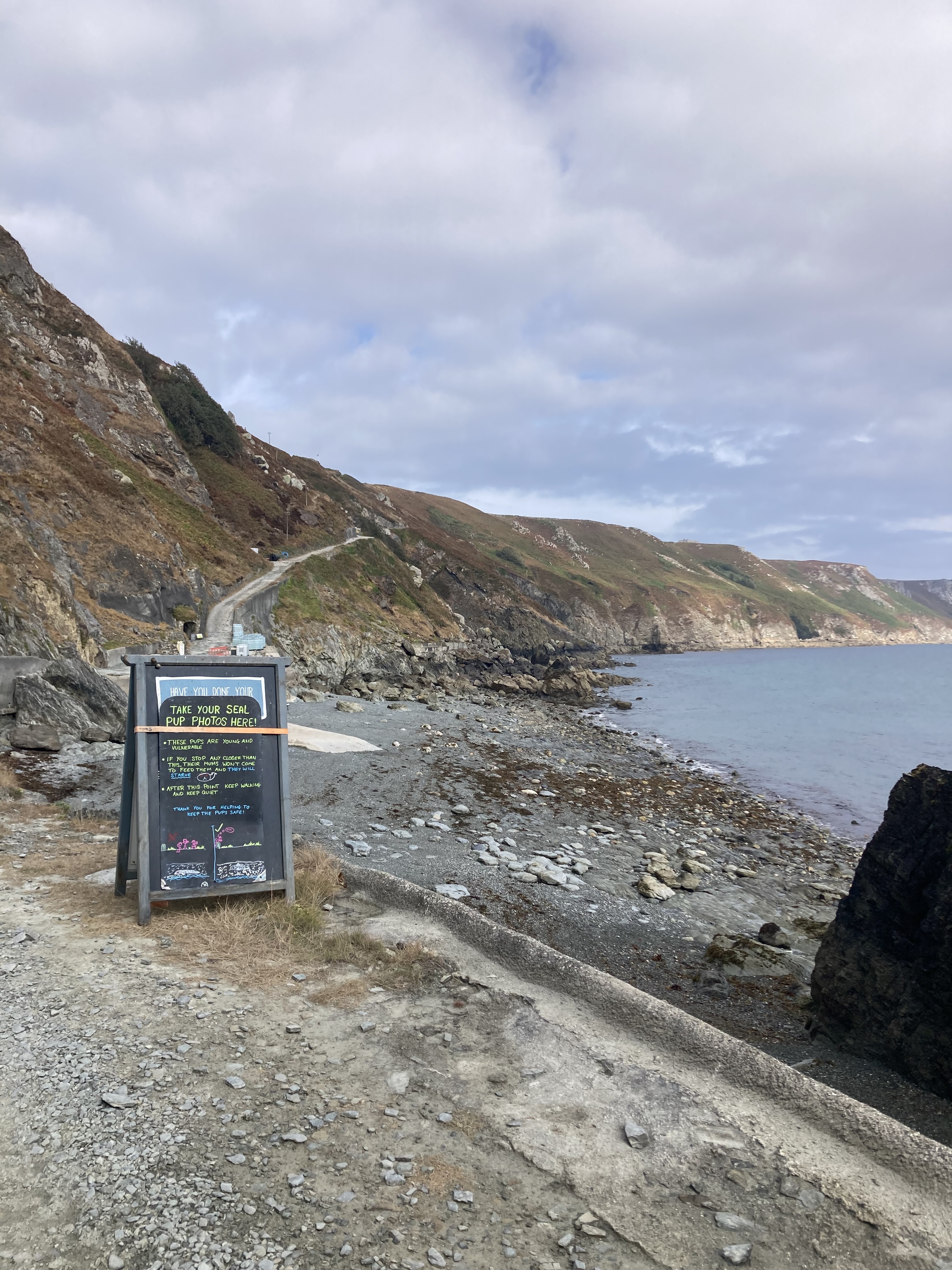 The New Seal Sign! by Kirsty Cox
The East Coast Survey takes around 5 hours in total to complete. I walk the length of the Lower East Path from Benjamin’s Chair all the way to North Light. The walk is divided into sections and at each section I stop and count the seals present, both hauled out and in the sea and how many males, females, juveniles and pups there are. And each hauled out seal is photographed to ID later. Today there was a good count of 80 seals across the East including several pups.
When I reached North Light I was sadly informed by a visitor about some disturbance that had just occurred. A boat with day-trippers had come in close to the shore and flushed a large number of seals from the rocks. Seals haul out on land to rest, sleep, and digest their food, so disturbing them means they waste vital energy. At this time of year, when there are so many pregnant seals and young pups, it is especially worrying to hear about any disturbance events.
After a very hot walk back to the village I headed straight down to the Landing Bay to help Jessie in monitoring the pups in the Landing Bay as the visitors started to make their way back to the boat. We encouraged visitors to keep moving on past the beach and to take their photos at a safe distance in order to allow the mums to feel able to haul out to feed them.
Then it was back up the hill for an evening shift in the tavern on KP duty. Another busy day on Lundy!
There were some lovely other sighting across the island today too. In the afternoon 2 Dotterel were spotted at John O’Groats. And Greg and Emma saw 2 Dunlins at Pondsbury, a Tree Pipit at Pointless Wall, a Curlew, Cuckoo and Sparrowhawk along the East, a Great Spotted Woodpecker at the Terrace and 4 Pied Flycatchers and a Spotted Flycatcher in Millcombe.
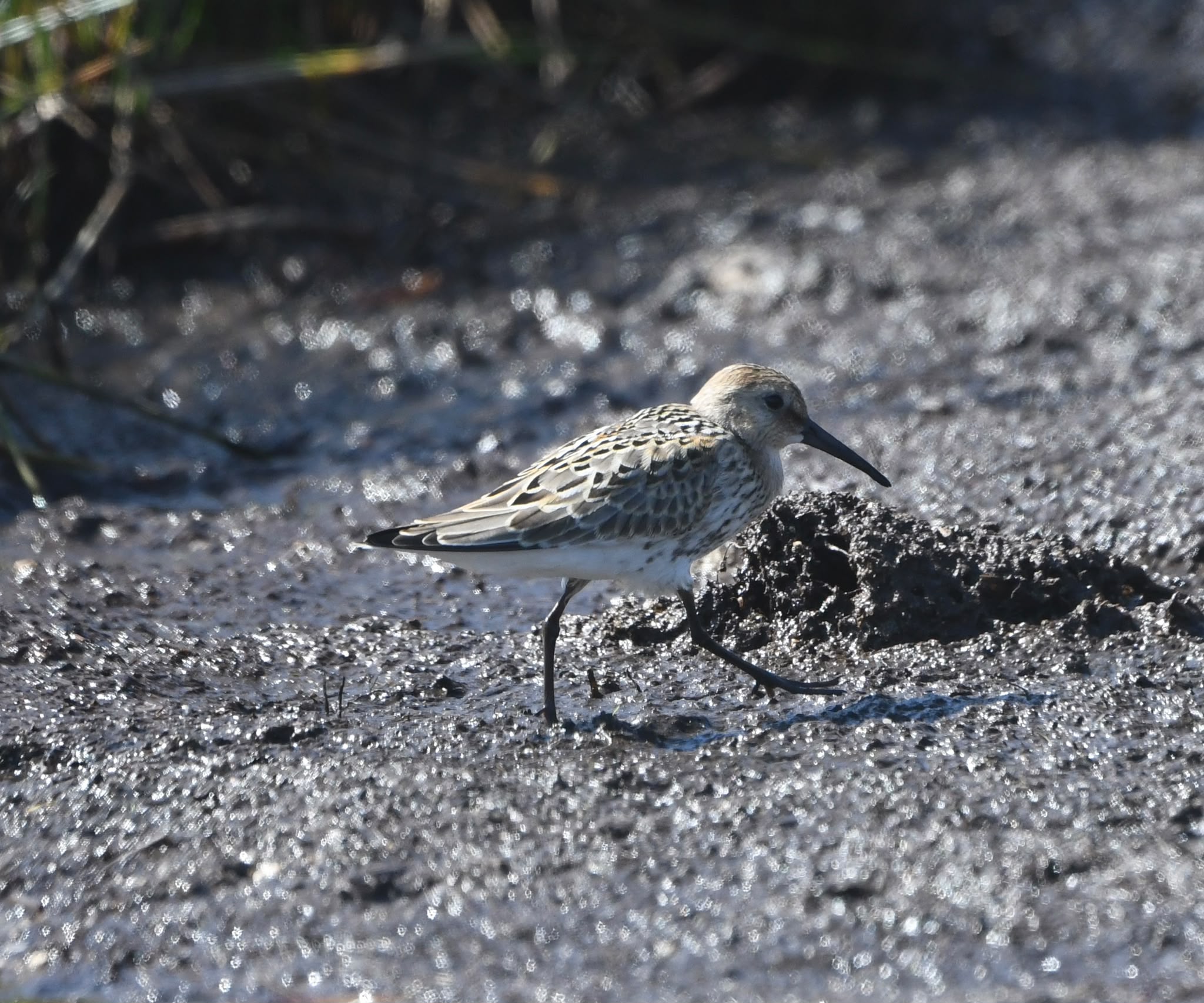 Dunlin by Greg Lee
Greg also spotted a Wryneck at Rocket Pole Pond in the evening.
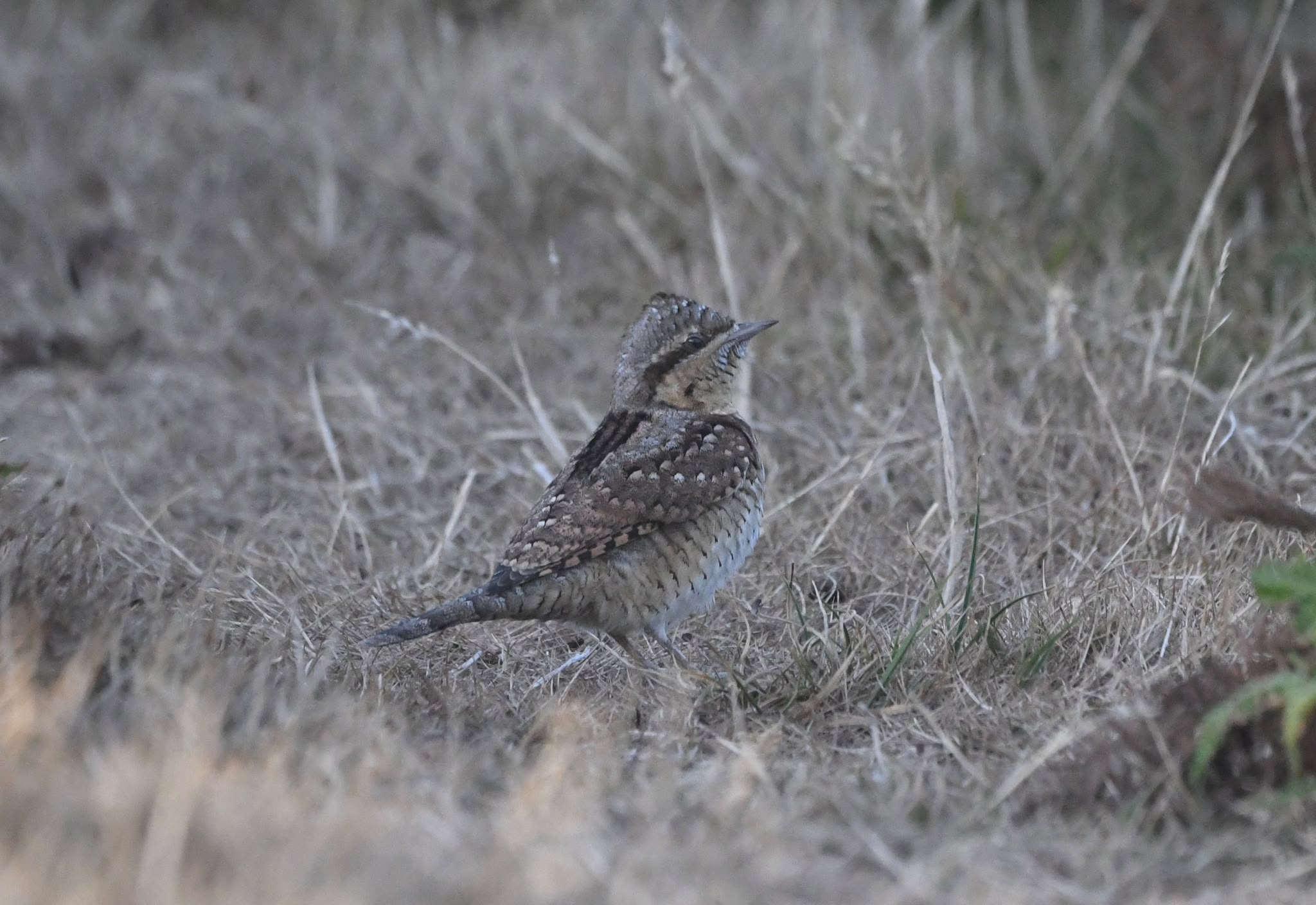 Wryneck by Greg Lee