


Bird Sightings
07/09/2026 – A very busy day!
By Greg Lee
Census this morning on what was quite a foggy and overcast start to the day. Things started pretty dramatically though when I heard the contact/flight-call of a Common Rosefinch flying over Millcombe. Fortunately, the bird was quite vocal, and I was able to pick it up in flight and see that it was a typical juvenile/1st-winter bird, which is often the case at this time of year. This species is a near-annual scarcity on Lundy with at least one record per year, though they can occur in both late spring and autumn. The sweet “pleased to meet you” song is definitely worth learning as spring birds and even young autumn birds can be singing.
The top of Millcombe initially seemed quite quiet, with a Goldcrest squeaking in the Pines and a couple of Willow Warblers. As I rounded the Ugly, I looked down into Lower Millcombe where the visiting Stour Ringing Group from Dorset had set up some nets. In the Secret Garden, there appeared to be lots of movement, so I quickly wandered over to investigate. When I reached the garden, there were a few Phylloscs flitting around the bushes and trees, mostly Willow Warblers and Chiffchaffs but then, a pale-bellied warbler briefly caught my eye before vanishing into the recesses of the mature Sycamore tree. I had an inkling of what it was but needed confirmation and a proper view. After five minutes, the bird appeared again, where I was able to make out the gleaming white belly, light brown head and mantle and rather vivid green wings and tail. It was a Bonelli’s Warbler! Amazingly, this was the third on the island this year and the second I had encountered on my travels around Lundy. However, although seeing it is one thing, the next part was pinning down which Bonelli’s Warbler species it was. Both previous birds this season have been Western and it was very likely this was too, but I wanted confirmation. Rushing around the corner, I came across Alex who was sitting on the bench waiting for the time for his next net round. He was up like a shot when I told him there was a Bonelli’s Warbler flitting above his head in the Sycamore, though the bird proved to be quite pesky and elusive. It then seemingly disappeared, although a Firecrest was a minor consolation. Smelly Gully was also busy too with a Pied Flycatcher and a Spotted Flycatcher sharing the venue.
 Western Bonelli's Warbler by G. Lee
Since I needed to finish census, I had to be on my way, though I had managed to get some good record shots. The rest of census was quite damp but enjoyable, with the female Teal again seeking respite on Quarter Wall Pond, two Whinchats at Rocket Pole, and five Ringed Plovers and a Tree Pipit calling overhead. Afterwards, I decided to also check the Terrace as it can be a productive area for migrants, and it certainly was with a few Willow Warblers in the bracken and sallows. Once down on the Terrace, I spotted some activity down in the willows to the south which I thought was worth investigating. As I walked down the path leading past the Heligoland trap, a brown bird took off from the ground on the right-hand side of the mouth of the trap and zipped down towards the catching area. I was quite amazed to see it was a Wryneck! Despite the perspex window to the catching box being left open (as it always is when the trap isn’t in use), the bird seemed more intent on trying to escape through the chicken wire. Sensing an opportunity, I immediately contacted Thomas to let him know that a Wryneck was in the trap and if I had permission to set it and try and catch the bird. Luckily, I managed to get through despite my less than reliable phone signal, and Thomas granted me permission to set the trap. Fortunately, the Wryneck didn’t escape, and I was able to process it and ring it. The bird was aged as a 1st-year due to the patterning of primary-coverts, dull brown iris colour and the condition of the secondaries. A very nice addition to an already productive morning and the first time I had seen this remarkable and cryptic drift migrant up close. Luckily, I didn’t forget about the birds in the sallows either and I was pleased to see they were two Pied Flycatchers.
 Wryneck (ringed and handled under licence) by G.Lee
 Wryneck wing (handled under licence) by G.Lee
Perhaps unsurprisingly, I headed back down to Millcombe after census to try and relocate the Bonelli’s Warbler. As I was walking the path leading to the Casbah, I heard a sweet, disyllabic, upturned hou-eet, slightly more drawn out than Willow Warbler, which I recognised as the contact-call of a Western Bonelli’s Warbler. With the species confirmed, I enjoyed watching the bird flit energetically high up in the canopy feeding with a mixed flock of Willow Warblers, Chiffchaffs, Spotted Flycatcher, Firecrests and Goldcrests, the white belly sticking out like a sore thumb. Even better still, other birders, including Thomas and Eleanor, got to see and enjoy this sprite of southern European woodlands. They also reported our first juvenile Woodpigeon of the year using the area! Up in the north, Tara came across a Purple Sandpiper at the North End, our first record of autumn for this species of rocky coastal areas.
06/09/2026 – Abundance High, Numbers Low + One Dead Glossy!
By Thomas Weston
A day where south-easterly winds should have given more than they did, in my opinion.
There was a nice census undertaken today whereby 40 species were seen in total, a new high count for the month so far....
 One of the most numerous species today, the Meadow Pipit in Brick Field by Thomas Weston
These included: 30 Swallows, 52 Linnets, 12 Robins, 6 Ravens, 3 Whitethroats, 3 Blackbirds, 2 Stonechats, 3 Feral Pigeons, 7 Wrens, 13 Shags, 2 Chiffchaffs, 2 Goldcrest, single Dunnock, single Chaffinch, single Rock Pipit, an impressive 104 Meadow Pipits, 7 Manx Shearwaters, single Woodpigeon, 5 Great Black-Backed Gulls, 4 Herring Gulls, single Goldfinch, one flyover Yellow Wagtail, a Sparrowhawk over Barton Field, an Oystercatcher, 3 Kestrels, 17 Carrion Crows, single Lesser Black Backed Gull, 3 Wheatears, 89 Starlings, 3 Pied Wagtails, single Fulmar, single Gannet, 2 Kittiwakes, 7 Mallards, a new in female type Teal on Quart Wall Pond, 3 alba wagtails, single Ringed Plover over the Terraces, 2 Peregrines chasing each other, and 3 House Sparrows.
Later in the morning, a subsequent look around Millcombe yielded a Firecrest.
Elsewhere, a couple of Lesser Emperor dragonflies, 2 Pied Flycatchers, and a Whinchat were around the Terrace and all spotted by Greg. A Dunlin over Jenny's Cove was seen by Emma, and some sad news came in the form of one of the Glossy Ibises being found dead around Punchbowl Valley. This was the second of the two birds that appeared, as the juvenile was showing very well in Barton Field for a couple of days, but this must have been the one seen with it, flying past Gannets' Bay a few days ago. The corpse was photographed by a couple of climbers and walkers, and subsequently identified as an adult.
05/09/2026 – A new dragonfly?
By Greg Lee
With clear skies overnight and a slackening of the breeze, it perhaps shouldn’t be a surprise that there was a good arrival of migrants. Perhaps it is a bit too early to call it an Indian Summer, since summer itself only really just ended, but it was a gorgeous early September day with sunshine and plenty of heat. First thing, I joined Ian and Rosie (our Manx Shearwater ringing team) in heading to Millcombe to set the nets up. As we reached the Secret Garden, there was a big flock of Blackcaps in the area, with birds seemingly everywhere in the bushes. What followed was a rather steady September ringing session, with a few Blackcaps moving through. Then, it was time for census, and the main Blackcap flock was relocated at the top of Millcombe, with some Whitethroats. I estimated at least 40 of the former although they seemed to be moving around in a very mobile group. A flyover Dunlin and Ringed Plover were nice, as was a small increase in Willow Warblers but there was little in the way of surprises, although a loafing Sparrowhawk was doing its best to become a public menace to the Starling flock. At the Terrace, it was even busier with around 60 Blackcaps working their way southward along the Quarries. Having experienced falls like this at Sandwich Bay, often, although very magical, discerning other species is difficult amongst the mass of Blackcaps and it was no different here with few other migrants being picked out amongst the ample supply of grey Sylvia warblers. A Clouded Yellow was my first for a couple of days. I’ve been reading recent reports elsewhere of counts of 1000+ of this wonderful butterfly species at some sites; surely this year must be approaching a record total for Lundy?
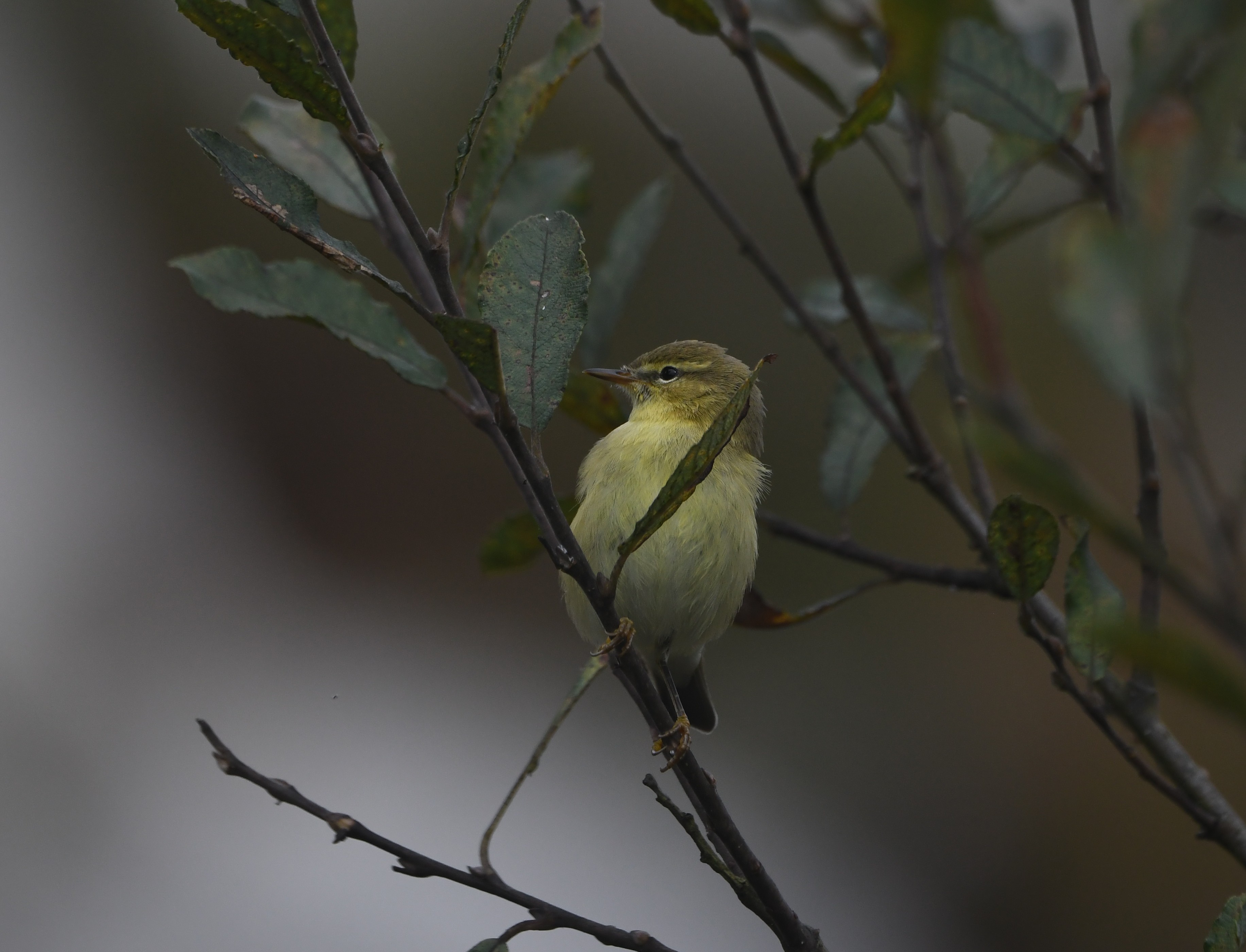 Willow Warbler at the Terrace by G.Lee
What followed was a rather busy day which saw me heading out on the Butterfly transect in the heat of the afternoon. Although butterflies were in good supply, the main sighting came on the Upper East Path when a large Dragonfly caught my eye. Particularly as this one had grabbed a hapless Red Admiral in flight. However, it then did something that so rarely the large dragonflies do here and it perched. When it did, I realised it had an electric-blue saddle, apple-green eyes and a brown/violet thorax, it was a Lesser Emperor! The first Lundy record of what is an ever-increasing but impressive dragonfly species. Since my previous experience had resulted in some rather poor in-flight shots, I was thrilled to obtain a perched image of this smart insect. Elsewhere, our rather special visitor in the form of a Glossy Ibis was also seen at times today, enjoying the vicinity of Barton Field to admiring viewers including other island staff!
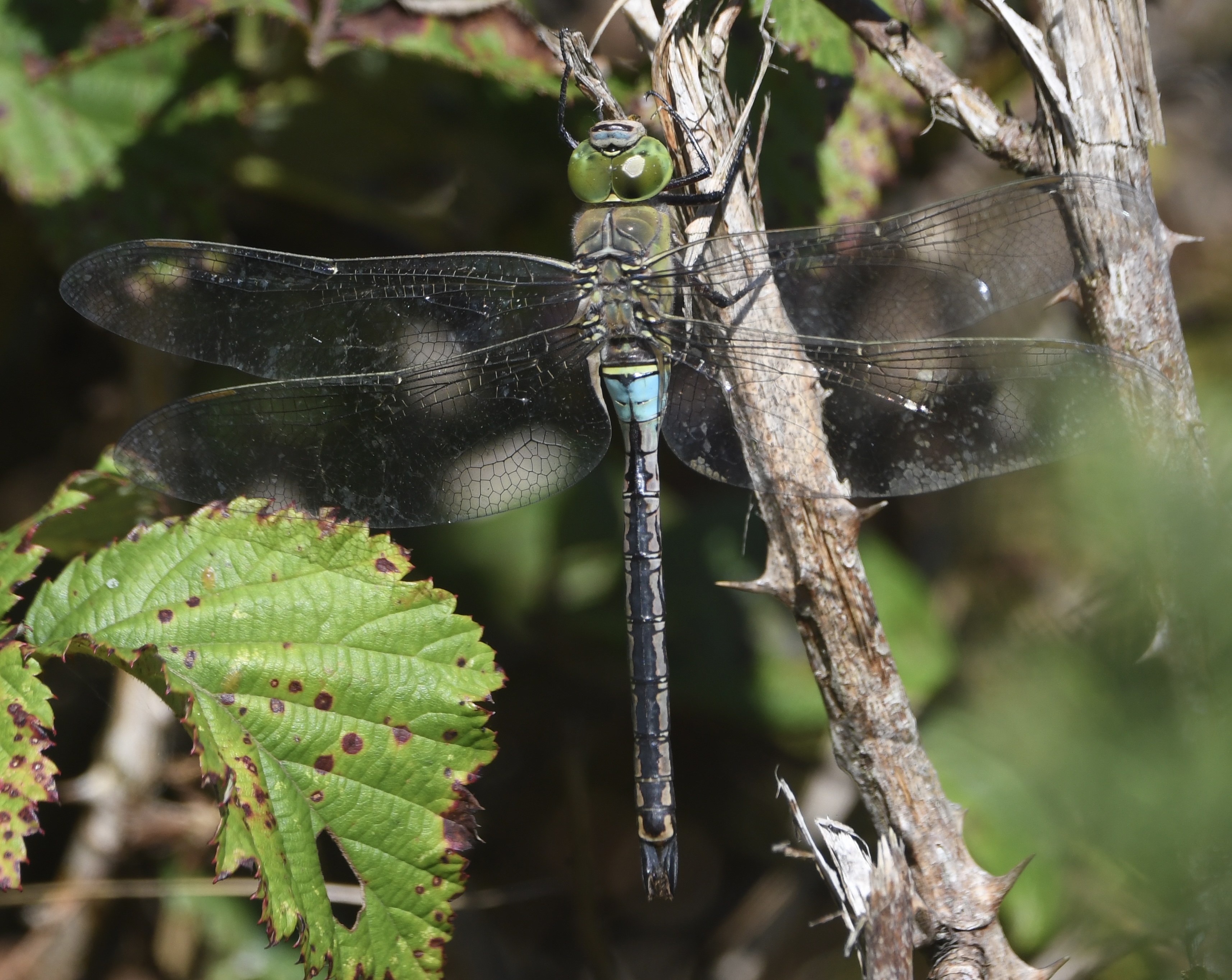 Lesser Emperor by G.Lee
04/09/26 – Manxies, a Glossy Ibis and lots of Seal pups!
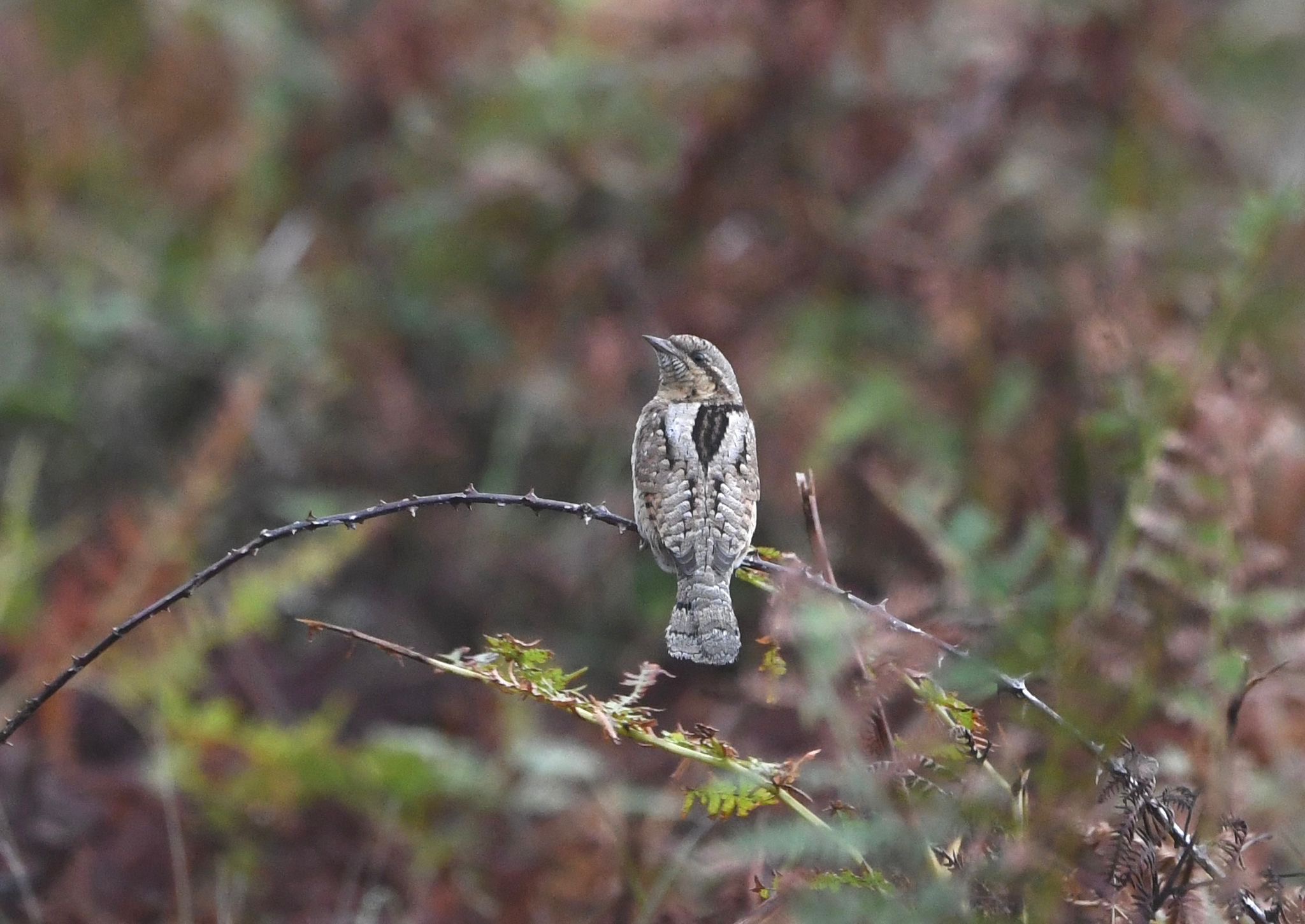 Wryneck by Greg Lee
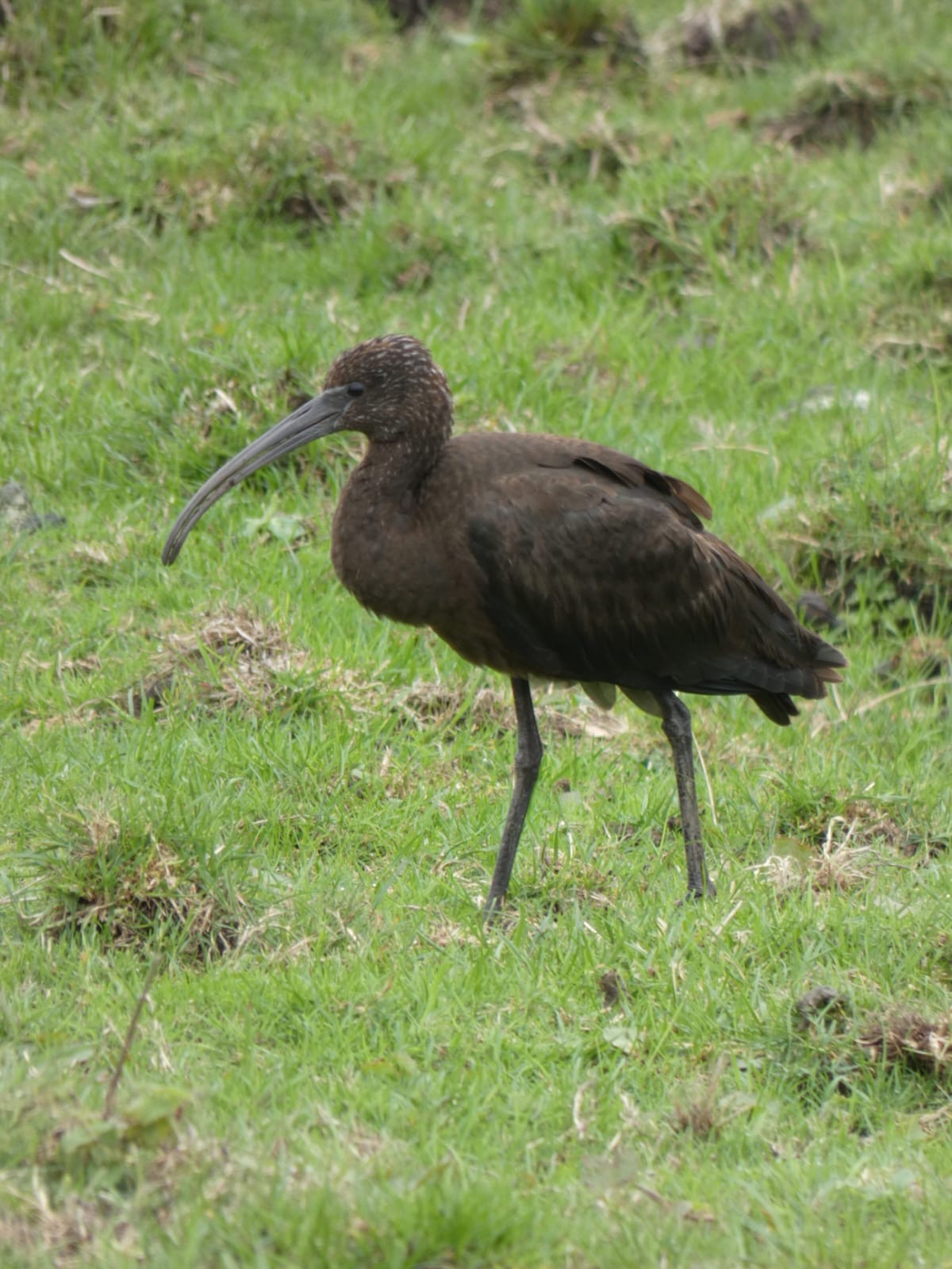 Glossy Ibis by Thomas Weston
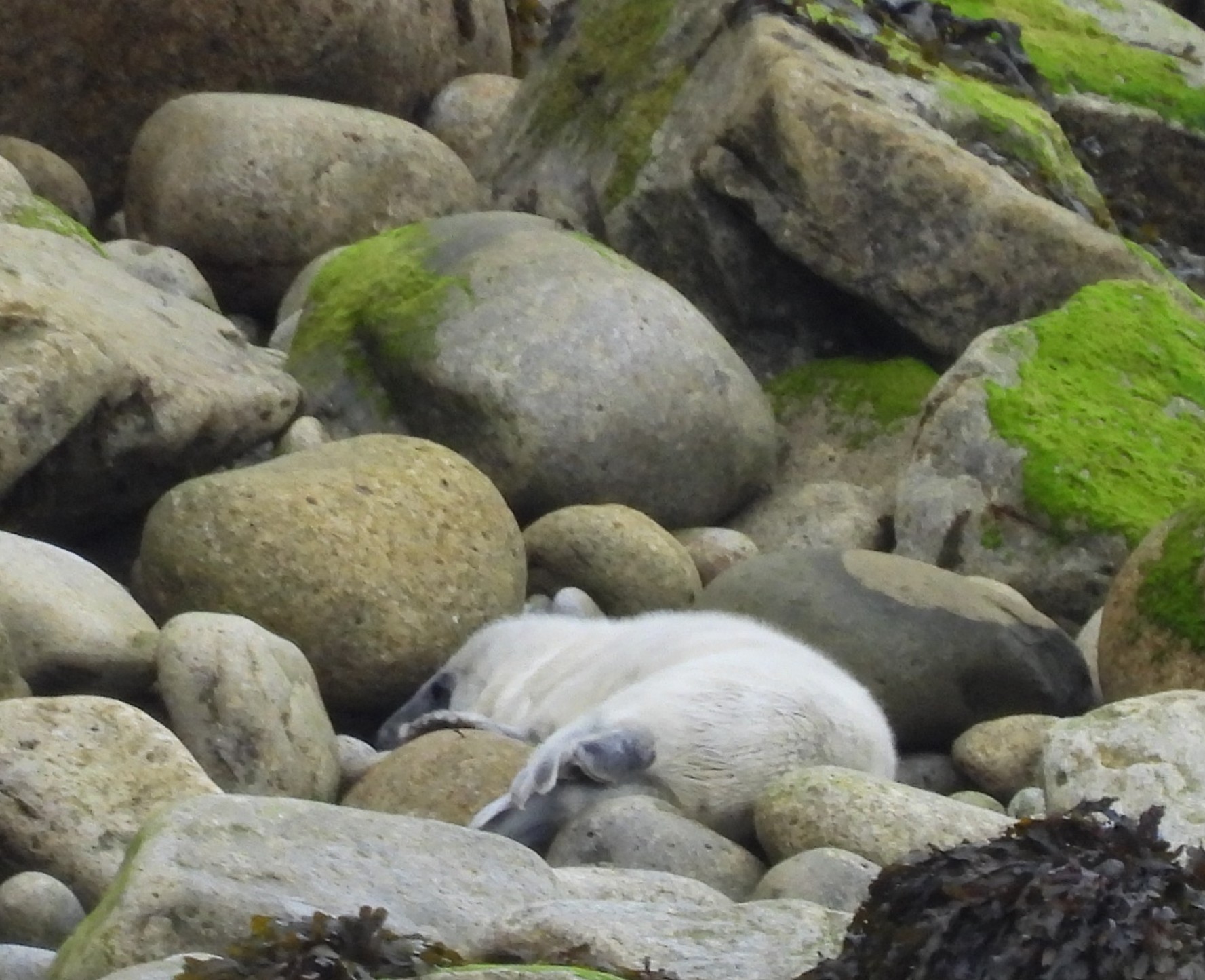 A pup on White Beach by Tara McEvoy-Wilding