


Bird Sightings
12/08/2026 – Eclipse Day!
By Kirsty Cox
Today started with a trip to visit the Manx Shearwater colony so that the chicks in the boxes could be weighed. It was my first time visiting the colony since I got back to the island just over a week ago. I was here volunteering with the Conservation Team for two months last summer and this season I am here volunteering as the Seal Fieldworker to monitor the arrivals during the Grey Seal pupping season and also to carry out population and disturbance surveys.
It was wonderful to visit the Manxie colony again and to see how the chicks are doing this year. Some are definitely almost ready to go! Whilst we were checking the chicks we were lucky enough to see three Little Egrets over the sea at the battery and a Peregrine gave us a fly by!
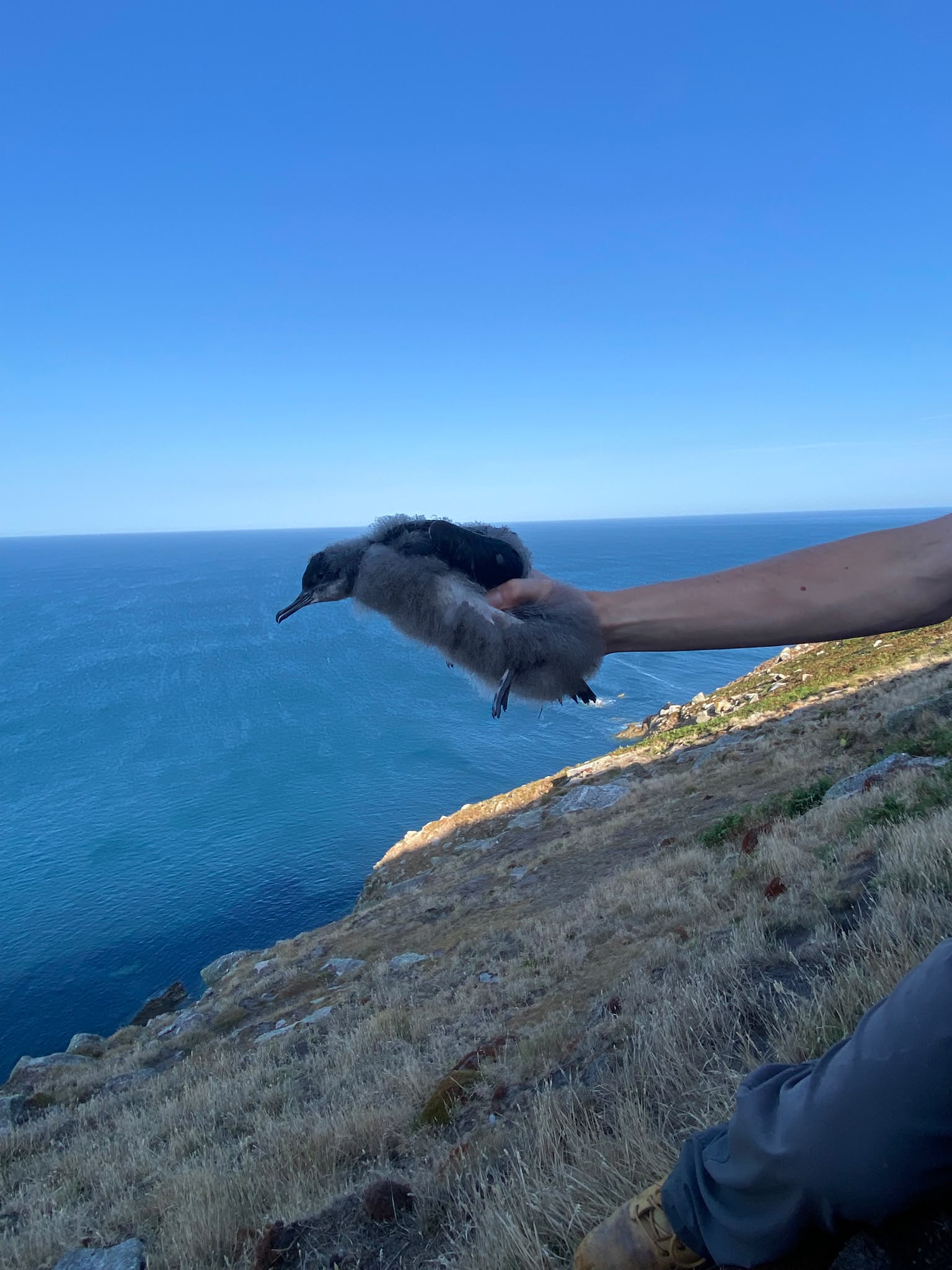
(Photo by Jessie Dermody)
After leaving the Manxies I spent the rest of the day carrying out a seal population survey. At this time of year we survey the whole of the east coast of the island at least once a week at low tide to count the number of seals hauled out or in the sea in each of the bays. Photos are also taken of each hauled out seal so that we can try and ID them. Every seal has a unique fur pattern, like our fingerprints, so we are able to create records for each individual seal and hopefully match them to the seals we have in the Lundy seal catalogue. It was hot work today with the rising temperatures but great to see 60 seals in total along the coast. And hopefully it won’t be too long before the first pups start arriving…
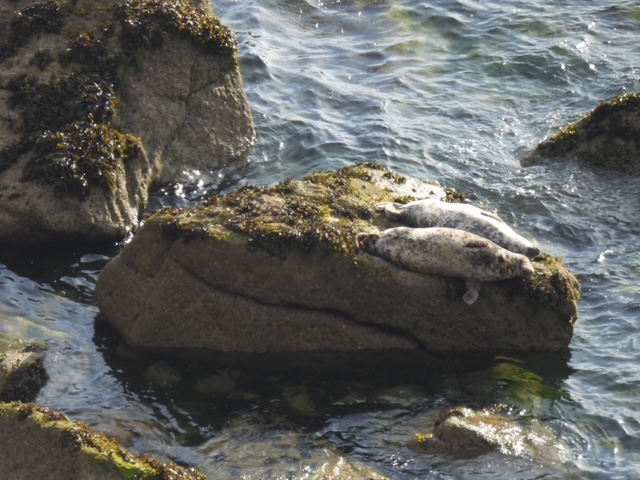
(Photo by Kirsty Cox)
In the evening we met up at Old Light to watch for the solar eclipse. There were various methods used to be able to see it - special glasses, pinhole cameras, homemade projectors and colanders! It was an amazing sight and Lundy was a very special place to be able to see it.
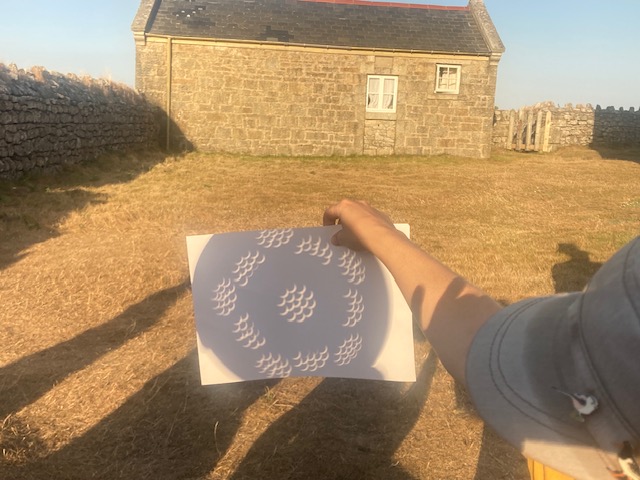
(Photo by Kirsty Cox)
11/08/2026 – The Pied Flycatchers arrive!
by Greg Lee
A relatively gentle day off for me today as I am recovering from an unexpected and unwelcome bout of Shingles, the first time I’ve suffered this affliction. Regardless, a course of antivirals is currently working its magic and therefore I’m still making sure I have the energy to get out into the field, particularly during one of my favourite times of year for birding!
Luckily, others were on hand to get some good bird sightings across the island today, with Roger and Emma spotting our second Common Buzzard of the year drifting over the island before settling down on the Airfield. Thomas and Eleanor also carried out census and were duly rewarded with two Tree Pipits dropping down on the route, a Ringed Plover over Millcombe, three Whitethroats and ten Willow Warblers.
As it was a bit of a scorcher today, I waited until evening to enjoy a calm and cooler walk. I chose the route past Pondsbury before doubling back and walking past the Quarries and following the Lower East Path. The North-eastern corner of Pondsbury is looking nice and muddy, perfect for some wader action. However, I couldn’t rustle up any waders today, but I instead sighted the juvenile Grey Heron that has been lingering over the past week, even flying over a staff get-together in Millcombe on Sunday night! A British Yellow Wagtail also flew up from the vegetation before landing elsewhere. Starting my route on the Quarries, I sighted a few Willow Warblers in the Bracken, walking further along, I sighted a bird dart out in a familiar fashion before perching again, spotting some white outer tail-feathers as it flew. When I raised my binoculars, I was pleased to be looking at my first Pied Flycatcher of autumn, always an exciting benchmark for me of the autumn migration period and bang on cue with the easterly winds coming across from the near-Continent. Upon reaching the Terrace, I would count a further 16 Willow Warblers, as well as a Spotted Flycatcher and hiding in the Willows, I made out the distinctive lack of features of a Garden Warbler as it worked its way through the leaves. Further along the Lower East, a second Spotted Flycatcher was in Quarter Wall Copse and a second Pied Flycatcher was in the Pines at Millcombe, making for a very rewarding evening wander!
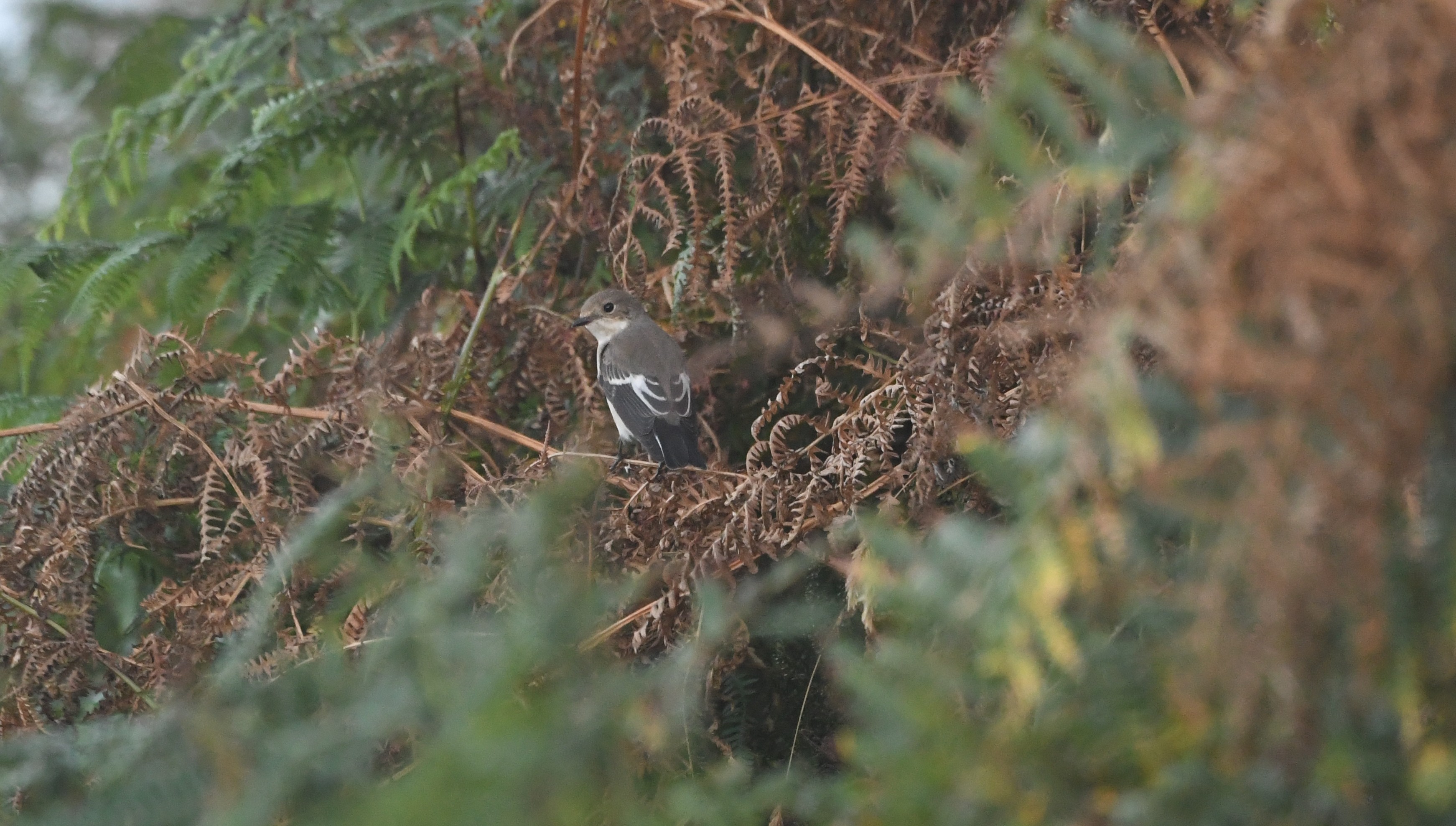 Pied Flycatcher by G.Lee
10/08/2026 – Baby Fulmars & a Boat BRUV!
By Jessie Dermody
I began my morning with a speedy walk up to the northeast of the Island, taking advantage of the cooler morning air. I got a lovely veiw of a Clouded Yellow butterfly flying past on my way. I was heading to Gannets' Bay, to take photos of the Fulmar colony there. We monitor specific sections of Gannets' Rock, so that we can caculate a standardised productivity level for the colony. This is based on how many nests are present and succsesful throughout the breeding season. Today there were only four birds on the rock, but there were also four quite large chicks! Gannets' Rock is also a home to several Peregrines - there is often one nearby, and today was no exception! An adult watched me complete the survey from ita perch on the rock. Once I had finished, I made my way back as quickly as I could - we had big plans for the rest of the day.
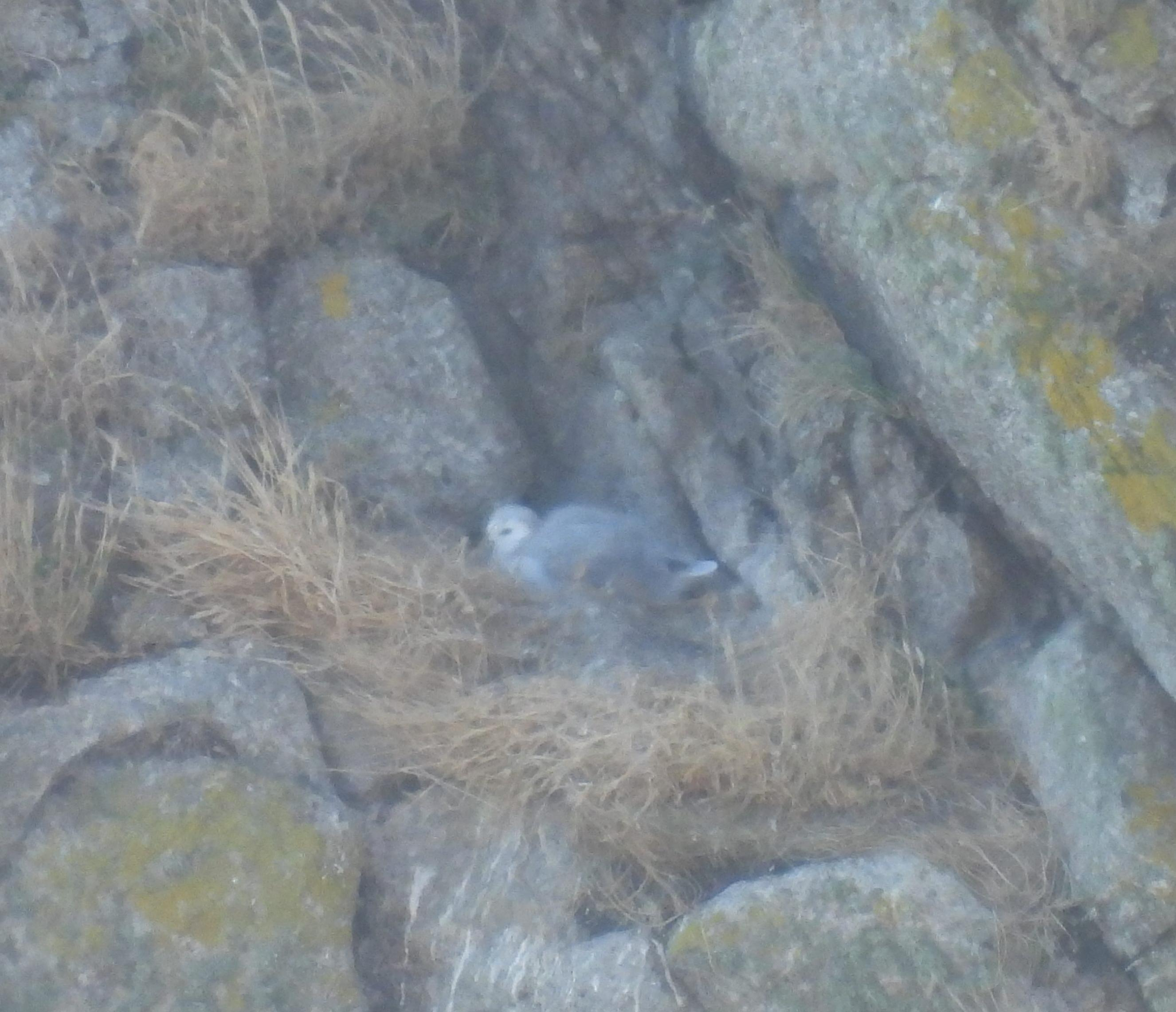 A Fulmar chick on a ledge - Photo by Jessie Dermody
I was - of course - running a little late, so I grabbed some fish from the freezer and sped down to the landing bay. I was meeting Tara, Kirsty, Eleanor and Thomas to deploy the BRUV from the RIB! We had one small issue though - we needed a new camera for the BRUV. Tara had a clever idea, putting an old GoPro in a waterproof casing, which we attached to the setup with zip-ties. Once that was sorted, I crushed up the bait, and we carried the BRUV to the jetty. It was a very low tide, and a litle choppy on the water, so boarding the RIB turned out to be quite difficult. But, with a lot of teamwork, we managed! Once we were all on board, we headed for the south of the island, where the water was a little calmer. Whilst we were scouting possible deployment sites, Thomas spotted a Grey Heron feeding beneath Benjamin's Chair. We deployed the BRUV, and I jumped in to make sure that the setup was facing the right way and pointed towards the seabed.
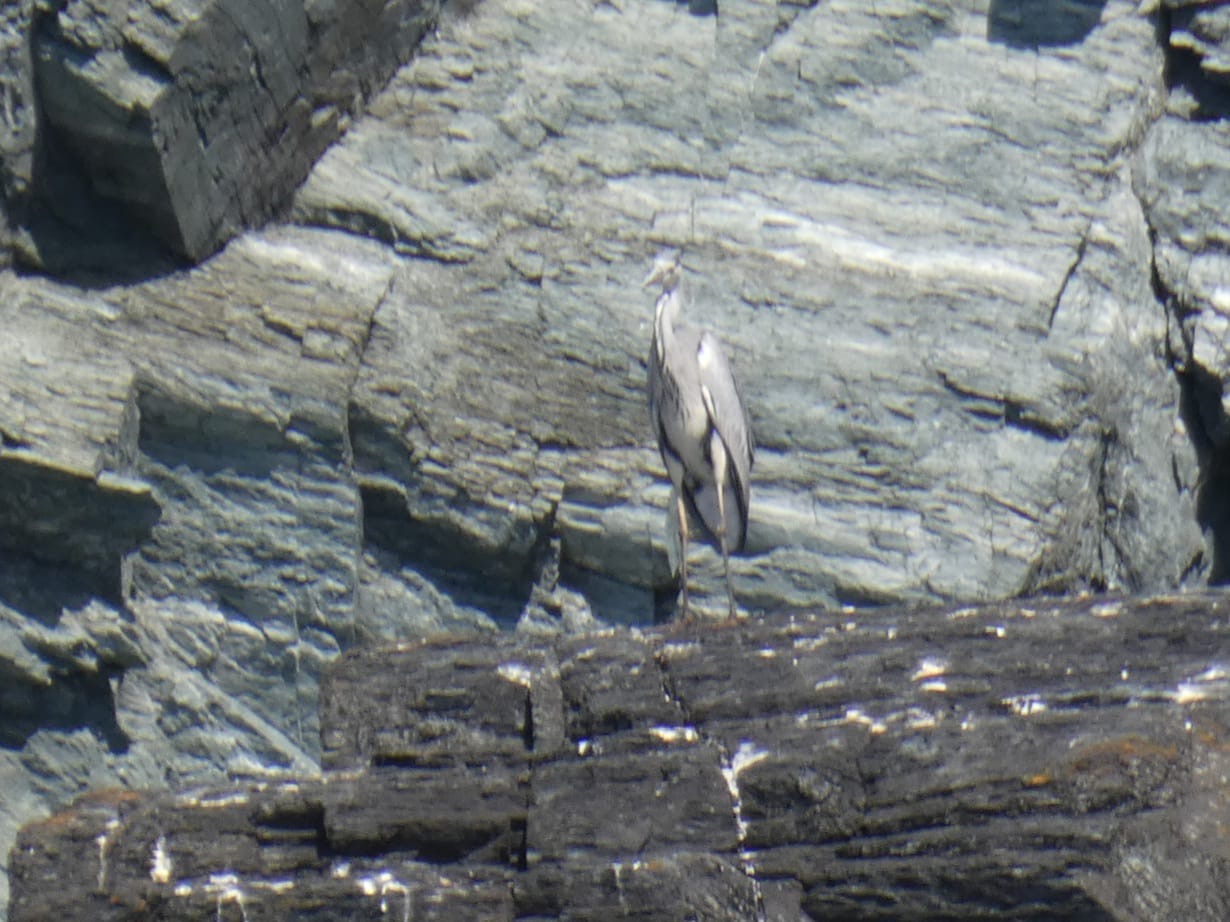 Grey Heron beneath Benjamin's Chair - Photo by Thomas Weston
We continued round the west of the island in the boat, towards Jenny's Cove. Thomas counted 9 Fulmar, 6 Raven, 8 Gannet, 91 Shag and 90+ Kittiwake on our journey. A highlight was two passing Turnstone near Devils slide. There was too much swell to head around the North End of the island, so we returned to Benjamin's Chair. In the bay, we were surrounded by five seals, with a possible pup calling from a nearby cave! Kirsty, Tara and I jumped in for a quick swim. The water was very clear, so we had a lovely veiw of the kelp park below us on the seabed. There were lots of bryozonans (sea mat) on the kelp, and a wealth of beautiful seaweeds. Once we emerged from the water, we retreived the BRUV and returned to shore. The tide was still very low, so it was another ordeal getting everyone out of the boat and up onto the slipway.
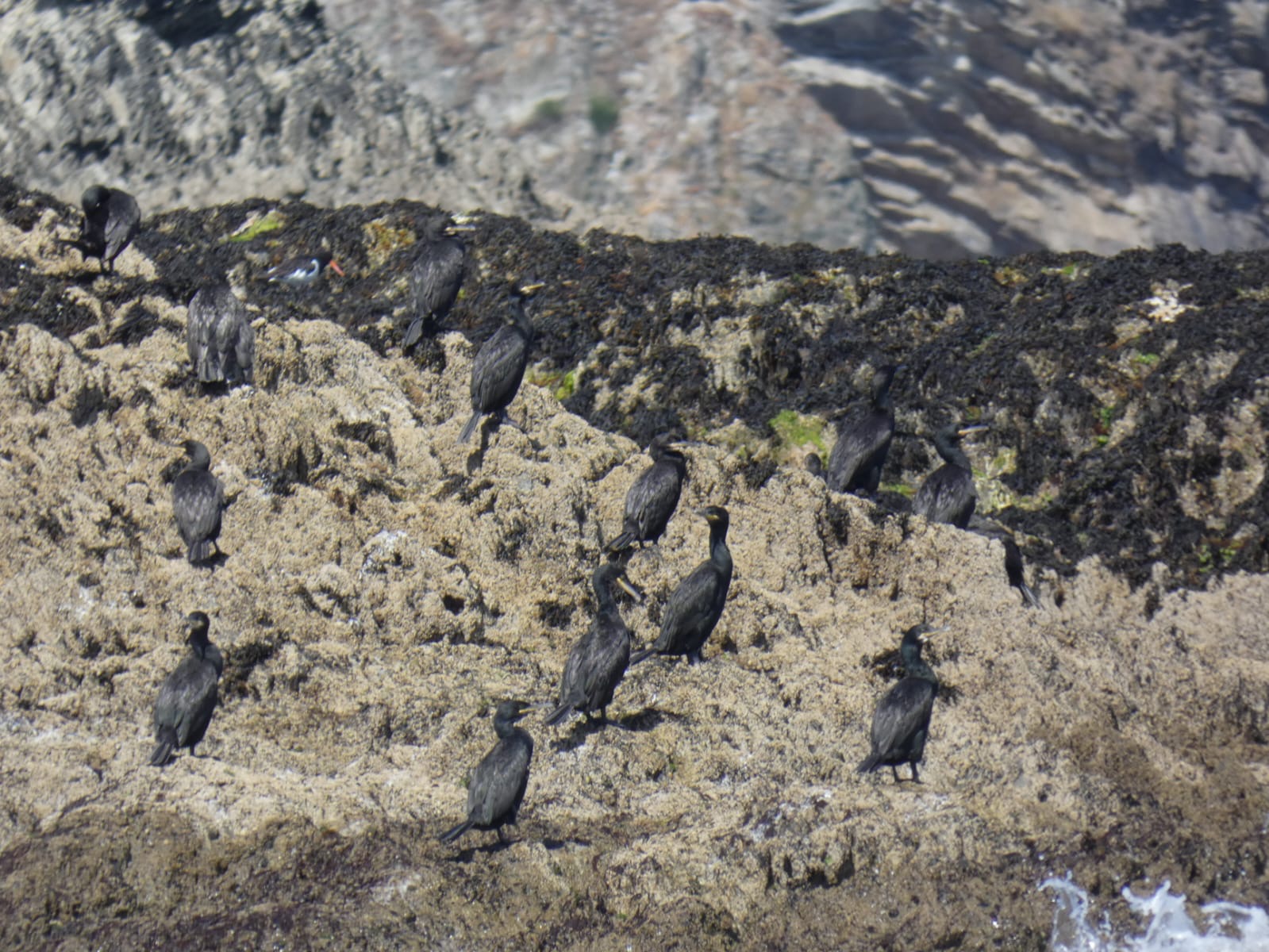 Shags on a rock - Photo by Thomas Weston
After our excursion, I headed back up the hill to grab some lunch and have a quick rest before my Tavern kitchen porter shift that evening. Whilst I was in the kitchen, the rest of the Conservation Team had a great evening of sightings. Emma spotted a Curlew on the Airfield, while Greg saw another Grey Heron, a Yellow Wagtail (of the British race), and two Water Rail at Pondsbury. Meanwhile, Kirsty saw a pod of 8 Common Dolphins from the Battery. Down on the southwest of the island Thomas saw one of our juvenile Channel Wagtails, as well as 12 Wheatear and a Sedge Warbler in the bracken.
09/08/2026 – Post Birders Week
By Thomas Weston
Post Birders Week led to my natural body clock waking up at 5am again! Doh. However, I was not complaining too much as it led me to Millcombe where I was joined by Greg. A two-hour session resulted in 25 new Willow Warblers, though there could have been double if we had stayed for longer. There was a few nice species seen, all new, including Chaffinch, Wren, Chiffchaff, Garden Warbler, and a juvenile Blackbird. There was no sign today of the Melodious Warbler, though with the wind changing direction again – in fact no wind at all this morning – it was likely it had fattened up and headed off back south.
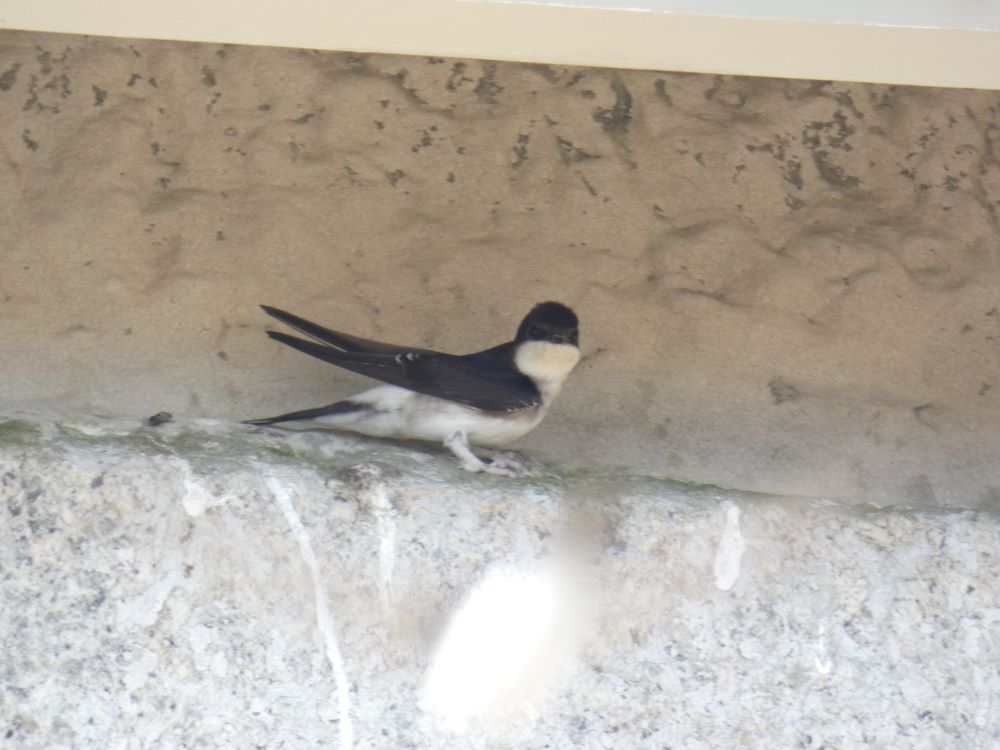 House Martin at Old light by ThomasWeston
Eleanor and I undertook census and it was really productive. The lack of wind led to some nice migrants heading on by. There were an additional 59 Willow Warblers, 20 Wrens, 30 Swallows, 28 Lesser-Black Backed Gulls, 14 Herring Gulls, 2 Robins, 6 Oystercatchers, 5 Blackbirds, single Whitethroat, 2 Great Black-Backed Gulls, 9 Goldfinches, 4 Dunnocks, single Woodpigeon, 14 Shags, 226 Linnets, single Chiffchaff, 3 Stonechats, 2 Gannets, 13 Carrion Crows, 3 Ravens, single Spotted Flycatcher, 23 Sand Martins, 24 Meadow Pipits, 31 Wheatears including a colour ringed bird and two metal only ringed birds, 4 Manx Shearwaters, 8 Skylarks, 33 Starlings, single juvenile Kestrel, 76 House Martins all whirling around Old Light, 2 Cormorants – island scarcities and definite migrants, 16 Swifts, 2 Rock Pipits, single Pied Wagtail, 9 House Sparrows, and a Peregrine too.
Hot and sticky indeed and showers definitely needed before the Tavern shift. A post-work garden party this evening celebrating a staff member's birthday resulted in listening to Manx Shearwaters coming back to the island in the night. Other reports from today included yet another Grey Heron on the island.