


Bird Sightings
31/07/2026 – Dragonflies aplenty!
by Greg Lee
A brighter census with a cooling breeze. Despite the northerly direction, it was a bit quieter for migrants than perhaps expected, with a light scattering of 16 Willow Warblers, three Whitethroats and one Sedge Warbler. In the brighter conditions, it was quite challenging to look at the birds, but it didn’t help that my optics are in need of a good wipe. A Collared Dove flying out of Millcombe was my first for a while, it seems boggling to me that these birds are willingly crossing the Bristol Channel and arriving on the island throughout the season. This particular bird would also be heard by Emma calling from the roof of Pigs Accommodation. As I headed up Battlements Corner, I sighted several Migrant Hawkers and my first Common Darter of the season, lacking the blue on the eyes of the Red-veined Darters which we have been seeing plenty of this year. Neither Migrant Hawker nor Common Darter is particularly uncommon here and in fact, I’ll be seeing plenty of both well into September I can imagine! Perhaps the best bird sighting of the day however, was the first Green Sandpiper of autumn seen on Pondsbury by Thomas and Eleanor. With the island being so dry, it is nice to know some waders are still dropping in! A few office jobs were needing doing during the afternoon before the often busy Friday KP shift, so my own sightings were limited. The Channel Wagtail family still remains on the island, with at least two juveniles moving between the Rocket Pole area and Quarter Wall.
A boat trip around the island led to a good Shag total from Thomas and Eleanor with 253 sighted along the rocks, whilst in the evening, three Grey Herons were seen leaving the rocks near South Light, the first for a couple of months.
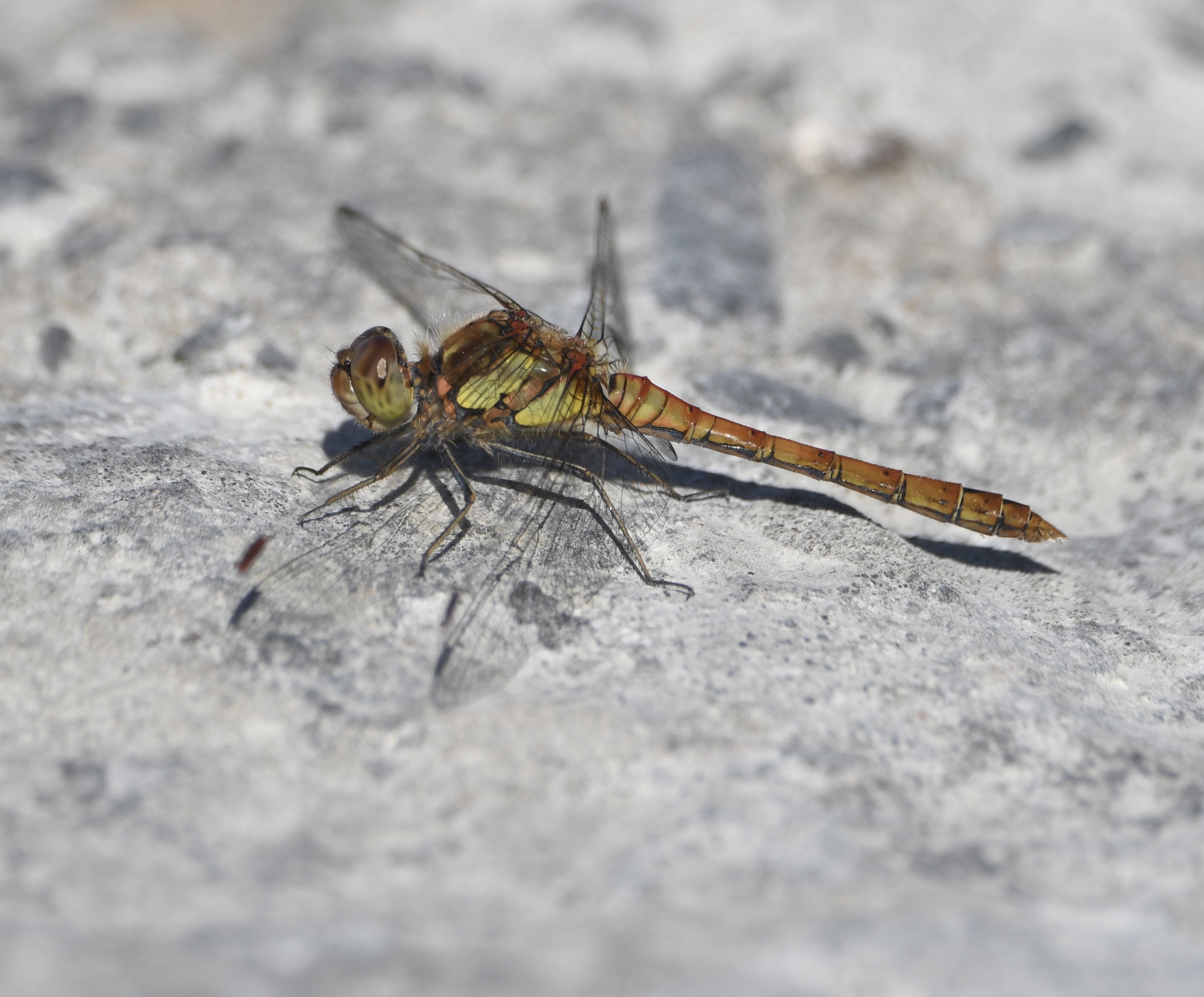 Common Darter by G. Lee
30/07/2026 – Census Counts
By Thomas Weston
Some good birds were seen this morning. Starting the day in Millcombe, I opened a few nets with Greg and Lucile. There was some nice cloud cover at dawn which led to some new birds being caught. These included a single new adult Whitethroat in full wing moult, multiple Willow Warblers including a retrap from a few weeks ago, 2 new Stonechats, 4 new Wrens, 3 new Linnets, and a single new Blackap too. There were some lovely sunrise views and whilst the sun was gaining, the breeze changed from SW to NW. The change in wind led to a Curlew heading out of the Landing Bay an hour into sunlight, as well as quite a few passing Gannets, a steady but consistent line of Manx Shearwaters, a possible large shearwater seen distantly shearing south, and a pod of closer-in Bottlenose Dolphins which was a good surprise for the three of us. In fact, they were Lucile's first dolphins ever.
We closed the nets just after 08:00, after which Lucile joined me for census this morning. There was a nice range of species seen throughout the route, and many nice views of some of the residents and passage migrants currently on the island. In total, there were 5 Mallards, 5 Woodpigeons, 2 Oystercatchers, 5 Kittiwakes, 6 Great Black-Backed Gulls, 22 Herring Gulls, 17 Lesser Black-Backed Gulls, 8 Gannets, 24 Shags, a single Kestrel, 4 Carrion Crows, 8 Ravens, 18 Swallows, 4 Willow Warblers, single Chiffchaff, Whitethroat and Sedge Warbler, 18 Wrens, 81 Starlings, 8 Blackbirds, one of the breeding Spotted Flycatchers, 4 Stonechats, 10 Wheatears, 27 House Sparrows, 2 Dunnocks, 2 Pied Wagtails, 28 Meadow Pipits, a single Chaffinch, 166 Linnets, and 25 Goldfinches.
The rest of the day was spent organising the plan for the upcoming Young Birders Week, as well as inputting ringing data from the previous few sessions we have undertaken.
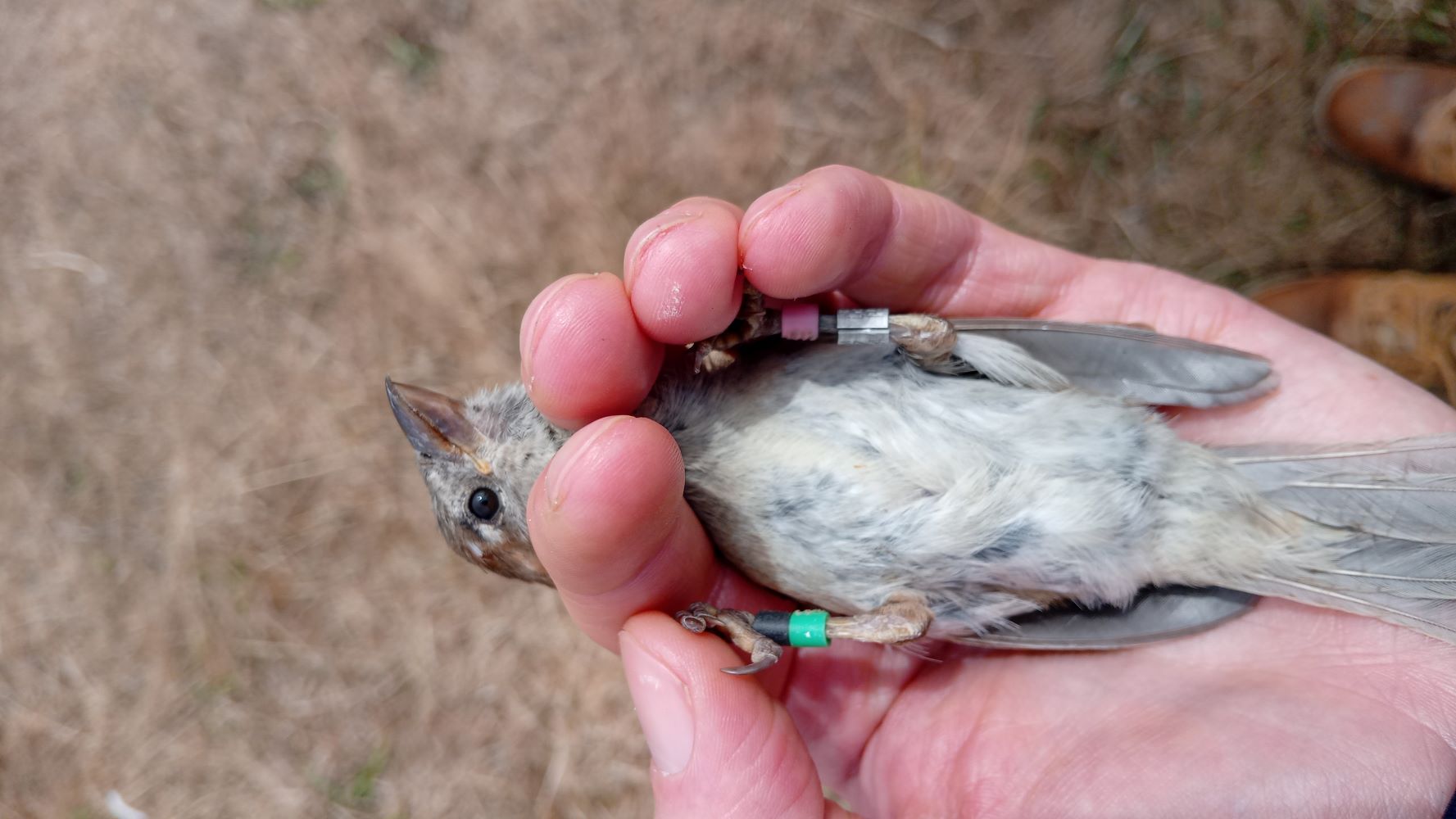 Colour ringed House Sparrow juvenile caught in the Village – by Thomas Weston
Plus as always, a few retrap Starlings and House Sparrows from the traps.
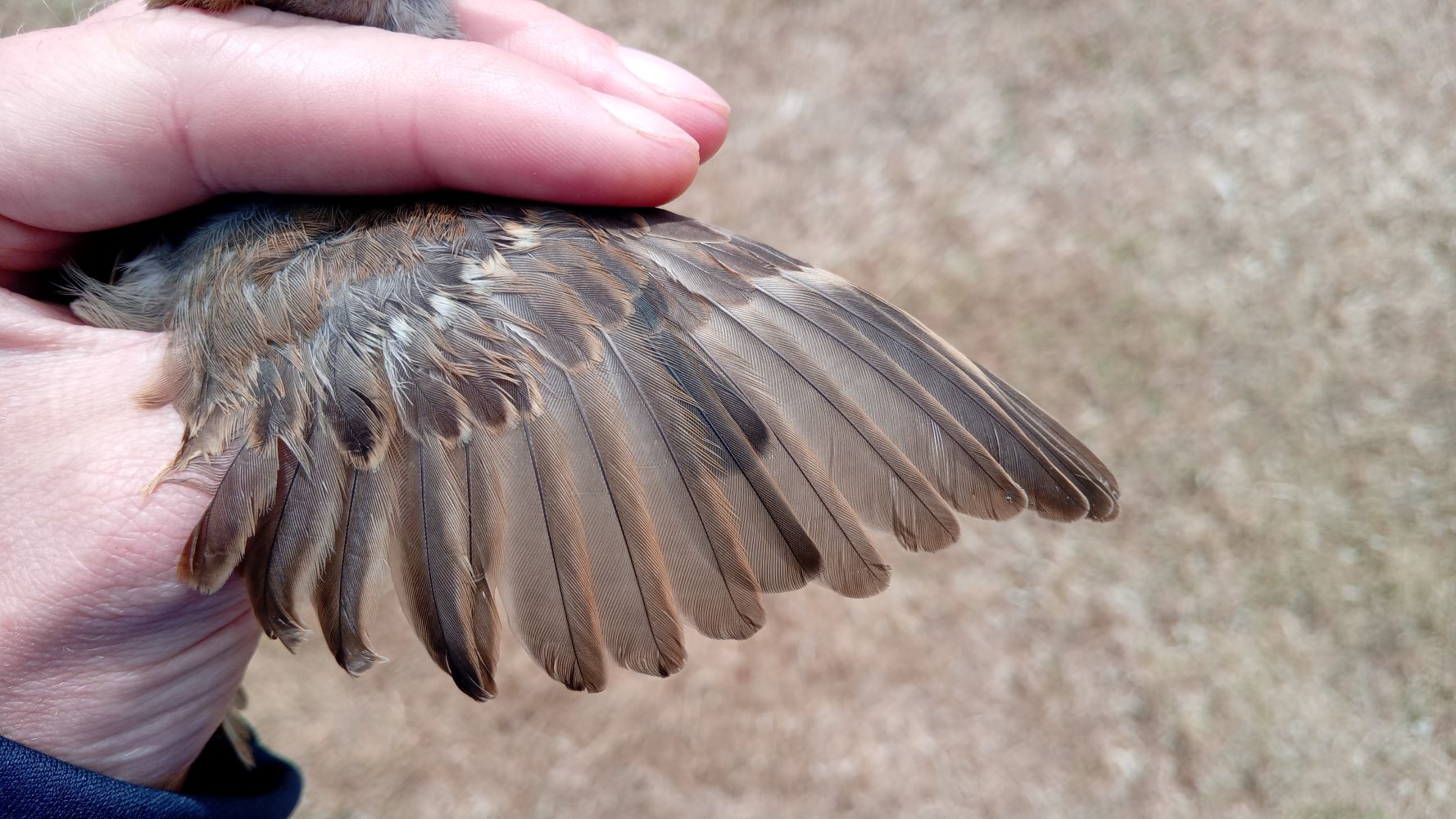 House Sparrow in moult in the Village – by Thomas Weston
This one in some nice primary moult.
29/07/2026 - Fuzzy Fulmars and a Boat Trip
By Emma Abel
The conservation team started the morning with a round island boat trip. With clear skies and calmer waters we set out up the East coast, where there were lots of juvenile Herring Gulls bobbing about in the water with their parents greeting us with their high-pitched begging calls. The East slopes were a beautiful gradient of greens into orange, with the pesky Bracken finally starting to die off with an eye-catching demise.
As we got to the North we were greeted by a Cormorant sitting majestically on a rock. it was at this point I realised binoculars plus a rocking boat would not make a happy Emma so I enjoyed the large bird with my eyes, still able to make out its white cheeks. Heading round the West coast, it was an amazing sight to see the island from a different angle, with the cliffs almost split into two, steep rocky faces leading into grassy slopes which stretched up to even more steep rocky buttresses. Jenny's cove was full off Kittiwakes, adults joined by their freshly fledged juveniles learning to fly, swirling around the cove. A couple came over to the boat, checking us out and giving us a nice view of their distinctive black W across their wings. Another curious soul was the Fulmar dipping and weaving low over the waves, passing close by the boat and giving us a good long stare. A few of the last Puffins gave us a speedy fly-by, their frantic flight pattern helping us pick them out whirring past.
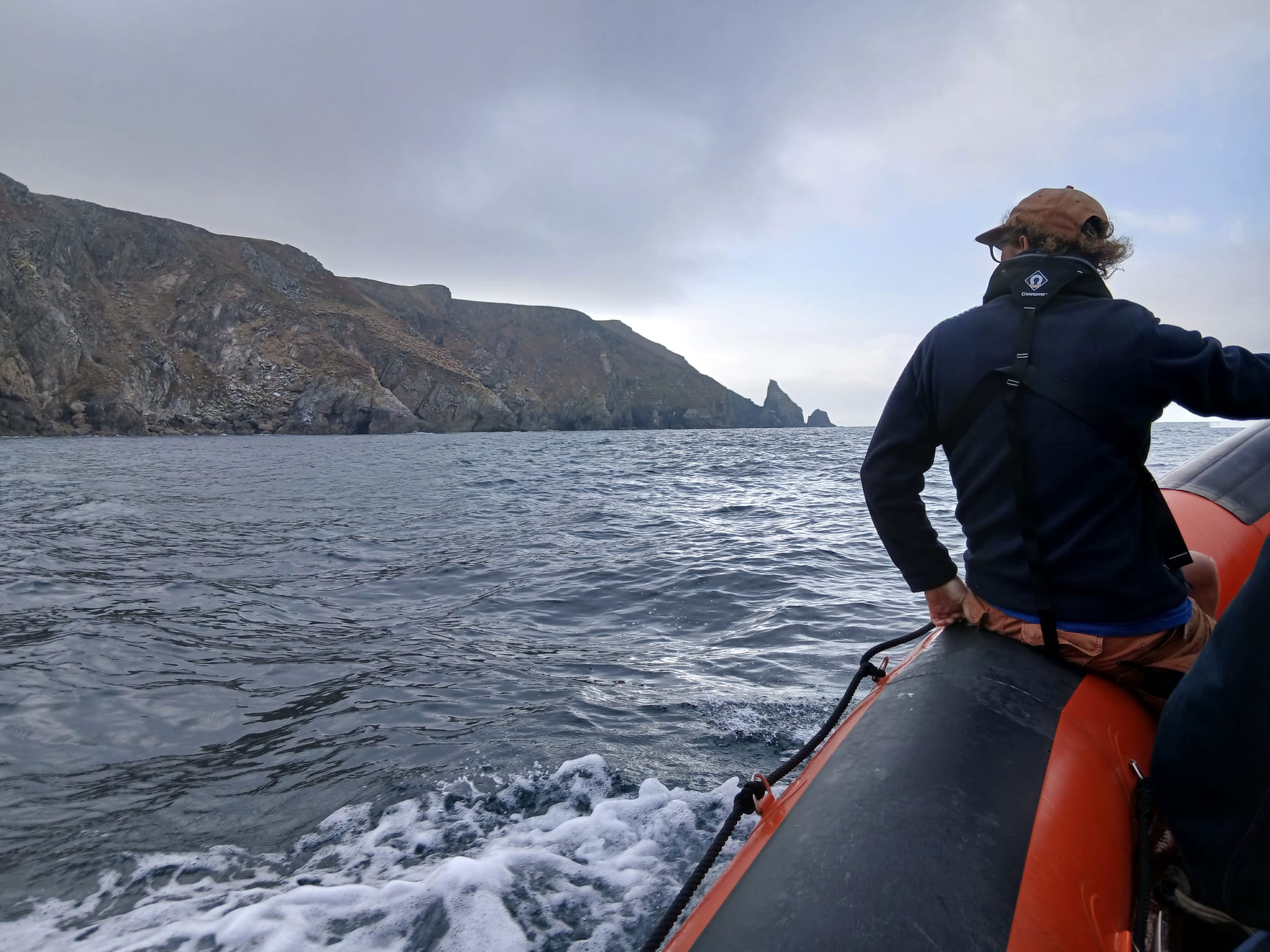 A Round Island Boat Trip by EAbel
Once we got back onto dry land, I headed back to the North to check on the Fulmar chicks, realising how appropriate that turn of phrase is with the grass looking crispier than ever. The lack of rainfall over the last months has taken its toll on the vegetation and the island looks parched. Hopefully there will be some rain soon. At Gannet's Rock I set up my scope and found 9 large fluffy Fulmar chicks tucked in to the cliff face. They still have some developing to go, having some of the longest breeding seasons of the birds on Lundy, with a fledge date of late August.
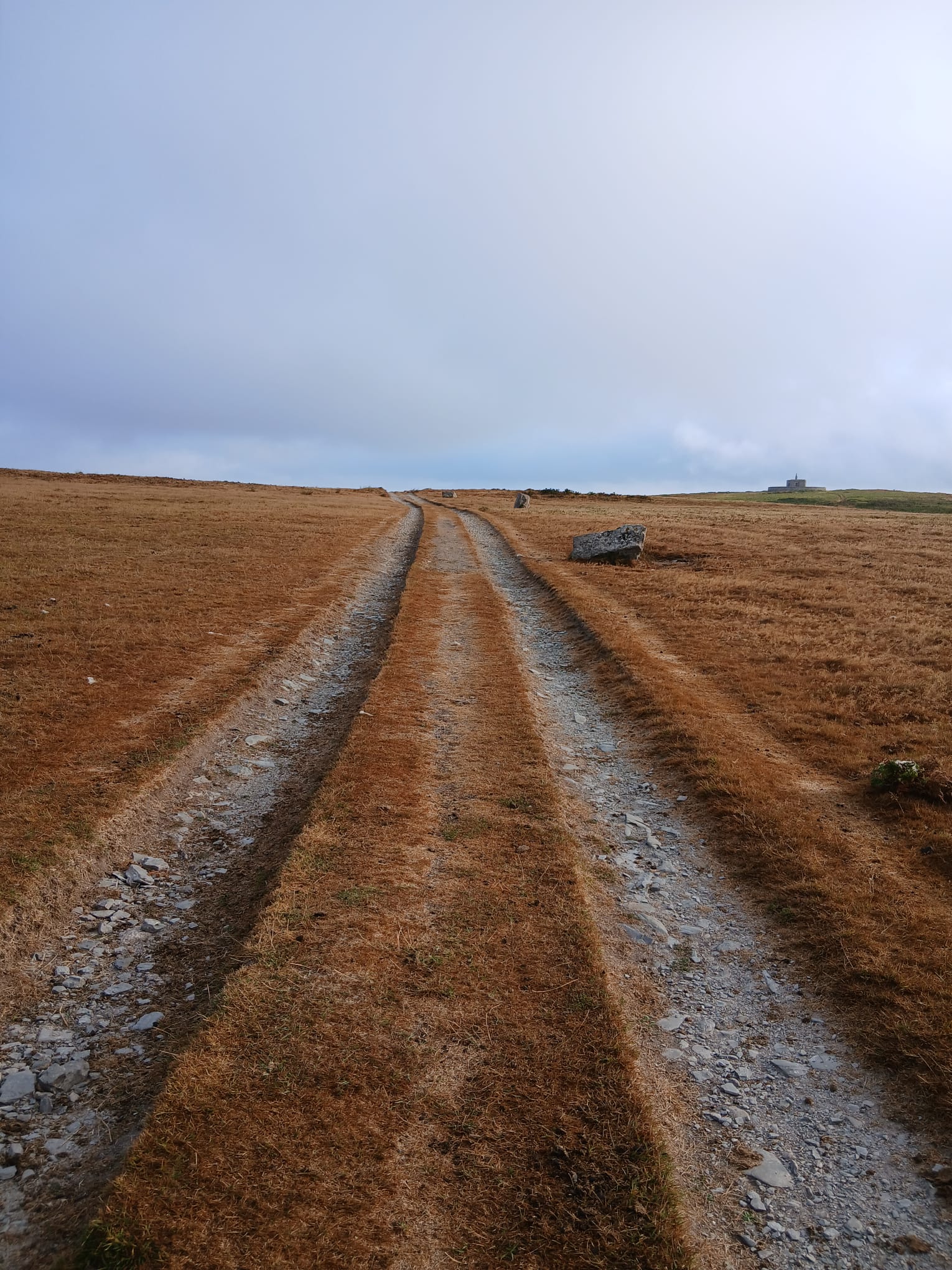 A Crispy Lundy by EAbel
28/07/2026 – ITV News interview
By Thomas Weston
Today was a Tavern day for me. I had a meeting with Simon and the visiting researchers to the island which went really well and they had exciting plans ahead!
I started my Tavern break at midday and worked through the busy boat day. Simon was out sorting the boat, whilst Tara and Chloë were with a visiting ITV news crew. Jessie was looking for pups, with no success again today, and Emma and Greg were busy out and about in the field. It was exciting times for Tara and Chloë who helped in a seal disturbance piece for the news and after this, Simon helped with a piece about the rat eradication and the positive effects to our island and our wildlife too.
In my Tavern break, I was whisked up the west coast in a Landrover and walked towards the Manx Shearwater colony. I helped with extra material for the rat eradication piece and it went really well. Our now celebrity chick was doing great, and with its parents being part of the 66' North piece a couple of months ago, it was great to get this chick its moment in the spotlight. The ITV piece came out the next day (29th), however, here are some stills.....
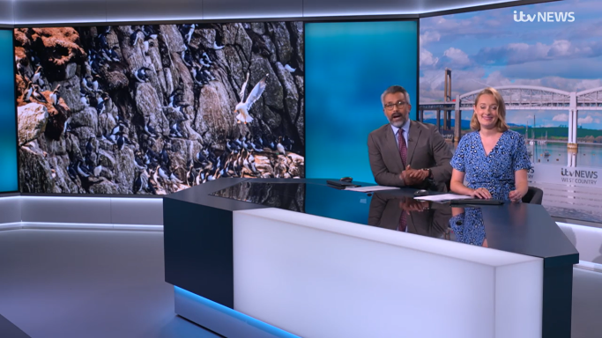 Introducing the Lundy Rat eradication piece
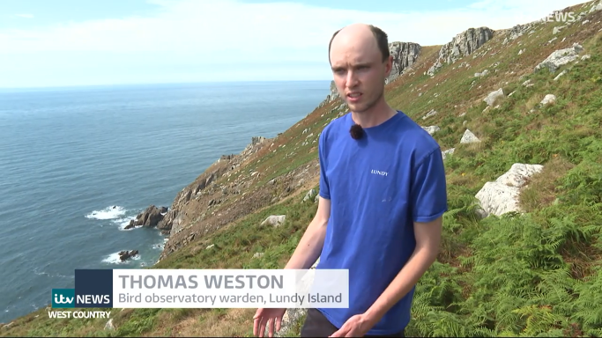 Me! Talking about Manx Shearwaters...
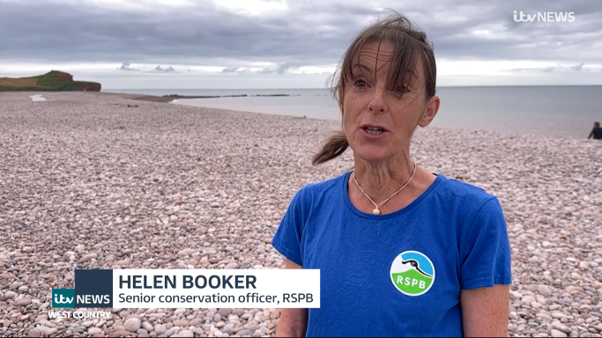 Helen talking from an RSPB perspective! A big success for our seabirds :)
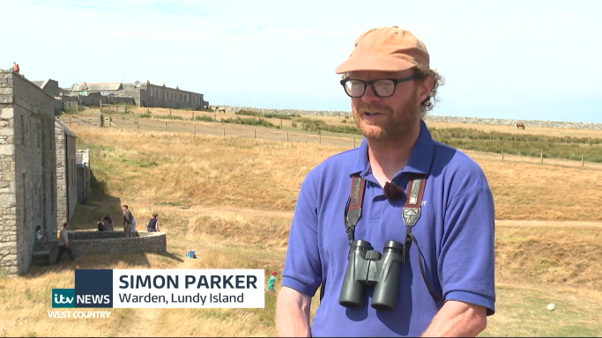 Simon talking about the positive affects of the rat eradication for the island.