


Bird Sightings
08/08/2026 – Birders Week Day 8
By Thomas Weston
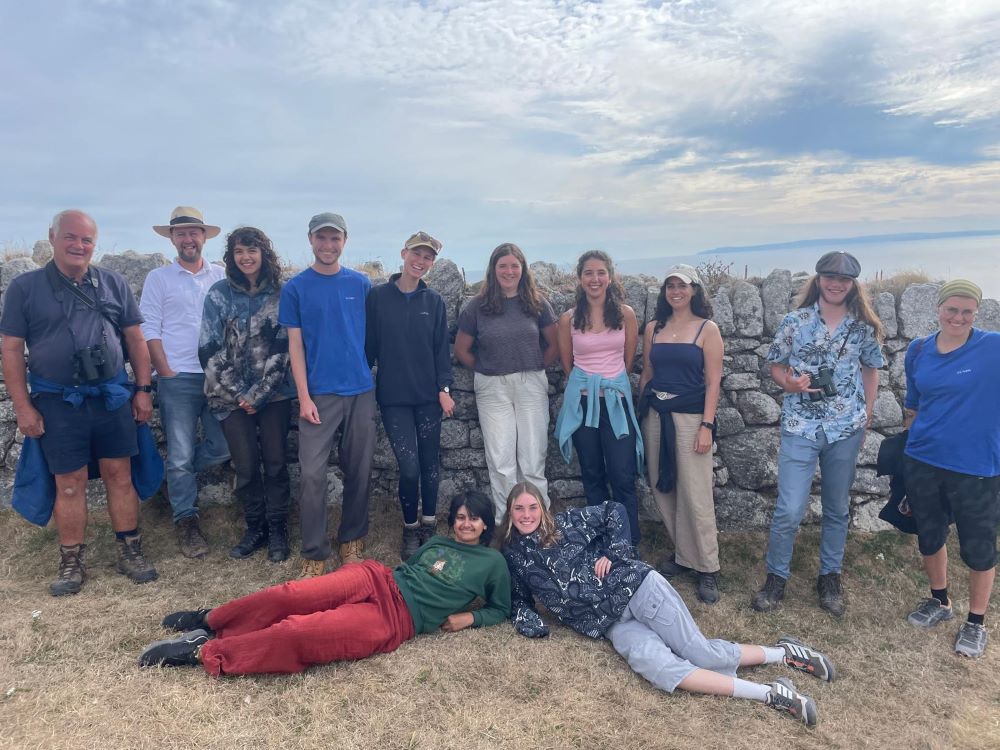 Birders Week participants by Eleanor Harris
The final day of the Birders Week 2026
Eleanor and I were on Housekeeping, with most of the conservation team doing other island bits.
The Melodious Warbler was seen for the second day but only by Greg on census.
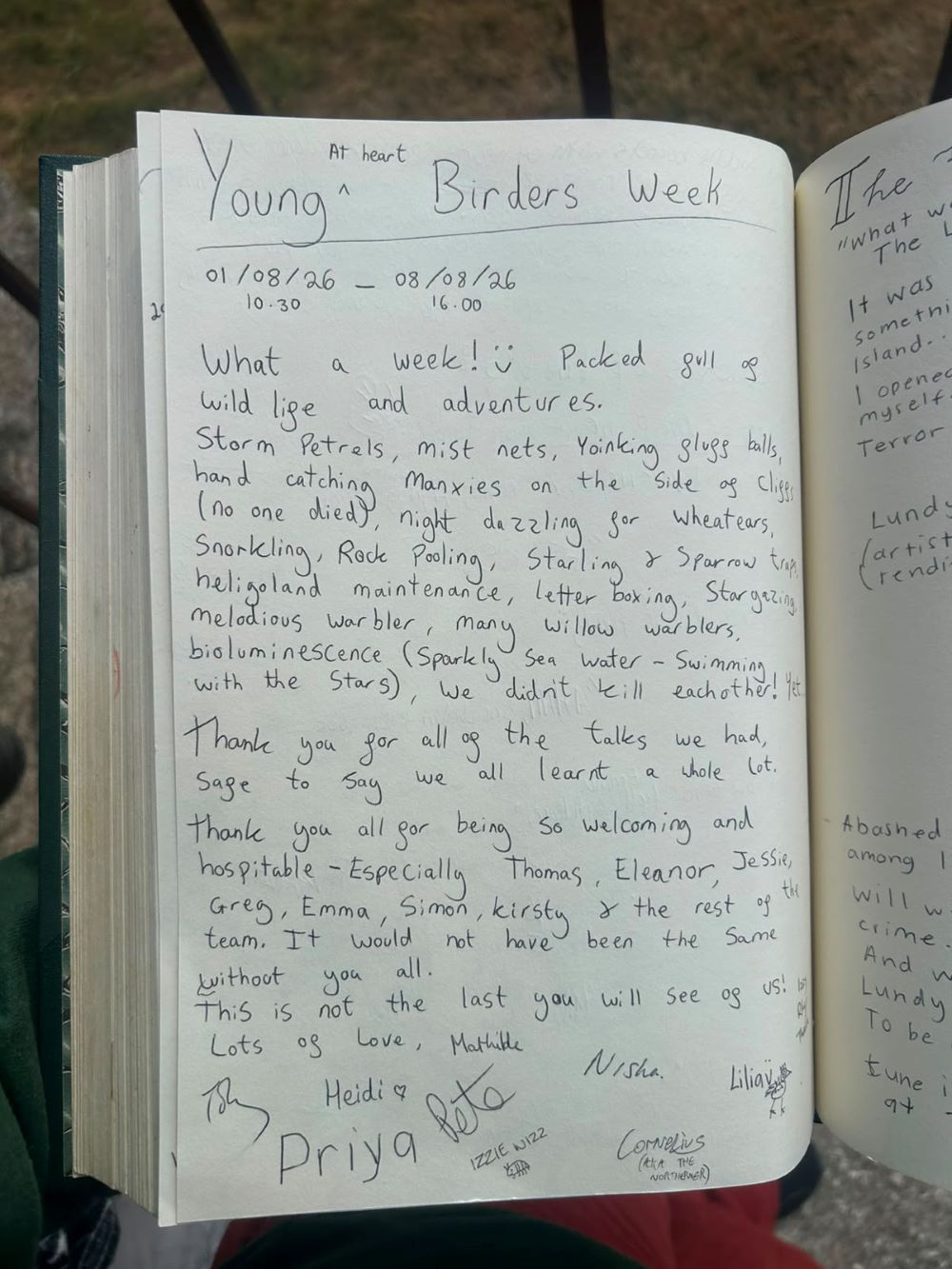 Birders Week entry into the Barn logbook
The team took a lovely photo with the remaining Birders Week participants, and we took great joy reading the stories in the accommodation log which is for all to see too!
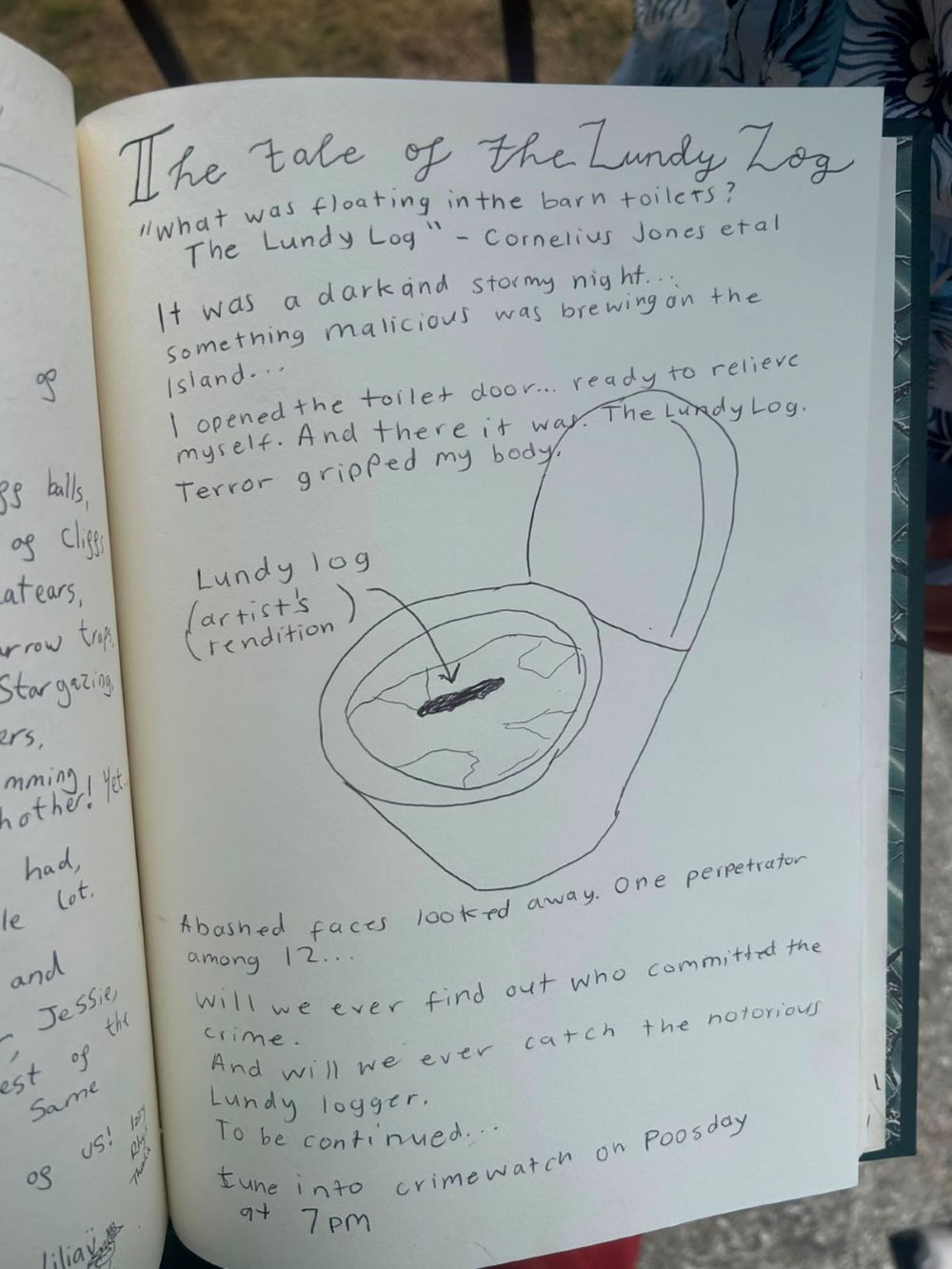 Birders Week log
The second story was rather entertaining to be honest.
And a post-work walk to try and find my water bottle found Eleanor and I relocating the Reed Warbler at the bottom of Millcombe in the pond looking for some food.
07/08/2026 – Birders Week Day 7
By Thomas Weston
Another early morning for the Birders Week brigade. This time the wind was yet again NW and from observations on Ventusky, it was due to a high-pressure system coming up from the Bay of Biscay. The past few days the high pressure was quite low and so most overshoots as a result were arriving in the extreme SW of the UK, including a notable sighting of a Melodious Warbler in Cornwall. With this in mind, and the high-pressure not situated so any wind was coming off the north coast of France, out into the Atlantic and then hitting into Lundy. Some rain, producing a stunning rainbow to the west of the island was noteworthy. Having not had rain for a while, it was looking like an interesting day! Even if the rain did not hit the island as such, its close presence was good enough.
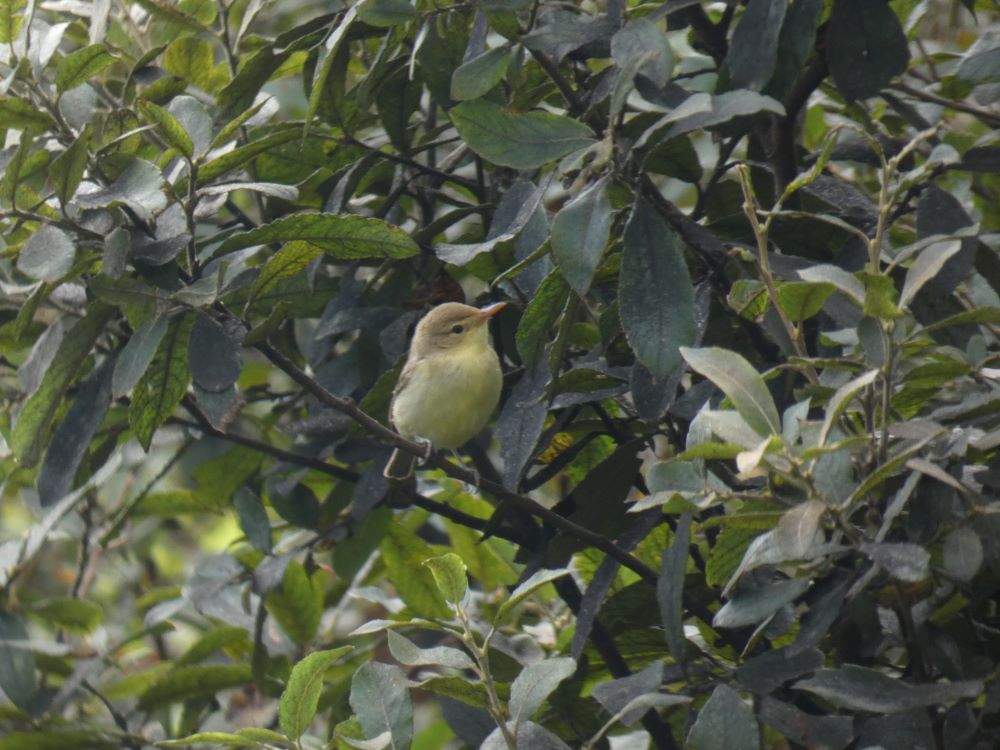 Melodious Warbler in Millcombe by ThomasWeston
However, Millcombe mist netting started at 6am and was another Willow Warbler migration day. Now these days do not start busy. We do not get down there and the rush is on; it takes time to emerge. However, yet again, between 7am and 8am, a rush of Willow Warblers came down and up the valley feeding in the bushes. Meanwhile, Greg was on census and ‘checked in’ with the ringing. It was going well and he continued having quite a quiet one today. Until Greg reached Smelly Gully where he found a Melodious Warbler in the bushes with the Willow Warblers. The bird was super elusive and spent most time hanging around at the bottom of a bush. Fresh in and a bit tired, it spent the time feeding up and gaining energy. Greg continued census and found a nice range of species on the route. The bird was actively feeding and as do most warblers, the bird gained more energy and headed up the valley where it ended up in one of the nets. As a result, some of the Birders Week participants got to see a new species, many had never seen a rare bird in the hand, and some had seen the species a while ago.
Around 11am we packed up in Millcombe whereby the ringing totals included 1 new Linnet, 1 new Stonechat, 2 new Sedge Warblers, a new Blackcap, the Melodious, a new Blackbird, a retrap House Sparrow, a new and retrap Wren, a new Chiffchaff, and 51 Willow Warblers too. Everyone was a bit tired today and it was the last full day for the Birders Week. Some of the team headed along the east coast looking for birds; another checked Pondsbury and found a Red-veined and a Common Darter hawking over the lake; whilst others took it steady.
The evening talks were seabird talks focusing on seabird research on the island. I am grateful for the time and effort put into the talks this week, focusing on a broad range of subjects. I think the wealth of knowledge we have on the island has been summed up and this evening was no different. Emma this evening provided information on the breeding seabirds this year focusing on the productivity site data. It seems to have been a mixed year for the seabirds, with some doing well, others OK, and some quite poor! With most of the seabirds now gone, we hope that they can have a great overwinter period ahead of next year’s breeding season.
Log followed before an evening Wheatear dazzling session. We ended up seeing 6 different birds but due to the sky being so bright with stars, and many of our Wheatears already heading off on migration, the birds seen were all super jumpy and quite flighty. Migration ready!
06/08/2026 – Birders Week Day 6
By Thomas Weston
With the wind blowing from the NW again, it was a good day to go down to the valley and undertake some Millcombe ringing. Moths by Greg was not undertaken today due to the wind, so the team set up base and opened a few of the nets in hope for some migrant warblers.
It was not long before the wave of Willow Warblers came through between 7-8am. The wave was mostly downslope from the Ugly and out to the SE. A few, presumably birds that did not have enough energy supplies were caught as they headed back up the valley, but the majority were downslope. An impressive and phenomenal migration moment in the day resulting in 50 birds being caught and ringed. There was a good backup cast of 1 new and 1 retrap Chiffchaff, a new Wren, 1 new and 1 retrap Goldfinch, 2 new Sedge Warblers, a new juvenile Dunnock, 2 new Blackbirds, and a retrap House Sparrow. Due to the lack of moth trapping this morning, Simon undertook some bushcraft activities including making rope out of stinging nettles! And teaching the Birders Week team how to successfully undertake this process without being stung.
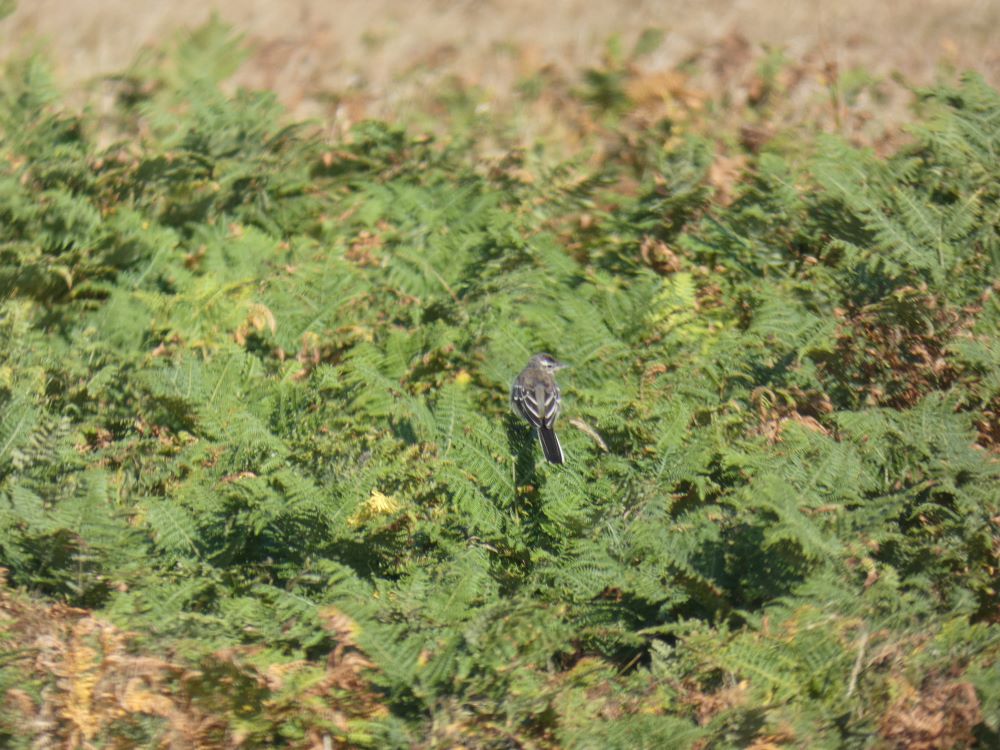 Channel Wagtail at Rocket Pole Pond by ThomasWeston
I undertook census whilst the ringers were in charge of Millcombe. In addition to above, there were 17 more Willow Warblers, single Spotted Flycatcher, 2 Whitethroats, 2 Sedge Warblers, 42 Wheatears showing an even larger arrival than yesterday, a single Sand Martin, a Rock Pipit in the Campsite, the Channel Wagtail male and female in Barton Field, whilst their fledged chick was by Rocket Pole Pond, 13 Swallows and a flyover Curlew. This juvenile type bird was heard way north of Quarter Wall, at a guess nearer Tibbetts. The call was distinctive and the bird casually headed south with a Herring Gull, bypassing the Airfield, Stoneycroft and heading SE before being lost to view. It was not the only Curlew seen today, with what was believed to be an adult female type with a longer bill seen around Rat Island this afternoon/evening.
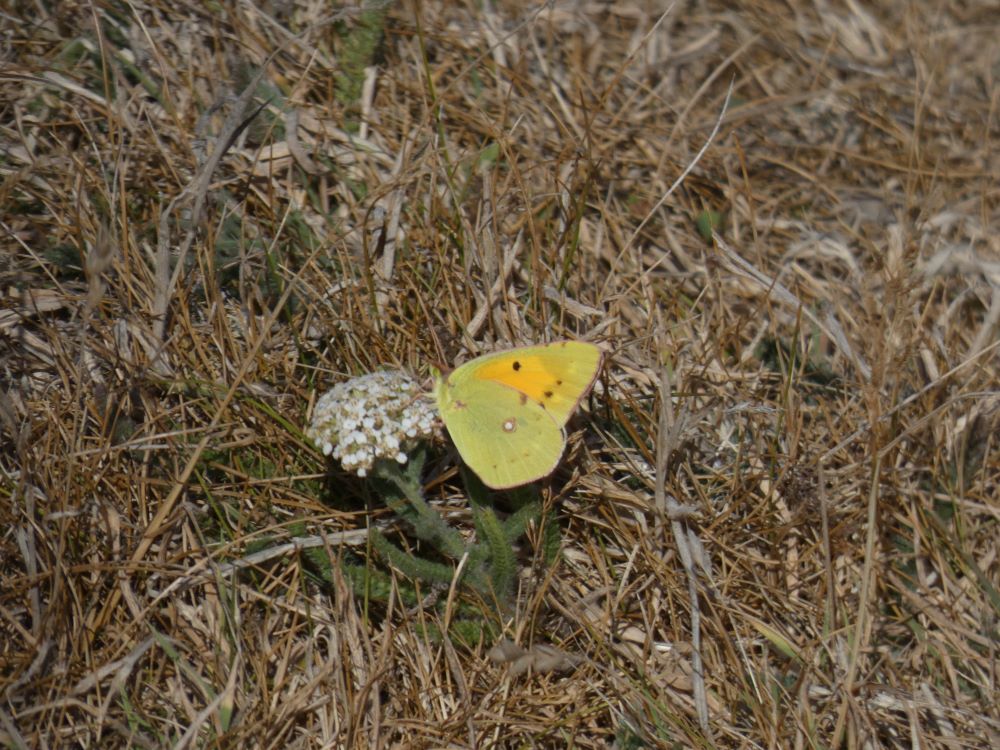 Clouded Yellow Butterfly at Benjis by ThomasWeston
Another Conservation Team task, as well as the boat day routine was the routine Butterfly Survey along the east coast. Today, Jessie and Kirsty undertook the survey and saw good numbers of butterflies including an increase in Clouded Yellow, Painted Lady, Small Heath, Common Blue, Red Admiral, two species of whites and a Grayling spotted by one of the Birders Week participants.
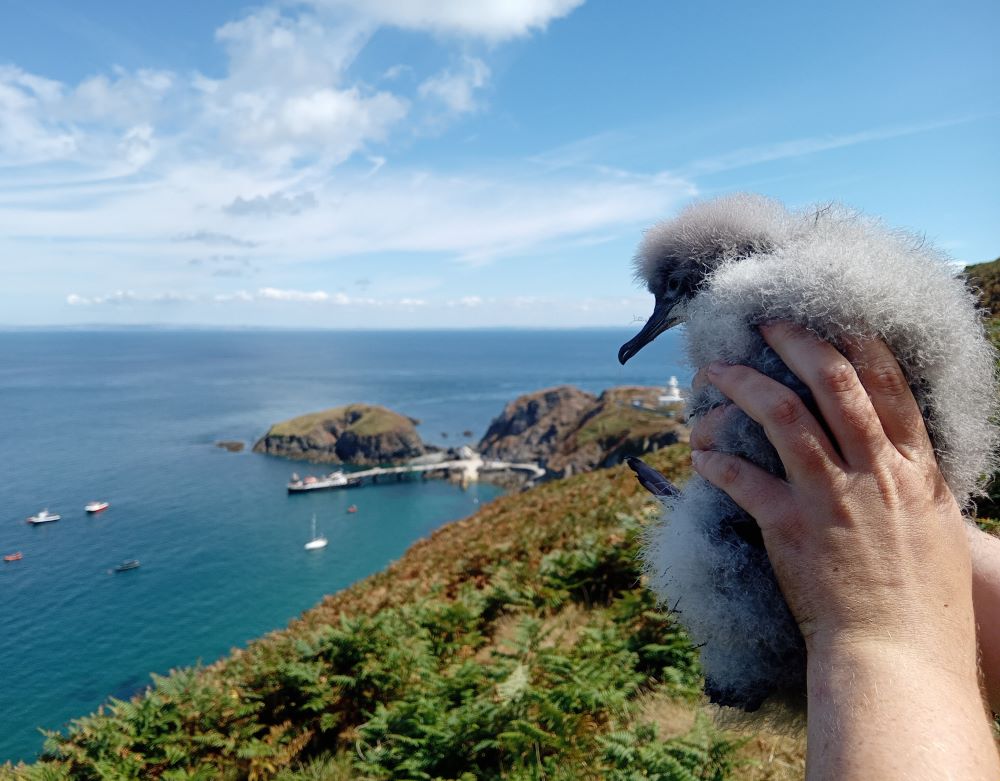 Manx Shearwater Chick by Mathilde
After some much needed lunch break, we decided to check an area of cliffs along the east coast where we do not tend to go night catching. Without raising too many expectations, we started to check some Manx Shearwater burrows and quickly started to find chicks! Based on our productivity boxes, we knew there should be some big chicks around, and it was great to see the birds in the natural burrows at the same, or similar size to those we are monitoring. Even with a small sample of 6 chicks found, it shows our birds can be representative for those around the island’s colonies. We also caught two adults in the burrows. More amazingly, one was ringed in September 2019 as an adult. We believe this bird to have been misaged, as an adult in September is quite uncommon, and the proportion of juveniles on the wing at that time is rather high!
At the end of the short session, we said goodbye to three participants who were heading off to jobs and work. The rest of the team headed back for some food before I gave a talk about Blackcap and Chiffchaff moult strategies, ahead of the autumn bonanza, as well as undertaking wildlife log ahead of an evening of nothing planned! Bliss.
05/07/2026 – Birders Week Day 5
By Thomas Weston
A Wednesday! And a non-travel day. The wind was still quite strong and now coming from the North West. It is always a bit hit and miss whether Millcombe is sheltered or not but it seemed today the weather was calm enough for mist netting in the valley, despite 25-30mph winds at the top. Being on the edge of high pressure means the birds are moving at super speeds and using the nice sunny and warm weather to move. Despite a calm valley, we gave mist netting a miss as people were rather tired from all the nocturnal adventures.
 Help on census
I undertook census with Birders Week Peter and it was a real success. Noticeably, there was a fall of a few common migrants with 34 Willow Warblers, 2 Whitethroats, single Sedge Warbler, and a bunch of ‘new in’ Wheatears with many going around in flocks of 5-8 and totalling 43. The Wheatears were great, and to have completed some night catching for them, it was ideal to see a couple of metal-ringed only ones in amongst the loose feeding flocks around the south. The funky juvenile Channel Wagtail who has been hanging around Rocket Pole Pond for a little now, was also seen. This weird and wacky hybrid is the unringed individual out of the two chicks fledged this year, and it is great that it is still going strong.
Due to my Tavern shift this afternoon, we set the Birders a challenge to undertake some letterboxing and to fully immerse themselves into Lundy life: either spotting dragonflies at Pondsbury, birding the North coast, running the Heligoland trap, opening some mist nets if they had the correct permits, and generally having fun and socialising together. This led to a Sedge Warbler being caught and ringed in the Heligoland trap – a fat score of either 6 or 7 led to a lot of laughs by the team. Thus, a generational thing that Lundy really has not caught up with yet! And Greg found a passing Minke Whale from South West Point which was very nice and missed by many. The Birders Week team undertook some letterboxing, swimming and opened some Millcombe nets, catching a few Willow Warblers, a Stonechat, Linnet, and a couple of retrap House Sparrows too.
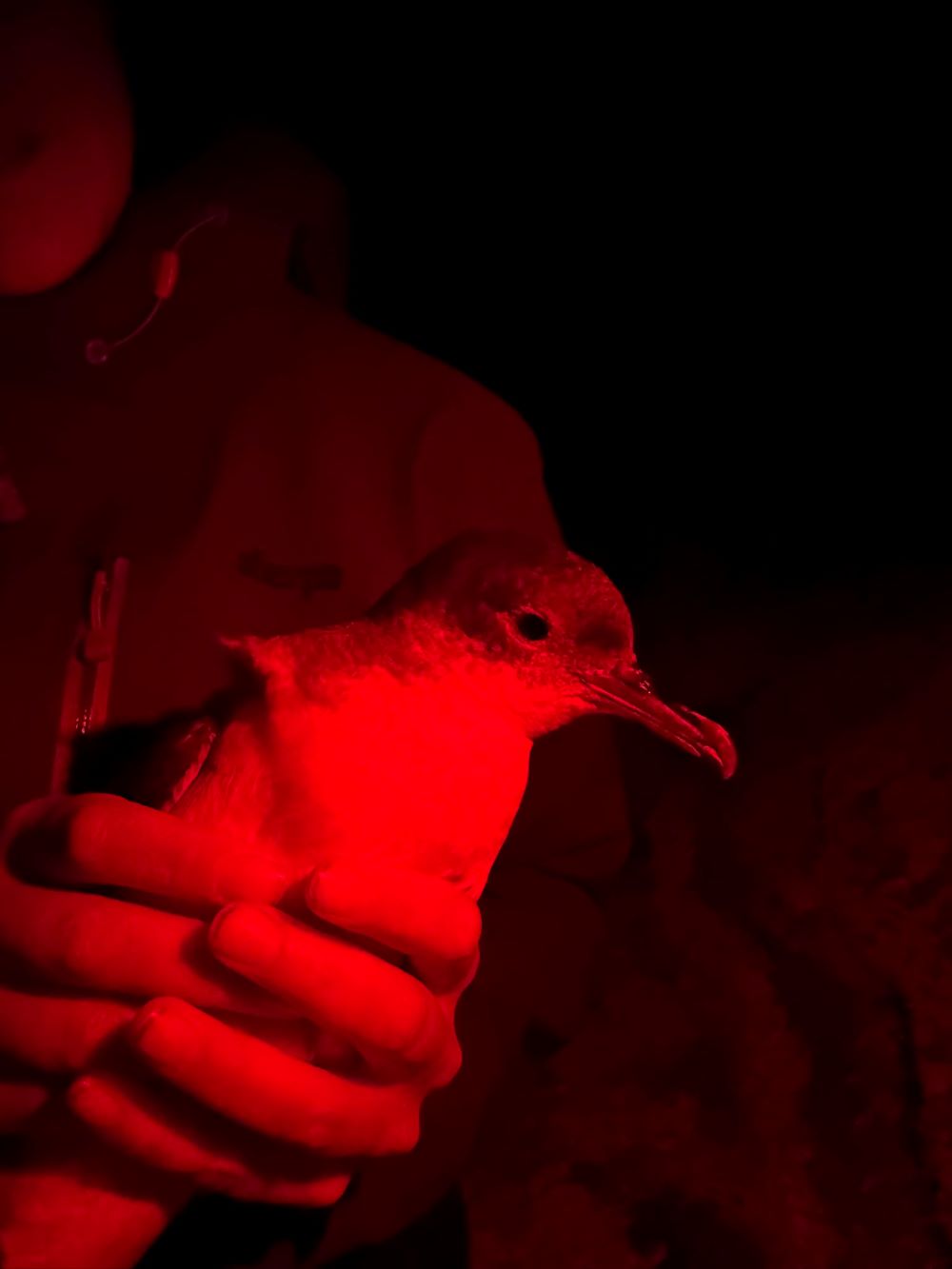 Manx Shearwater whilst out nightcatching by Mathile
I worked the Tavern in the afternoon/evening whilst Jessie gave a great talk about some of the marine life in the local water around Lundy. After the Tavern, we decided to go Manx Shearwater ringing and caught about 16 birds before midnight which was a success. The oldest bird had been ringed roughly 7 years ago, and the team got to see the adults of this species up close and personal for the first time on the trip. Back by 00:30 tomorrow!