


Bird Sightings
24/08/2026- A switch to the East.
Greg Lee
After yesterday’s migration event, it wasn’t surprising that things were generally a bit quieter on the island today. A new weather-system has started to appear today with the winds switching around to the east, certainly it will bring some drift migrants to the British Isles but will any stray as far west as Lundy? We’ll certainly be trying our very best here!
A good sign was another increase of Pied Flycatchers, with at least four on my travels around the island today. Two Goldcrests were around the Pines in Millcombe, presumably having used the easterly winds to push them across the Bristol Channel. A Tree Pipit over the Village was also a nice first species in the book for census, we’ve had a few buzzing individuals visit the island over the past week. After such as big fall yesterday, just five Willow Warblers and three Spotted Flycatchers showed a reduction in migrant numbers after the clear conditions overnight.
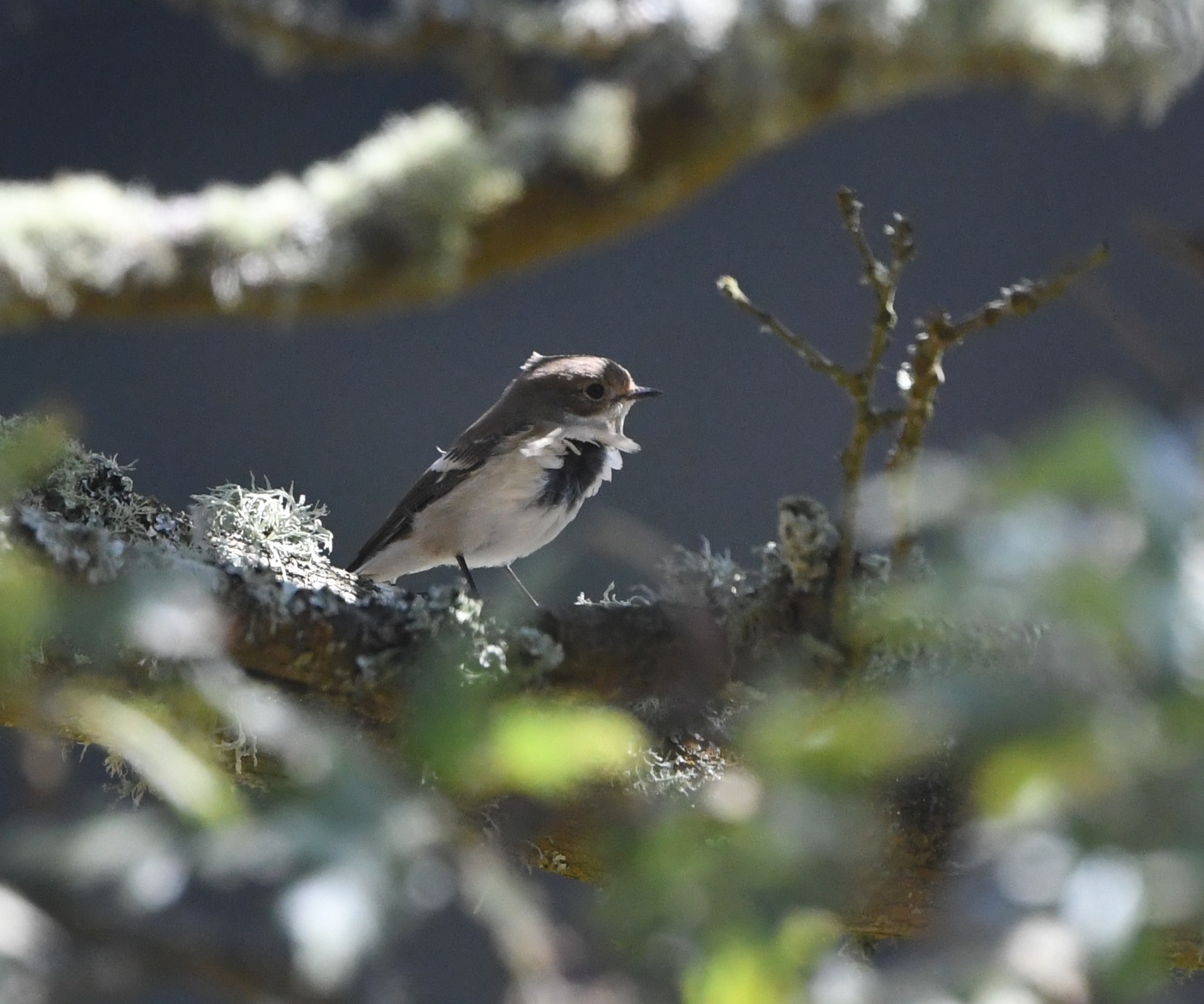 Pied Flycatcher by G.Lee
Afterwards, I met up with Kirsty who showed me the Seal Pup transect, which I will be covering whilst she is off the island. Covering the various viewpoints around the South End of the island. Despite the fresh easterly and very choppy waves coming in, it was pleasing to see a couple of healthy looking pups around the island, one of which was enjoying swimming practice in a sheltered pool. Lets hope many more pups appear over the coming weeks!
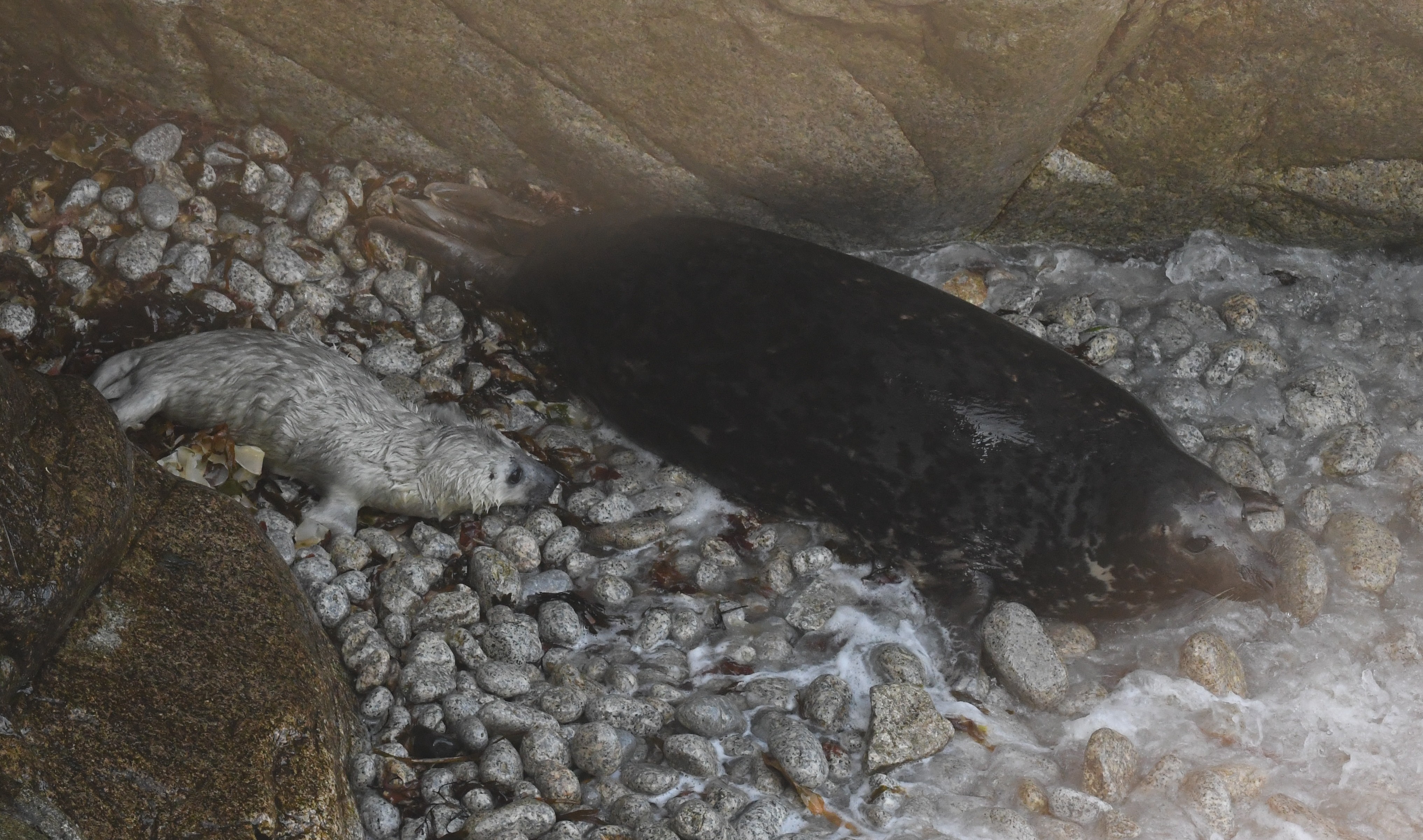 Seal pup and mother by G.Lee
It was a variety of office jobs in the afternoon, including writing up a description of the Western Bonelli’s Warbler, data entry and catching up with various blog pieces. Thomas and Eleanor also had some good sightings across the island today with a very showy Dunlin on Quarter Wall Pond, four Snipe south over Quarter Wall and two Pied Flycatchers further north up the island.
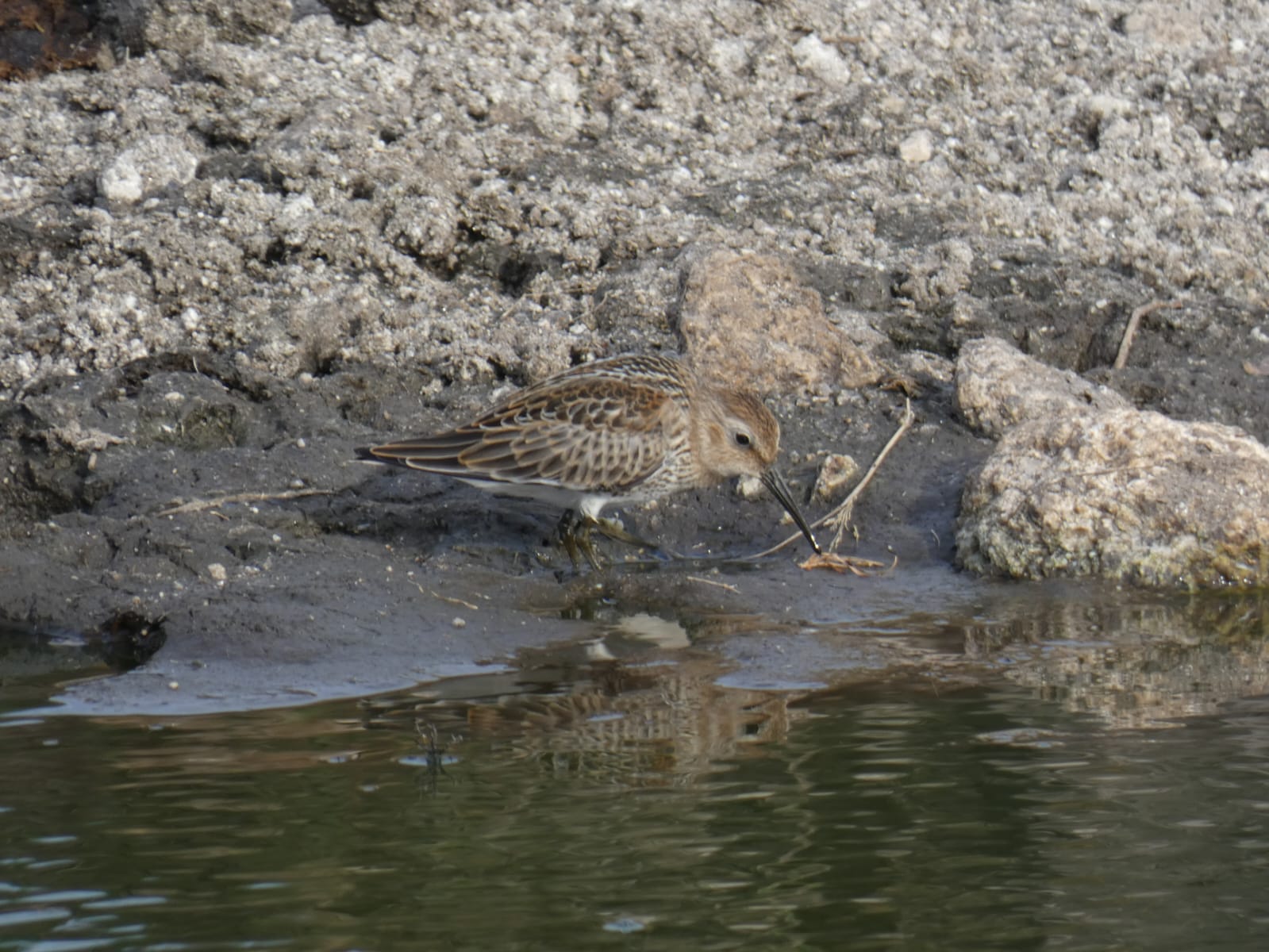 Dunlin by T.Weston
25/08/26 - Meet the Pups!
By Jessie Dermody
My first job of the day was a pup check! There were strong easterly winds last night, so I was worried that there would be a lot of dead pups on the beaches. Thankfully, I did not see any dead pups, only live ones! We are up to seven pups now, spread out on beaches around the island. Asrai was the first pup found, followed by Dunnie, Emer, Fext and Golem. The most recent two appeared last night on the landing bay beach - one is named Heffalump, and the other one is yet to be named. We are worried about their chances of survival, with all the disturbance from traffic on the road. If they are disturbed often, their mothers may be too afraid to return to the beach to feed them. All we can do is try to minimise disturbance and hope for the best! We have closed the beach, and put up signs explaining best practise for veiwing and photographing the pups from a distance for visitors. Both pups are extremely cute.
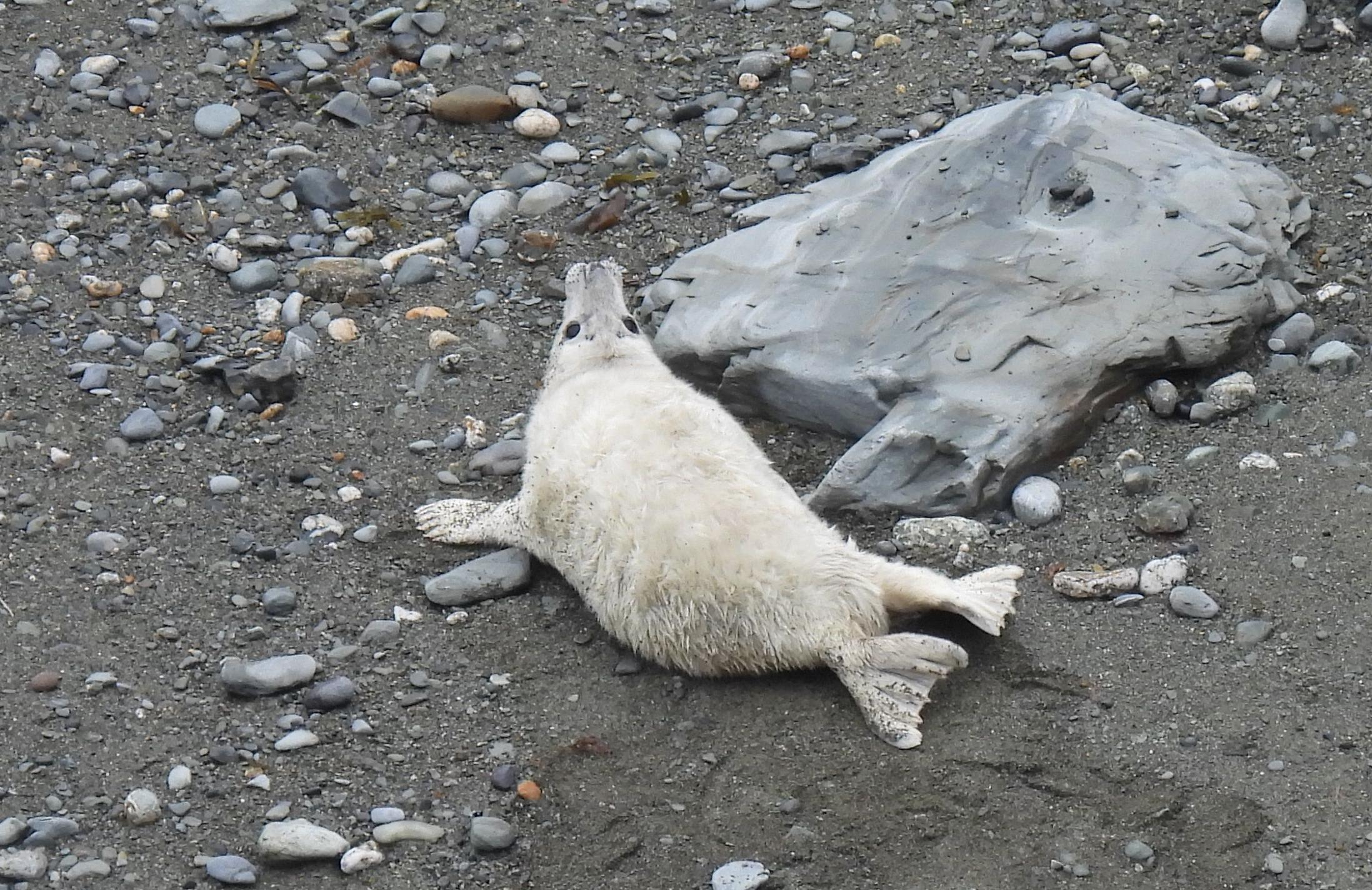 Baby Heffalump - photo by Jessie Dermody
After pup check, I had a butterfly survey to do! On my way to the start of the survey route, I spotted a Pied Flycatcher! This was very exciting for me - I'm not much of a birder, especially not for terrestrial birds. I was very happy to see a new species without anyone having to point it out. There were 4 Pied Flycatchers seen across the island today. It was a grey and windy day, so I didn't think there would be many butterflies around. I was proven correct, only recording one Painted Lady on the whole survey route. I did see 3 Small Whites, 2 Red Admirals and another Painted Lady outside of the survey route, but unfortunately these do not count.
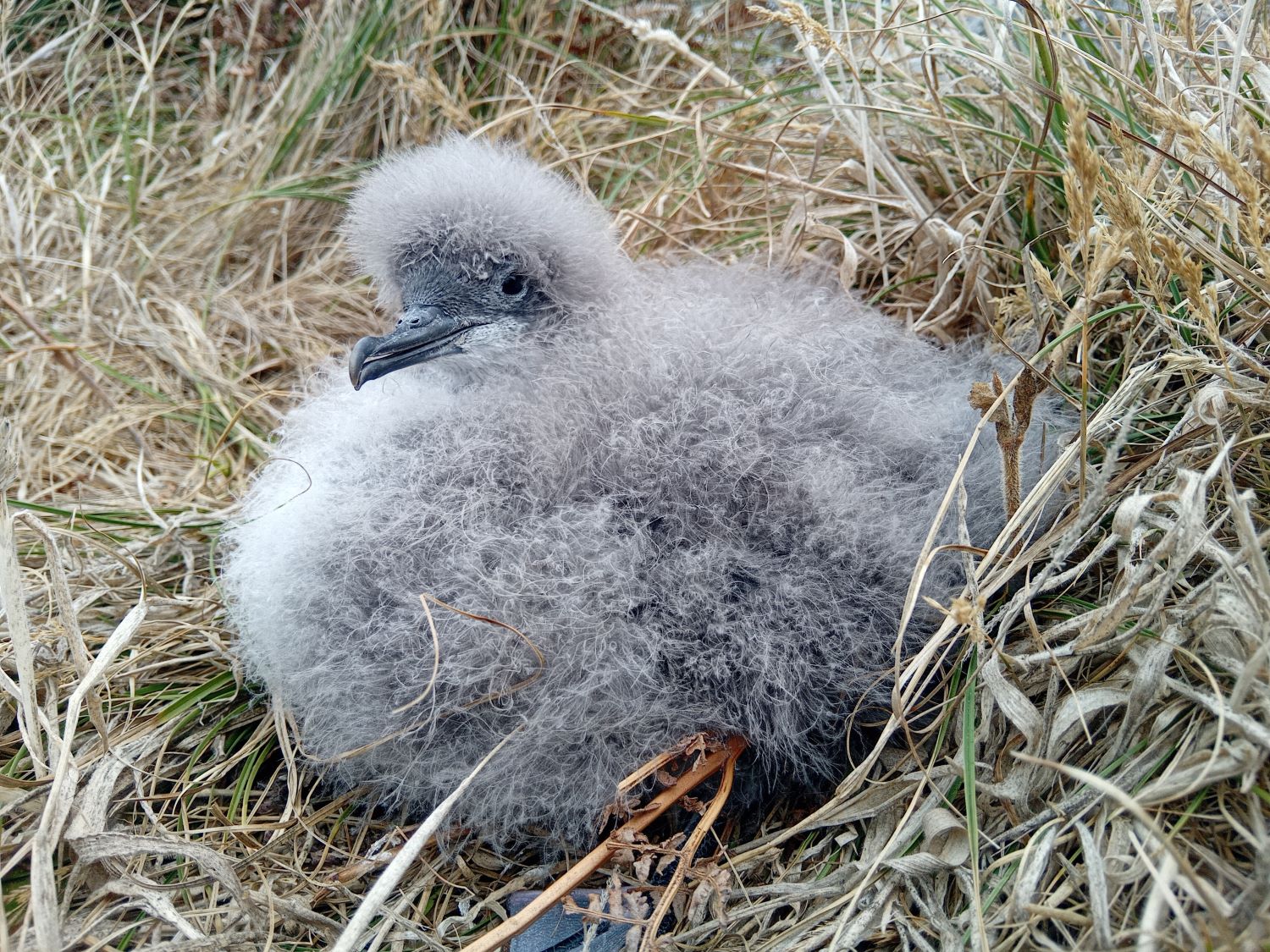 Manx Shearwater from the artificial nest boxes by ThomasWeston
The rest of my day was to be spent in the office, identifying species from our rockpool surveys earlier in the month. One rockpool we surveyed had a total of 51 different species in it! I ran into Thomas on his way out to check if any of the Manx Shearwater chicks in from the nest boxes had fledged. Three of them had! The youngest of the box chicks (my favourite), is still looking very fluffy, but the others have grown a lot of their adult feathers.
On census this morning, Greg saw the first 2 Whinchat of autumn, a Dunlin and a Great Spotted Woodpecker.
23/08/2026 - Migration!
By Thomas Weston
 Sunrise by Thomas Weston
A very calm and relaxing morning with a slight chill in the air was enough to head down to Millcombe.
I opened a couple of nets and sat watching the sea. There was no movement at all to begin, our Manx Shearwaters have mostly gone, but some still return to feed their chicks. After a little while, the first two Gannets started to move, followed by another couple and a few more after that. Watching these birds I noted a dark, quick flying bird heading North low over the water. It was not one our local feeding Shags but a dark phase Arctic Skua heading north along the island. What a nice surprise having not seen one this spring at all. The bird was not in pursuit but presumably heading out into the Channel to find some other seabirds to mob.
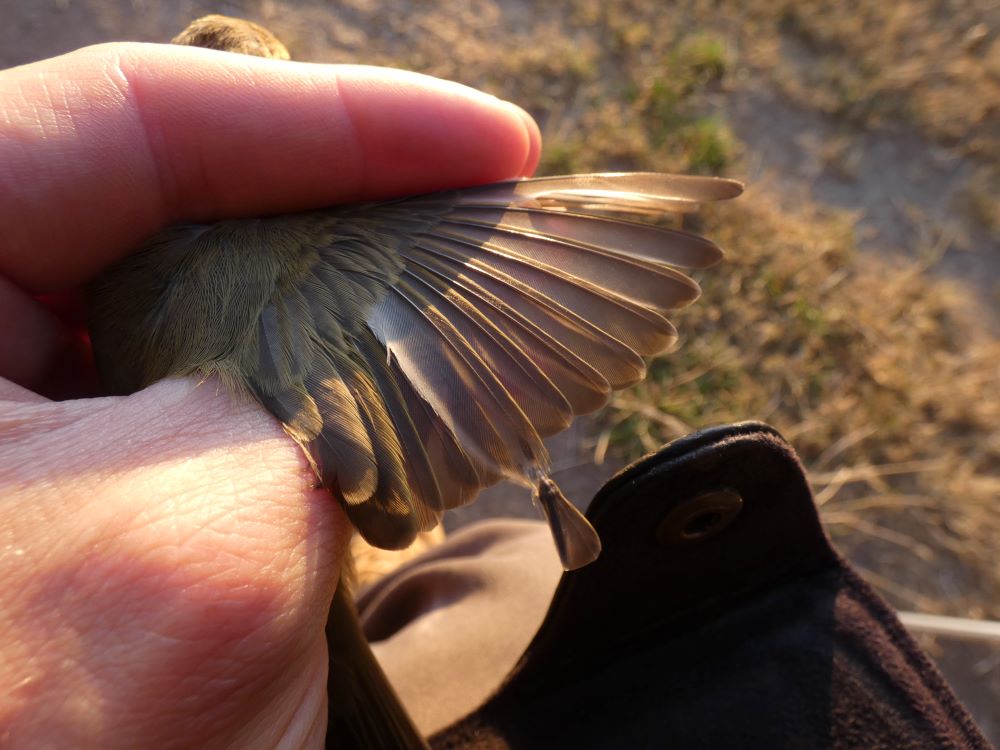 A wing extention on a Willow Warbler - never seen that! Thomas Weston
In the valley a couple of Tree Pipits dropped out the sky as the sun rose, being a nocturnal migrant this was probably a sign to stop and fatten up for the next hop. A Yellow Wagtail did the same and the Willow Warblers started to move. In the nets, a couple of new Robins were of note. Fully completed their post-juvenile moult, it could be said they were born on the island or elsewhere - you never know! There was a very 'fat' Blackcap caught, with a small number of Willow Warblers to add to the tally.
The arrival of the mothtrappers was very nice, they caught over 100 moths of which there were a few migrants in there too! They also reported a Goldcrest which was almost certainly a new migrant, as it was at Old Light.
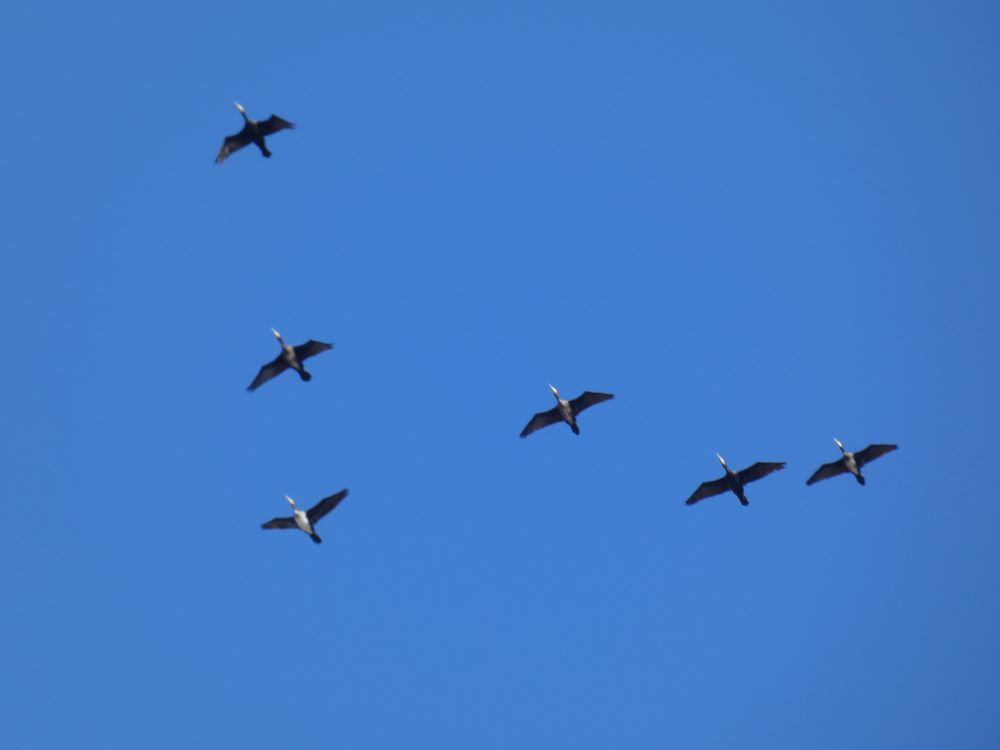 Cormorants over Millcombe by ThomasWeston
In the Valley, a flock of 4 Spotted Flycatchers passed through at speed before heading off. I ended up catching one and the others passed through at speed. As I started to close the nets, a flock of 6 Cormorants headed South at hieght. Walking on up the Millcombe drive there were two more Spotted Flyctachers, followed by another couple in Smelly Gully, and a flock of 8 at Barton Field. At the top of the valley, it seemed there was a phenomenal migration day going on as the sounds of a Bunting species flying over was in fact a Ortolan Bunting. The bird, seem by myself and visiting ringer Sam was a medium sized Bunting, the beige, pinkish belly and distinct facial markings, plus pretty brown wings, with the accompanying call was all great identification features.
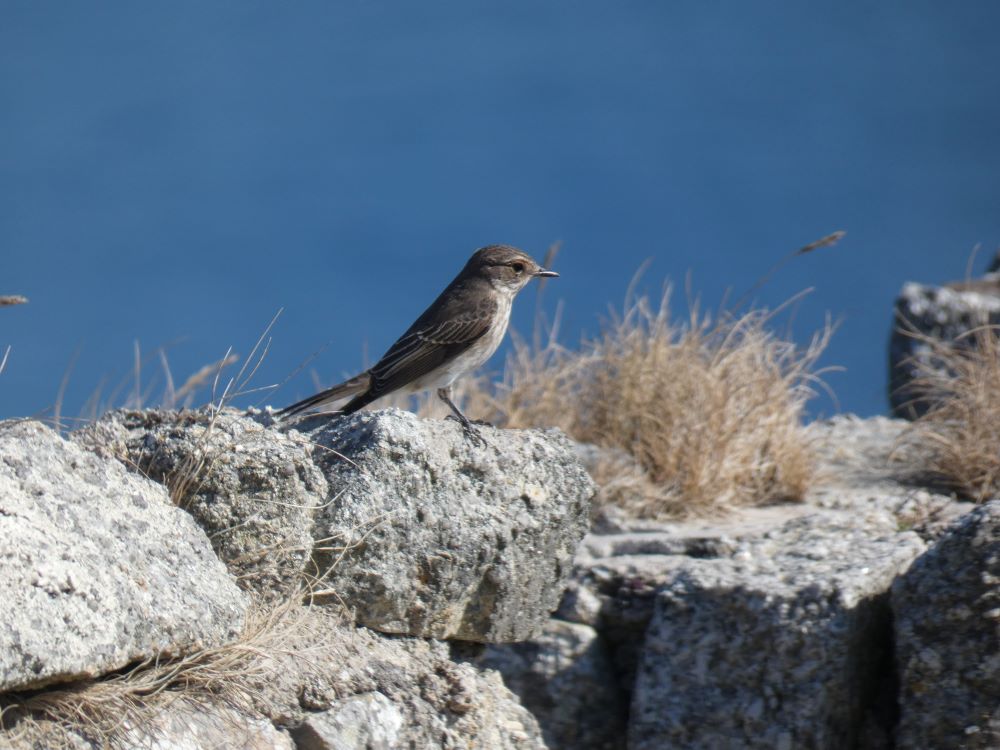 Spotted Flycatcher in Millcombe Thomas Weston
On a mission to relocate the bird, it seemed to fly towards Benjamin's Chair area, I stumbled across another couple of Spotted Flycatchers and a nice pulse of Sand Martins, House Martins, and Swallows. In addition, Greg had a Pied Flycatcher, Ringed Plover, Cuckoo, Sedge Warbler, more Spot Flys, and the first Redstart of the autumn.
21/08/2026 - Beetle Hunting
By Kirsty Cox
Today was very much a day of two halves. The first half of the day was spent in the office catching up on seal admin tasks. Each time a seal population survey is carried out all the photographs taken of hauled out seals are put into a powerpoint ‘album’ and each photo is checked against an online database and our own Lundy catalogue to look for matches in fur patterns. Finding a match means we can start to put together a ‘history’ for the seal, plotting their movements and pupping locations. The photos I was processing this morning were taken on a survey of the East Coast earlier in the week. There are over 60 photos of seals to look through which will take some time but I have already matched a seal to our Lundy catalogue who is also known to surveyors in West Cornwall so that’s an exciting find. And I also matched a tagged seal who was rehabbed at West Hatch and released in 2023 - it’s always wonderful to spot a tagged seal as it proves that rescue, rehab and release works!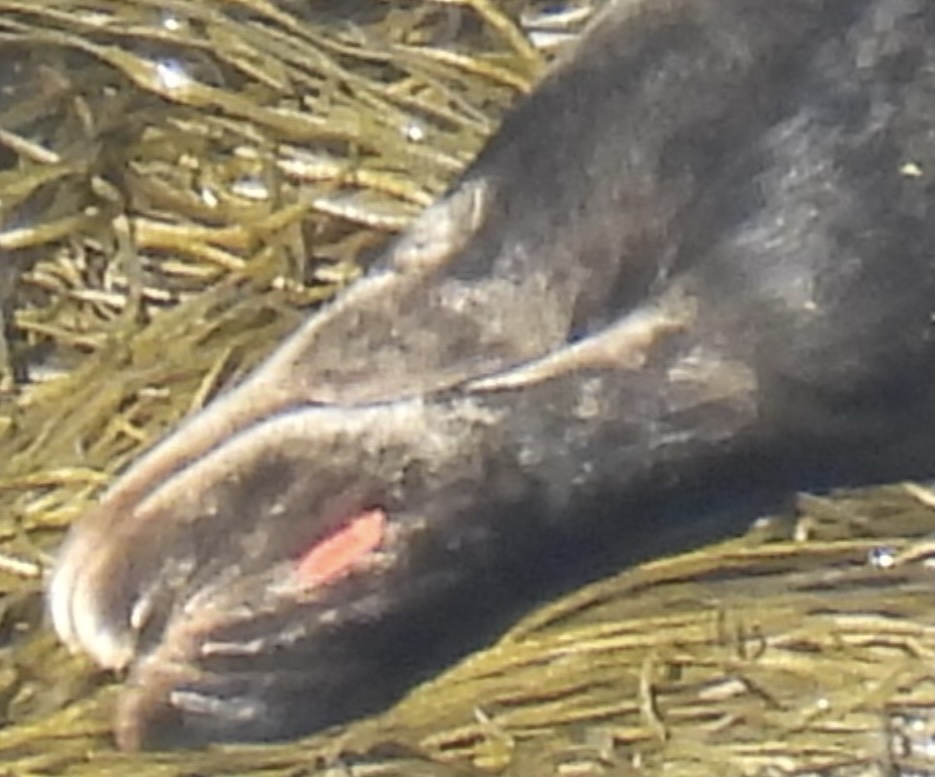 Seal Tag by Kirsty Cox
After lunch I spent some time on recycling duty, a very necessary part of Lundy life. The recycling from all the holiday properties on the island has to be sorted before it can be shipped off so it is a big job during the summer season. We are always very grateful for visitors who take the time to wash out and sort their recycling from their rubbish as it makes the job much easier and definitely more pleasant!
Then it was time for some outdoor survey time. Jessie and I were on the hunt for Lundy Cabbage Flea Beetles. These beautiful little bronze coloured beetles live and feed solely on the Lundy Cabbage and so are endemic to the island. We survey cabbage plants in a particular area once a month to see how many beetles we can find and today we had a good result of 8 beetles!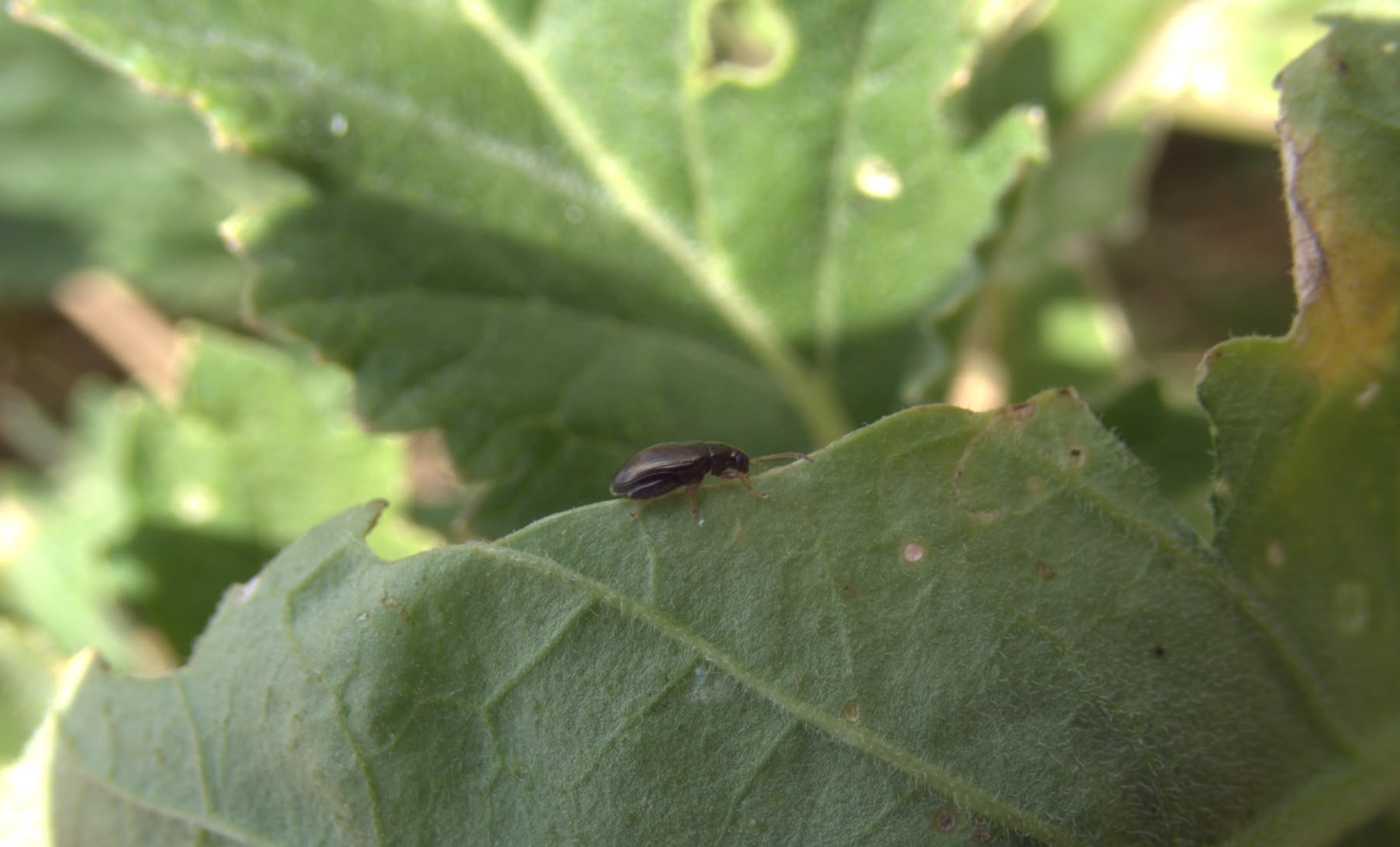 Lundy Cabbage Flea Beetle by Jessie Dermody
Once the beetles were surveyed, it was time for the seals. Pupping season has started on Lundy and so most days now I carry out a ‘Pup Check’. This entails walking a particular route and looking for pups on all the beaches. If any pups are spotted then photos are taken of the pup and the mother for ID purposes and we then monitor the development of the pups as they moult and are weaned.
It was a busy day for bird sightings across the island too. In the morning Greg saw a Ringed Plover and a Grasshopper Warbler on census, and Thomas, Eleanor and Tara ringed 12 Manx Shearwater chicks at the South end of the island. And in the afternoon, Thomas and Eleanor spent time watching a Spotted Redshank at Pondsbury and then spotted a Green Sandpiper at Quarter Wall Pond.
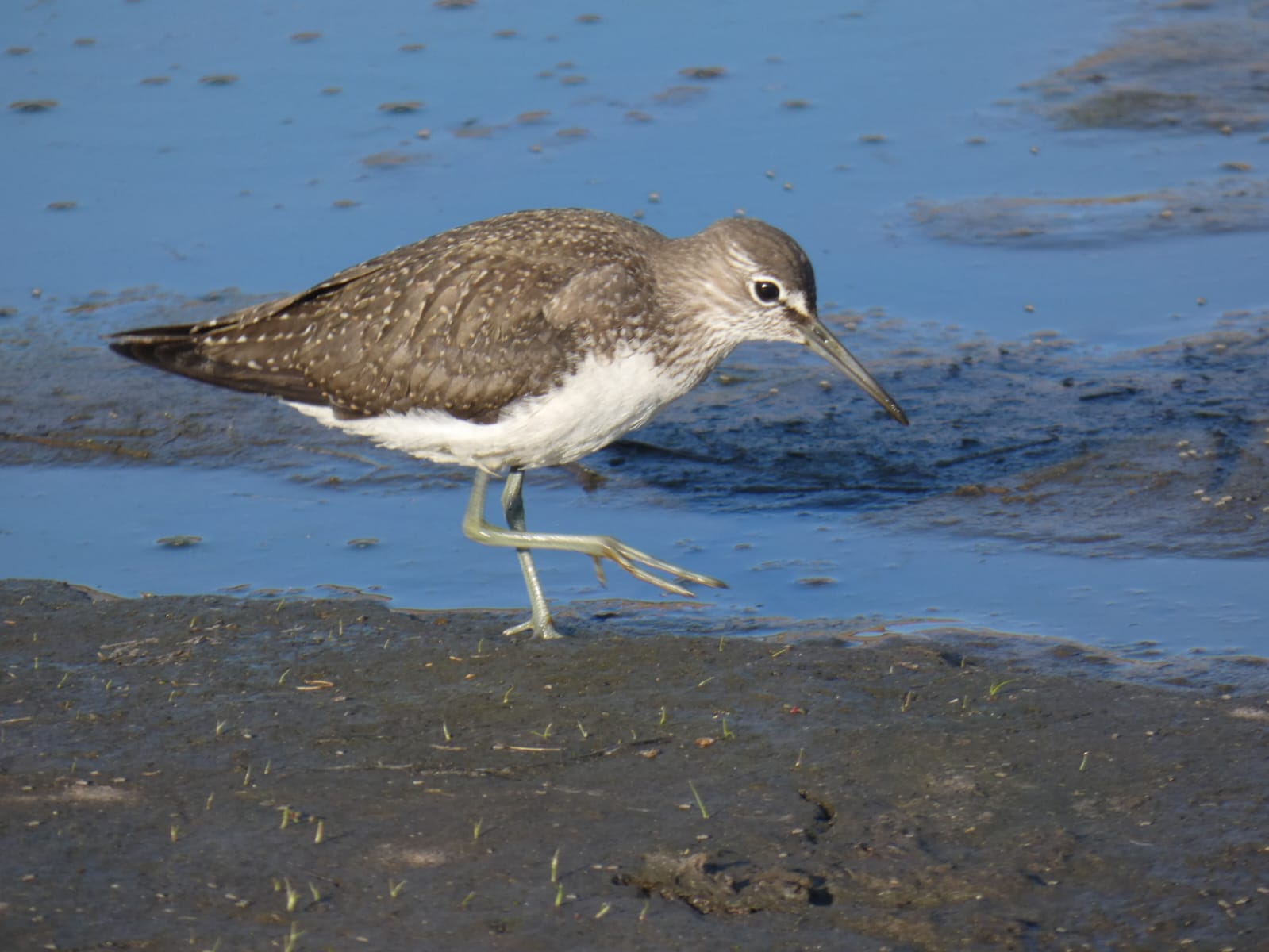 Green Sandpiper by Thomas Weston