


By Jane Sharkey
The Next Generation Discovers Lundy
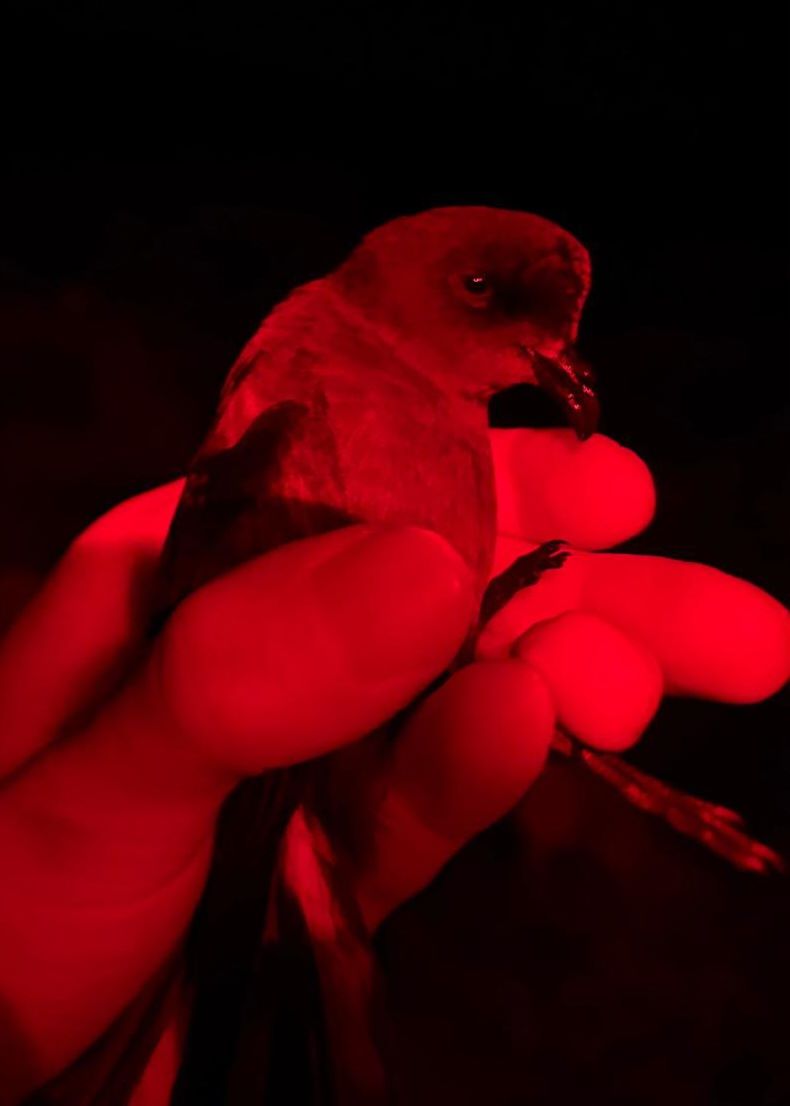 Storm Petrel ringing
It is well after dark when a group of young people make their way towards Lundy's Northern section. The walk takes about 50 minutes, guided only by the Marker stones on the side of the track and the occasional light of the Moon. They are heading out into the night to look for one of Lundy's most elusive seabirds: the Storm Petrel.
For Rhys, one of fourteen young people who came to Lundy this August, the experience was something he had been hoping for. He had heard of Storm Petrels before, but actually holding one in his hand was something else entirely.
For a week, these young birders and naturalists had the opportunity to step beyond the familiar and experience Lundy from a very different perspective.
The group, aged between 18 and 25, arrived on the island from different parts of the UK. They came from the Midlands, Kent, Dorset, London, North Wales, and Lancashire, amongst other places. None of them had ever met each other before arriving.
They had been invited to spend a week on Lundy from 1 to 8 August 2026 as part of a new initiative organised by the Lundy Bird Observatory and the Lundy Conservation Team. The aim was simple: to connect young people with Lundy, introduce the island and its conservation work to a new generation, and provide them with the opportunity to experience some of the work carried out by the wardens and volunteers.
Beyond the visitor experience
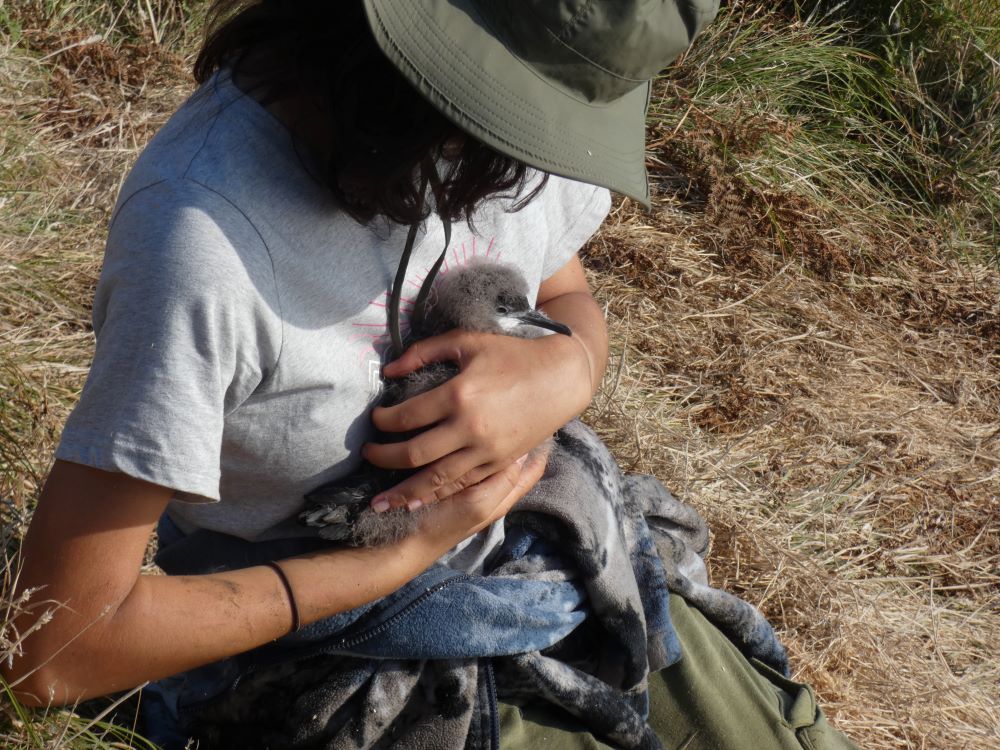 Checking the Manx Shearwater boxes by Thomas Weston
For many visitors, Lundy is a place to explore for a day or perhaps spend a few nights. For this group, the island and their home for the week became a living classroom.
Their week sometimes began early in the mornings and sometimes continued long after the sun had gone down. They participated in bird ringing in Millcombe and assisted in locating and ringing Wheatears. They checked the chicks in the artificial Manx Shearwater boxes on the cliffs and headed out at night to the North to ring Storm Petrels.
There were moth traps to inspect, rock pools to explore and seals to watch. The group also heard from volunteers involved in Lundy's conservation work, with evening talks covering subjects including the island's intertidal zones, the Lundy House Sparrow Project, Moth trapping, Ageing Autumn Chiffchaffs and Blackcap, and the work of the volunteer Seabird warden. There was even an additional talk by the Royal Society for the Protection of Birds (RSPB) on Storm Petrel research and tracking.
For the participants, it was an opportunity to see the practical side of conservation rather than simply reading about it.
Thomas Weston, Bird Observatory Warden on Lundy, spearheaded the programme. His vision was to introduce a new demographic to the island and give young people the opportunity to connect with Lundy and its wildlife. He also wanted the young people who took part, ‘to push themselves beyond their comfort zone '.
None of the participants knew one another before they arrived on the island; within a few days, they were exploring Lundy together, sharing experiences and learning from the Conservation Team and volunteers.
Their base for the week was The Barn, which provided a communal space where the group could cook, relax and make themselves at home. With its youth hostel feel, it became their base from which to explore an island that none of them had ever visited before.
Learning to look differently
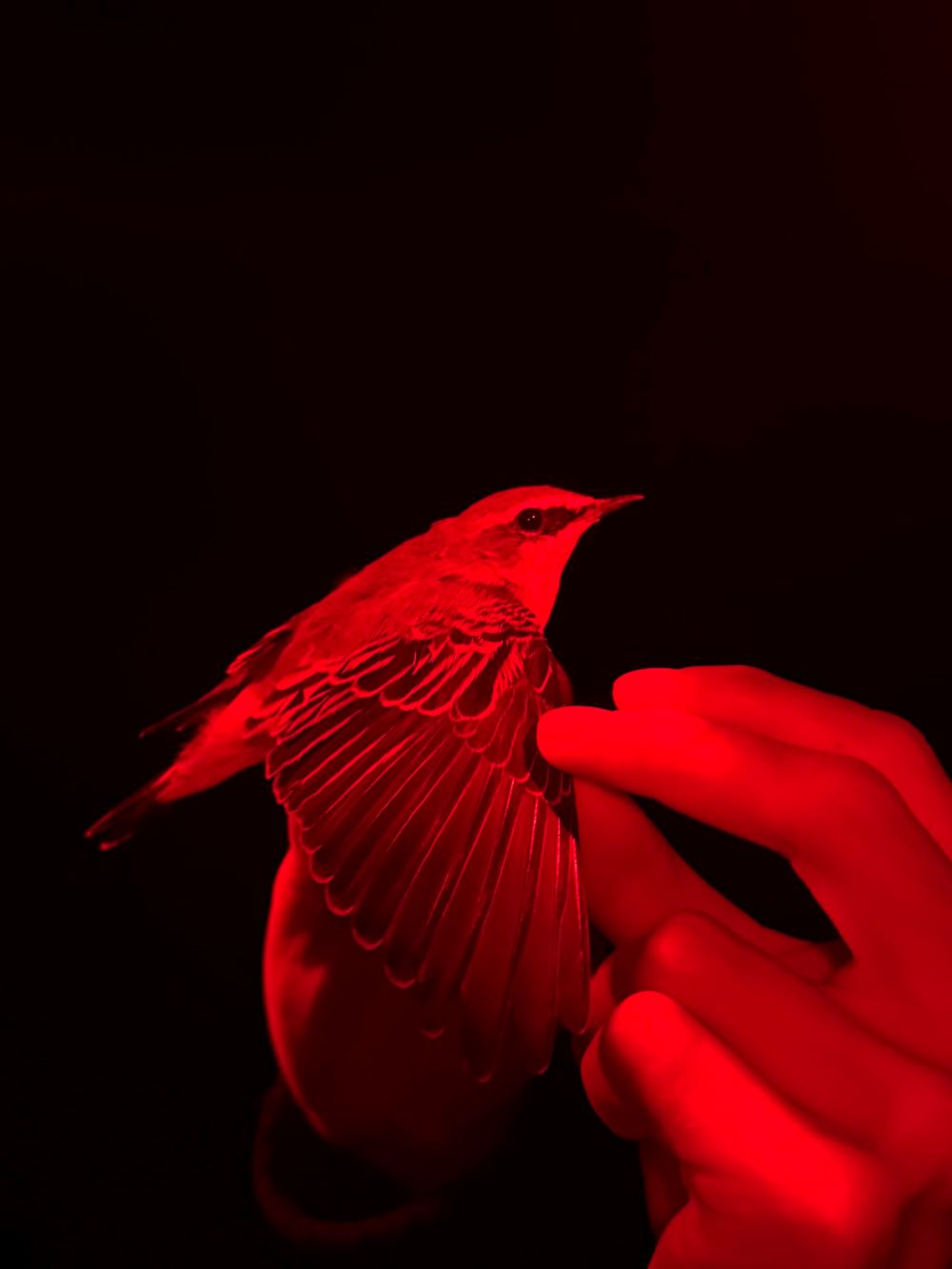 Wheatear dazzling by ThomasWeston
For Mathilde, one of the highlights was Wheatear dazzling.
There is a particular drama to the process: moving carefully, stopping when the bird stops, and remaining completely still. She compared it to the children's game Granny's Footsteps — following behind someone and freezing whenever they turn around.
It was one of many moments when the participants found themselves looking at familiar things in unfamiliar ways.
Thalia particularly enjoyed the night walk to ring Storm Petrels, describing it as "crazy". It wasn't only the wildlife that captured her imagination. Exploring the island, Thailia discovered some of Lundy's history too. She was particularly struck by the interpretation panels in the church and the embroidered banners created by schoolchildren from North Devon.
It was not all about birds. During the week, Thailia experienced a night swim surrounded by bioluminescence, describing the sensation of swimming in starlight, with the glow both above and below the waves.
For Cornelius, a birder from Lancashire, the chance to do something completely different was part of the appeal. During a rock-pooling session, he looked up towards the Castle rising above the cliffs and felt as though he had stepped into a scene from Game of Thrones.
Making Lundy accessible to a new generation
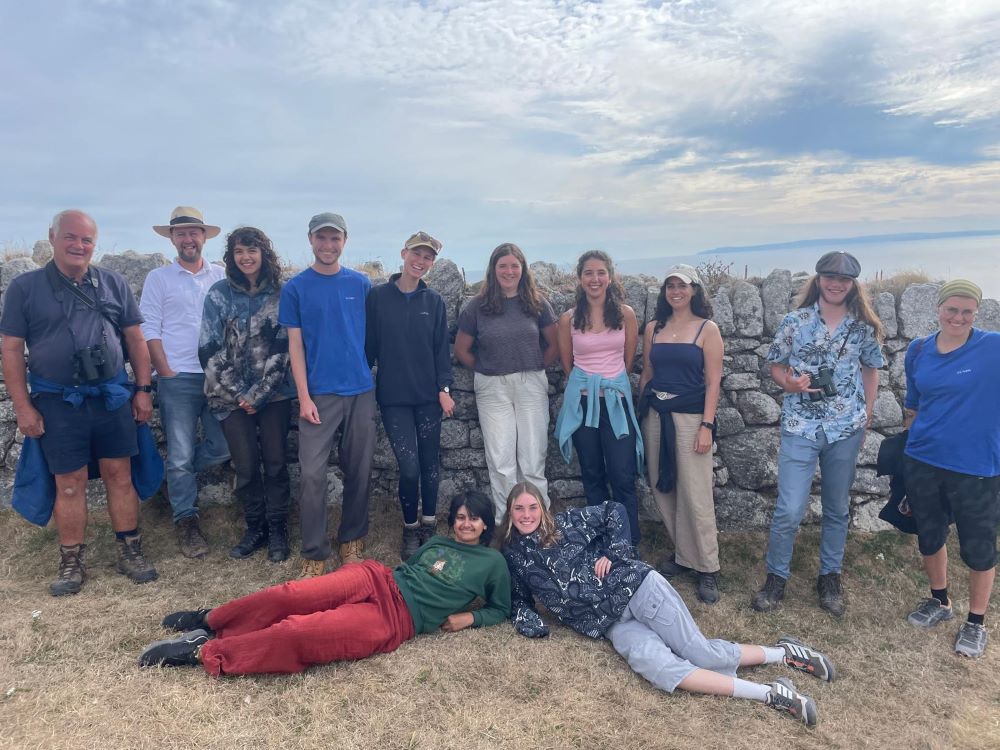 Birders Week by Eleanor Harris
The cost of the week was £300 per person, including boat travel and accommodation. Funding through the British Trust for Ornithology's Young Bird Observatory Visitors programme enabled eligible participants to apply for a £250 grant towards the cost in 2026.
The support helped make the opportunity more accessible to young people who might otherwise have found the cost of travelling to and staying on Lundy a barrier.
Although the programme was aimed particularly at young bird ringers and birders, the invitation was wider. Young people interested in birds, marine life, moths, insects and the natural environment were encouraged to participate.
In doing so, the programme reflected the reality of conservation work on Lundy itself. Bird ringing sits alongside moth trapping, seal watching, rock pooling, marine monitoring, and the many other tasks undertaken by the Lundy Bird Observatory, the Conservation Team and the 2026 volunteers.
For Rhys, though, there was one moment that stood out above the rest: holding a Storm Petrel. It was something he had known about as a birder, but knowing about a species and suddenly finding yourself holding one are very different things.
The sense of discovery ran throughout the week. Fourteen young people arrived on Lundy as individuals who didn't know one another. They left having shared early mornings, late nights, wildlife encounters, new experiences and the strange and wonderful feeling of becoming part of island life, if only for a week.
This is what Thomas had hoped for when he began thinking about the programme: not simply to bring young birders to Lundy, but to give them a reason to connect with the island. To explore it. To ask questions. To push themselves a little further than they might normally go. In doing so, Lundy has become part of their story and somewhere that they will revisit.
Following the success of the 2026 programme, the Lundy Bird Observatory and Lundy Conservation Team hopes to offer a similar opportunity again in 2027. Details of future dates, costs and funding opportunities will be announced once plans have been confirmed.