


Bird Sightings
06/08/2026 – Birders Week Day 6
By Thomas Weston
With the wind blowing from the NW again, it was a good day to go down to the valley and undertake some Millcombe ringing. Moths by Greg was not undertaken today due to the wind, so the team set up base and opened a few of the nets in hope for some migrant warblers.
It was not long before the wave of Willow Warblers came through between 7-8am. The wave was mostly downslope from the Ugly and out to the SE. A few, presumably birds that did not have enough energy supplies were caught as they headed back up the valley, but the majority were downslope. An impressive and phenomenal migration moment in the day resulting in 50 birds being caught and ringed. There was a good backup cast of 1 new and 1 retrap Chiffchaff, a new Wren, 1 new and 1 retrap Goldfinch, 2 new Sedge Warblers, a new juvenile Dunnock, 2 new Blackbirds, and a retrap House Sparrow. Due to the lack of moth trapping this morning, Simon undertook some bushcraft activities including making rope out of stinging nettles! And teaching the Birders Week team how to successfully undertake this process without being stung.
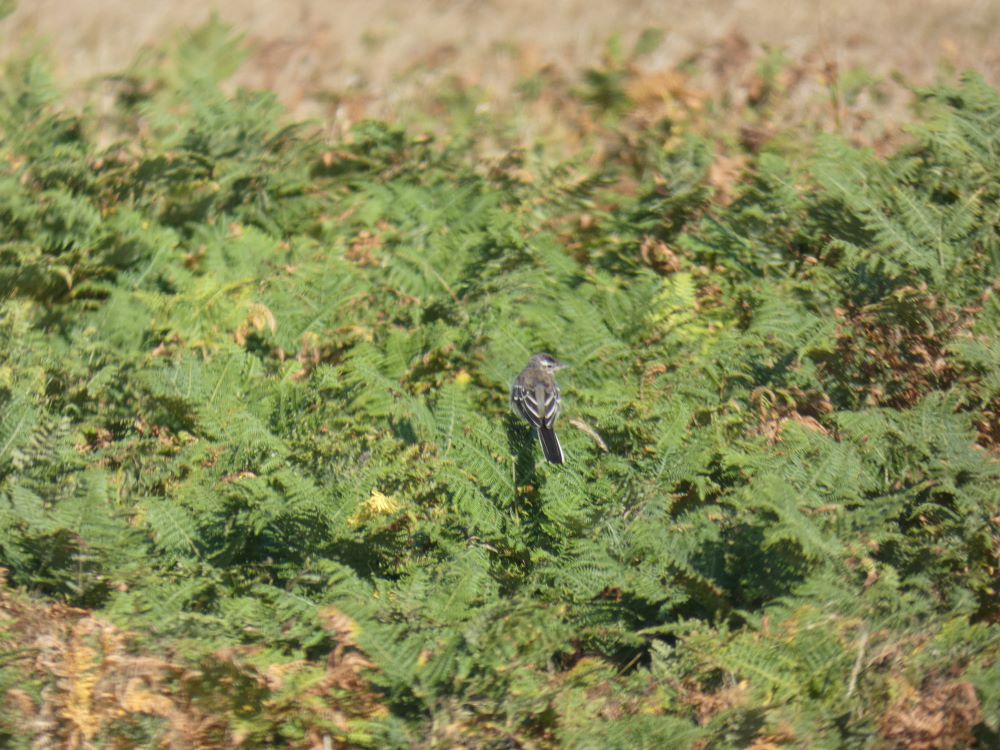 Channel Wagtail at Rocket Pole Pond by ThomasWeston
I undertook census whilst the ringers were in charge of Millcombe. In addition to above, there were 17 more Willow Warblers, single Spotted Flycatcher, 2 Whitethroats, 2 Sedge Warblers, 42 Wheatears showing an even larger arrival than yesterday, a single Sand Martin, a Rock Pipit in the Campsite, the Channel Wagtail male and female in Barton Field, whilst their fledged chick was by Rocket Pole Pond, 13 Swallows and a flyover Curlew. This juvenile type bird was heard way north of Quarter Wall, at a guess nearer Tibbetts. The call was distinctive and the bird casually headed south with a Herring Gull, bypassing the Airfield, Stoneycroft and heading SE before being lost to view. It was not the only Curlew seen today, with what was believed to be an adult female type with a longer bill seen around Rat Island this afternoon/evening.
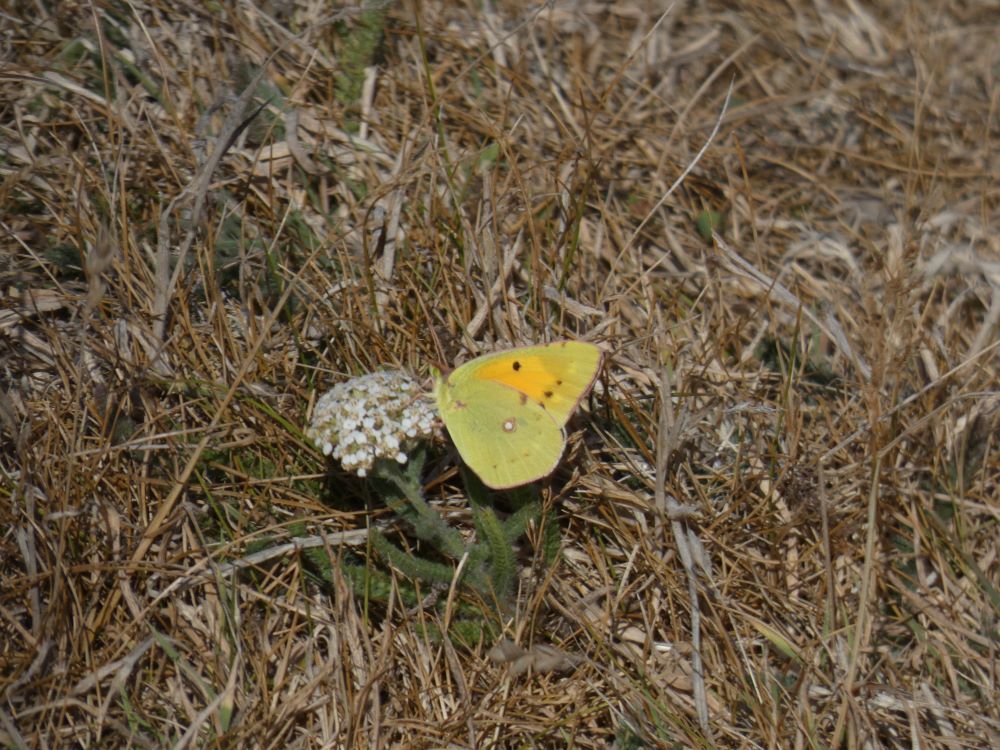 Clouded Yellow Butterfly at Benjis by ThomasWeston
Another Conservation Team task, as well as the boat day routine was the routine Butterfly Survey along the east coast. Today, Jessie and Kirsty undertook the survey and saw good numbers of butterflies including an increase in Clouded Yellow, Painted Lady, Small Heath, Common Blue, Red Admiral, two species of whites and a Grayling spotted by one of the Birders Week participants.
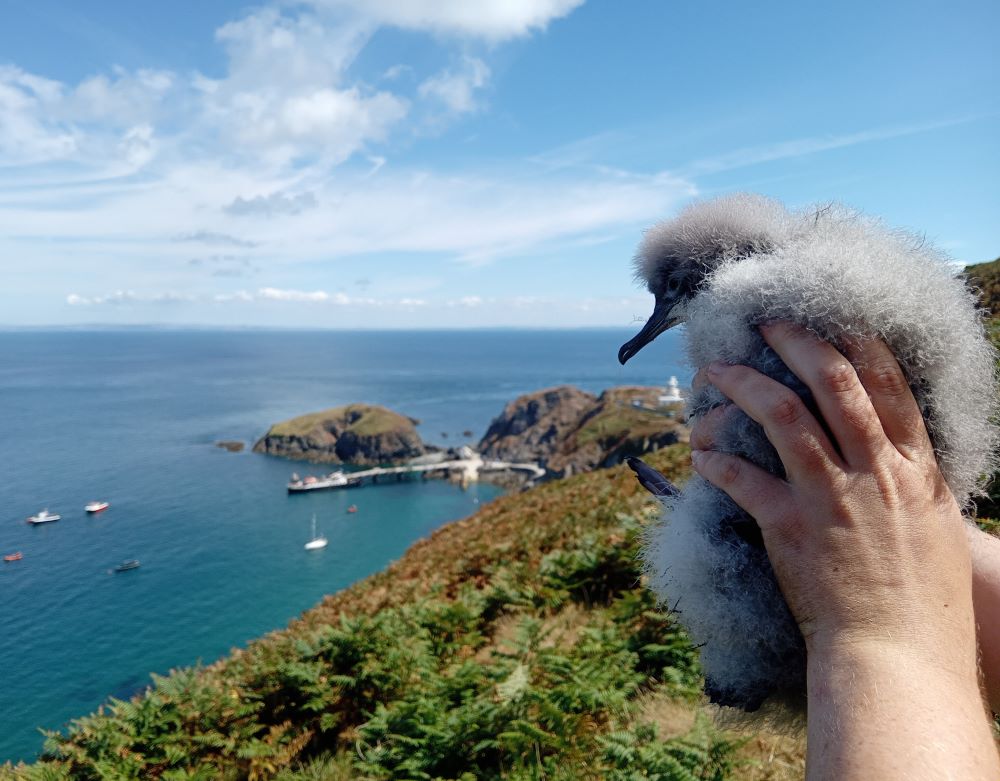 Manx Shearwater Chick by Mathilde
After some much needed lunch break, we decided to check an area of cliffs along the east coast where we do not tend to go night catching. Without raising too many expectations, we started to check some Manx Shearwater burrows and quickly started to find chicks! Based on our productivity boxes, we knew there should be some big chicks around, and it was great to see the birds in the natural burrows at the same, or similar size to those we are monitoring. Even with a small sample of 6 chicks found, it shows our birds can be representative for those around the island’s colonies. We also caught two adults in the burrows. More amazingly, one was ringed in September 2019 as an adult. We believe this bird to have been misaged, as an adult in September is quite uncommon, and the proportion of juveniles on the wing at that time is rather high!
At the end of the short session, we said goodbye to three participants who were heading off to jobs and work. The rest of the team headed back for some food before I gave a talk about Blackcap and Chiffchaff moult strategies, ahead of the autumn bonanza, as well as undertaking wildlife log ahead of an evening of nothing planned! Bliss.
05/07/2026 – Birders Week Day 5
By Thomas Weston
A Wednesday! And a non-travel day. The wind was still quite strong and now coming from the North West. It is always a bit hit and miss whether Millcombe is sheltered or not but it seemed today the weather was calm enough for mist netting in the valley, despite 25-30mph winds at the top. Being on the edge of high pressure means the birds are moving at super speeds and using the nice sunny and warm weather to move. Despite a calm valley, we gave mist netting a miss as people were rather tired from all the nocturnal adventures.
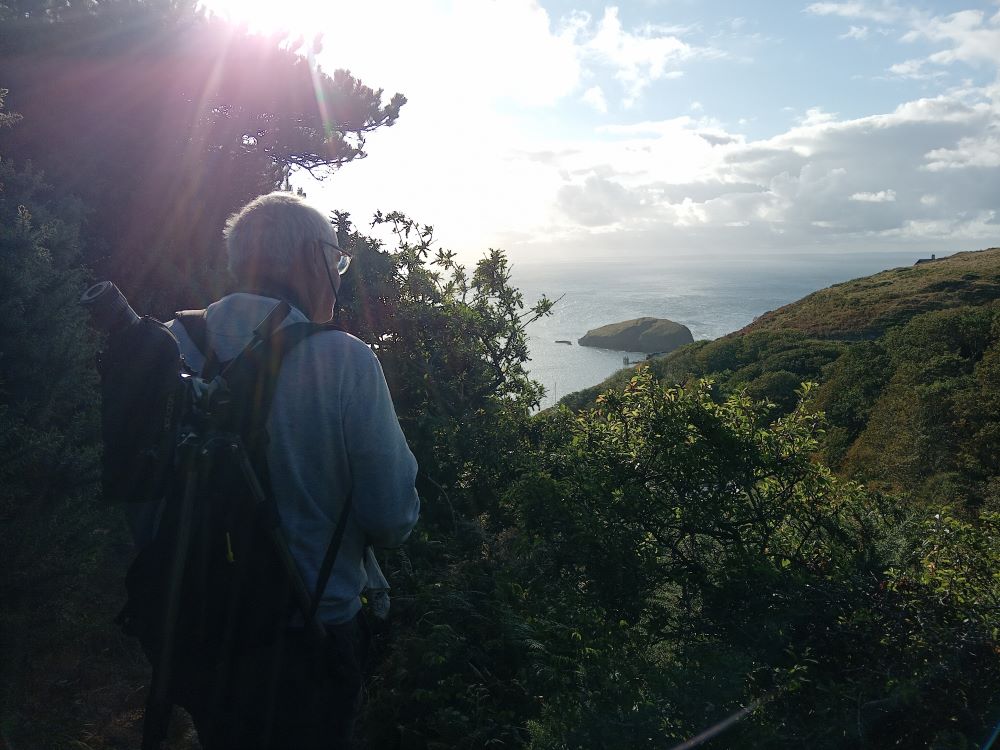 Help on census
I undertook census with Birders Week Peter and it was a real success. Noticeably, there was a fall of a few common migrants with 34 Willow Warblers, 2 Whitethroats, single Sedge Warbler, and a bunch of ‘new in’ Wheatears with many going around in flocks of 5-8 and totalling 43. The Wheatears were great, and to have completed some night catching for them, it was ideal to see a couple of metal-ringed only ones in amongst the loose feeding flocks around the south. The funky juvenile Channel Wagtail who has been hanging around Rocket Pole Pond for a little now, was also seen. This weird and wacky hybrid is the unringed individual out of the two chicks fledged this year, and it is great that it is still going strong.
Due to my Tavern shift this afternoon, we set the Birders a challenge to undertake some letterboxing and to fully immerse themselves into Lundy life: either spotting dragonflies at Pondsbury, birding the North coast, running the Heligoland trap, opening some mist nets if they had the correct permits, and generally having fun and socialising together. This led to a Sedge Warbler being caught and ringed in the Heligoland trap – a fat score of either 6 or 7 led to a lot of laughs by the team. Thus, a generational thing that Lundy really has not caught up with yet! And Greg found a passing Minke Whale from South West Point which was very nice and missed by many. The Birders Week team undertook some letterboxing, swimming and opened some Millcombe nets, catching a few Willow Warblers, a Stonechat, Linnet, and a couple of retrap House Sparrows too.
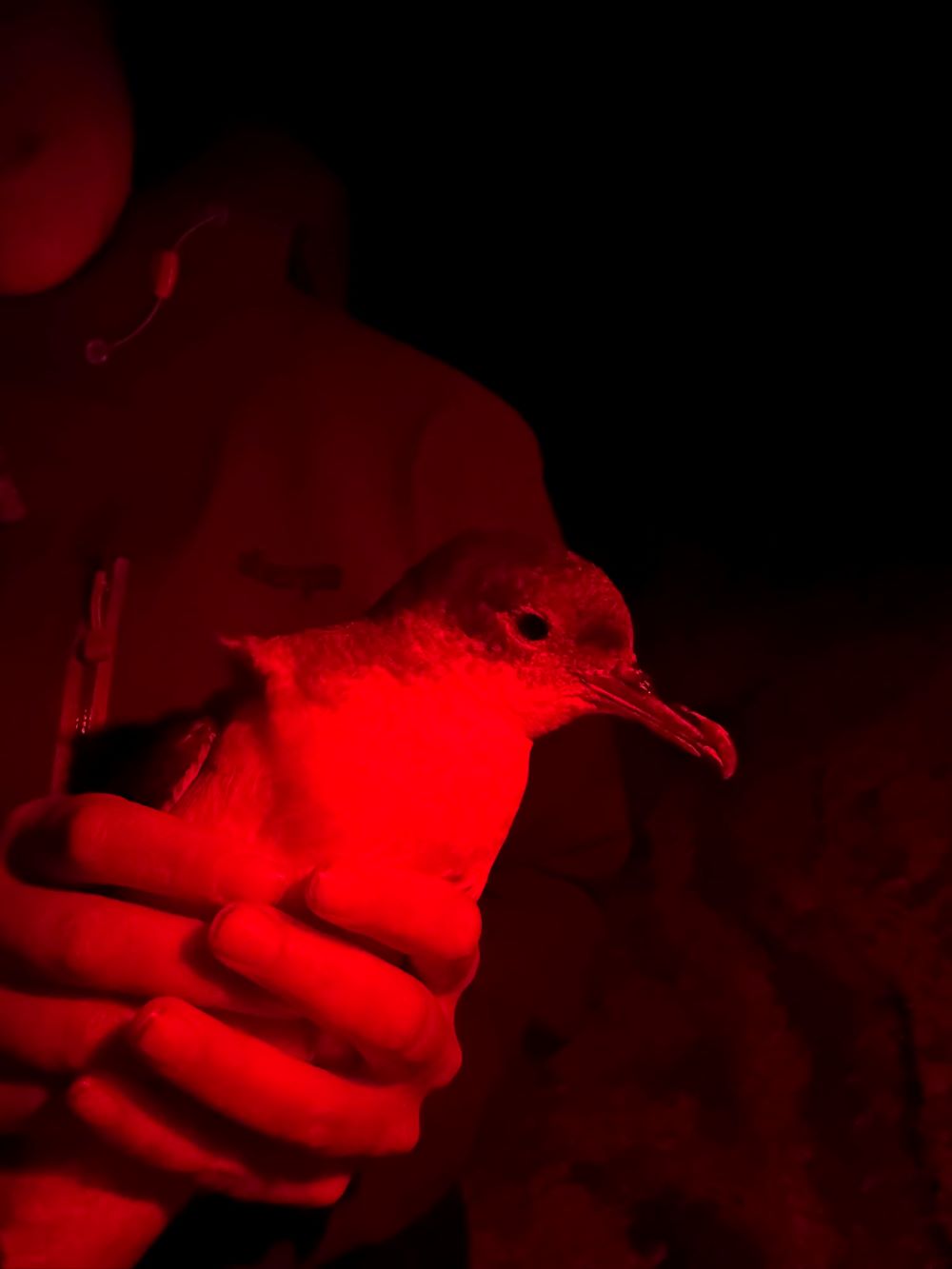 Manx Shearwater whilst out nightcatching by Mathile
I worked the Tavern in the afternoon/evening whilst Jessie gave a great talk about some of the marine life in the local water around Lundy. After the Tavern, we decided to go Manx Shearwater ringing and caught about 16 birds before midnight which was a success. The oldest bird had been ringed roughly 7 years ago, and the team got to see the adults of this species up close and personal for the first time on the trip. Back by 00:30 tomorrow!
04/08/2026 – Birders Week Day 4
By Thomas Weston
The day started a little breezier than ideal, plus very foggy. The Birders Week team were going to join me in Millcombe for some ringing but alas it was not suitable at any of the nets. In fact, it turned out today was more of a relaxing day for the team after a couple of busier days gone by. No worries, because Lundy is full of adventures wherever you go and there is never a time when there is not a new place to explore.
However, Greg was up early and checked the moth trap. He caught 70 species caught including Dark Swordgrass, Diamondback, and Devonshire Wainscot for example, plus many many more not beginning with the letter ‘D’! Greg then went round to complete census with a couple of the birders, which was good, and included a nice range of migrants with Willow Warblers in fine form again. The change in wind direction to SW slightly halted some proceedings, but it is looking calmer and more suitable in the coming days, so we shall see!
Planned snorkelling did not happen due to the boat day proceedings, and as a result I ended up going to the meeting and having a look from the Ugly whilst the breeze was slightly stronger than recently, and very southernly too! The totals from an hour's watch from the Ugly between 08:00-09:00 involved 47 Manx Shearwaters, 24 Gannets, 36 Shags, 3 Kittiwakes, single Rock Pipit, Kestrel, and 4 Wheatears. Amazingly, the predicted rain was not apparent, and the clouds dispersed so much that there was bright sun again and excellent visibility. The seabirds started to fly further away from the Lundy coast, and so I packed up and headed to the Village. On my arrival, two of the Birders Week participants had just opened the traps and within a short period of time had already caught a House Sparrow. More amazingly, it was unringed! Excited at their discovery, it was equally more exciting to go and get Lucile who was actually leaving today from the island – but coming back in November. The sparrow was named James Joyce and released with some new bling. It has been incredible working with Lucile and we wish her a great autumn ahead of her, wherever she decides to go!
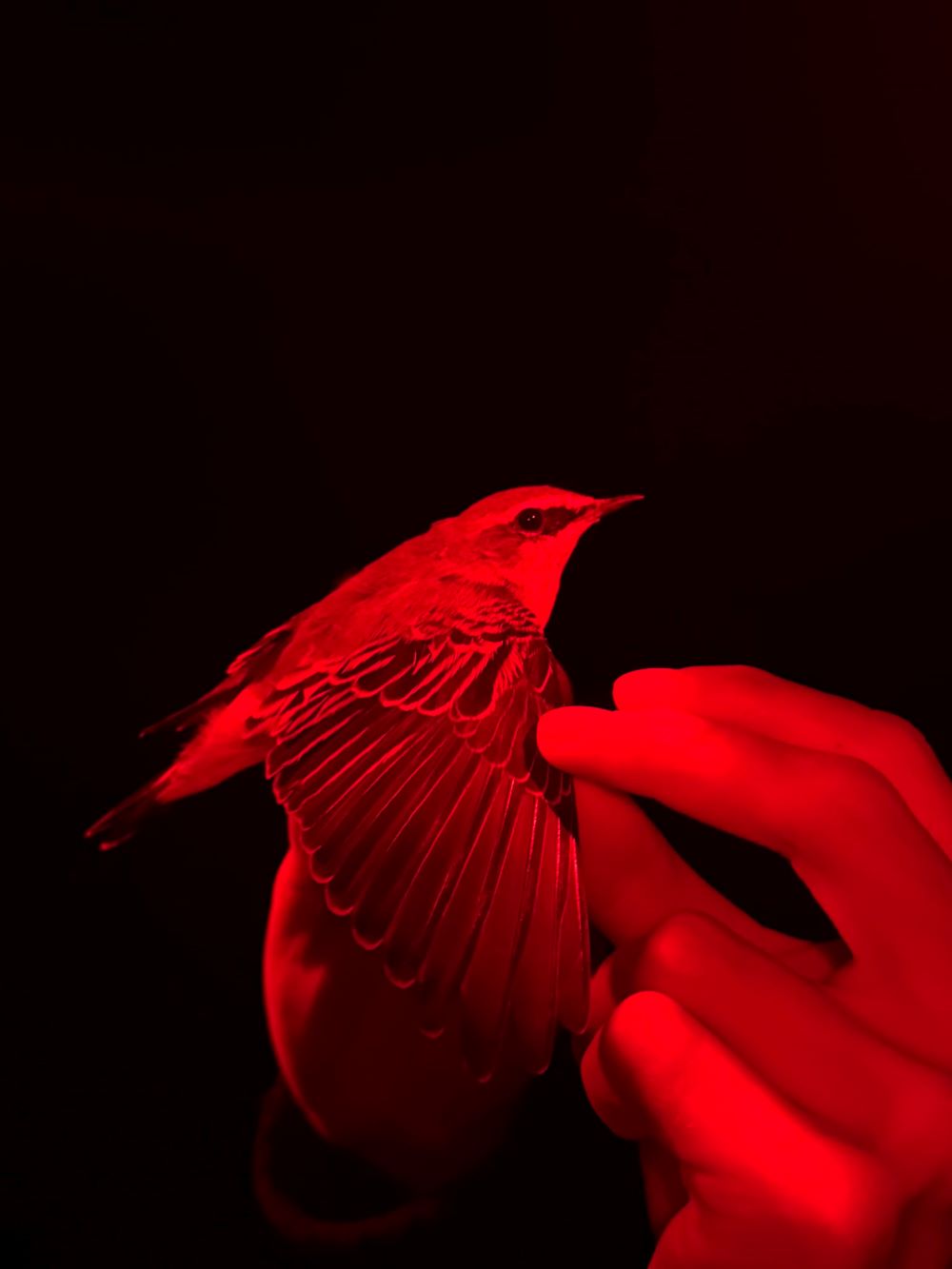 Adult male Wheatear - aging criteria shown by the super dark black greater coverts. Sex based on dark lore. By Thomas Weston
Meanwhile, the Birders Week participants were exploring the island. A highlight for the day was a Curlew seen by three participants as it came in at Jenny’s Cove, then flew east to Quarries, and then south out towards Rat Island. At the same time, I completed some blogs, data input, and helping with House Sparrow boxes was the last few things before the end of the official workday. Though this was a bird day in amongst Birders Week, so the fun continued post-work too. I saw 3 Swifts whilst walking to the Barn this afternoon, and in the evening, Simon gave a great Warden's Talk to the team. The idea to have a quieter one quickly changed when Wheatear dazzling was mentioned, and before we knew it, we had caught 9 out of 12 Wheatears seen this evening with the whole team. It was amazing! New birds coming through the island, mixed in with Lundy juveniles, and even more amazingly was a bird originally ringed two years ago. The bird was caught at North End plateau during fieldwork and seen in the car headlights around 1:40am. The bird was ringed, processed and released, but as a juvenile it is pretty difficult sexing them when they are still quite fluffy. Amazingly, two years and two days later this bird was recaught as an adult male, in Tent Field near the Tavern. Back by midnight and we hope the weather improves for more ringing in the morning tomorrow…
03/08/2026 – Birders Week Day 3
By Thomas Weston
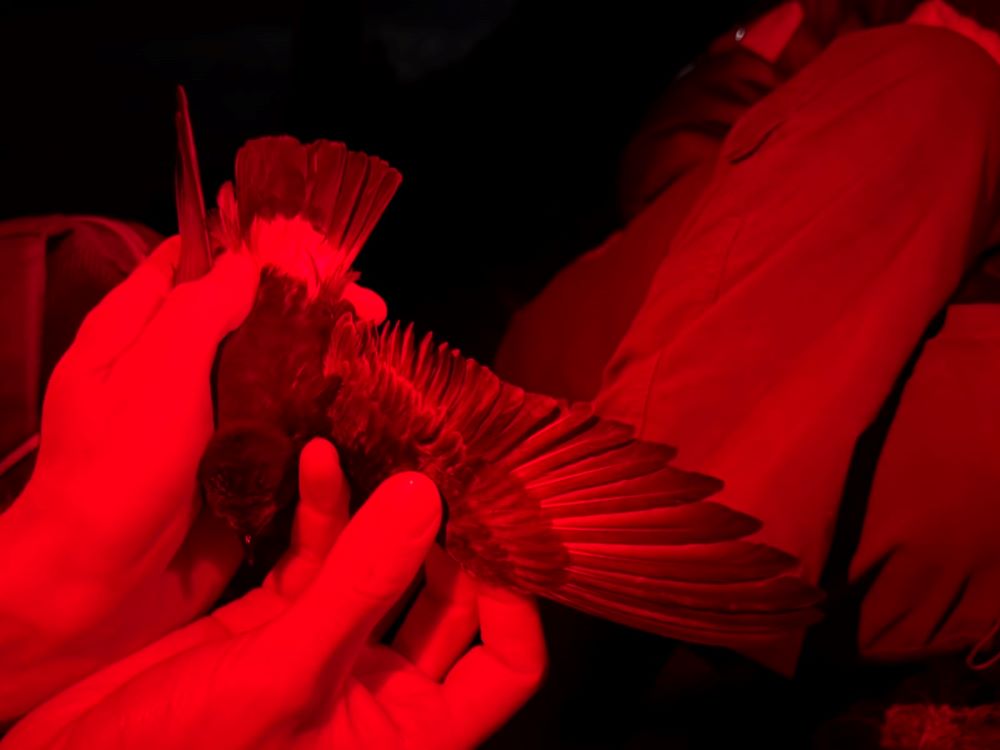 Storm Petrel ringing – by Thomas Weston
.......A late night last night on the cliffs resulted in a really nice mist-netting session for Storm Petrels returning to their colony. With half of the Birders Week team heading north by vehicle, the rest trekked up the island – including myself.
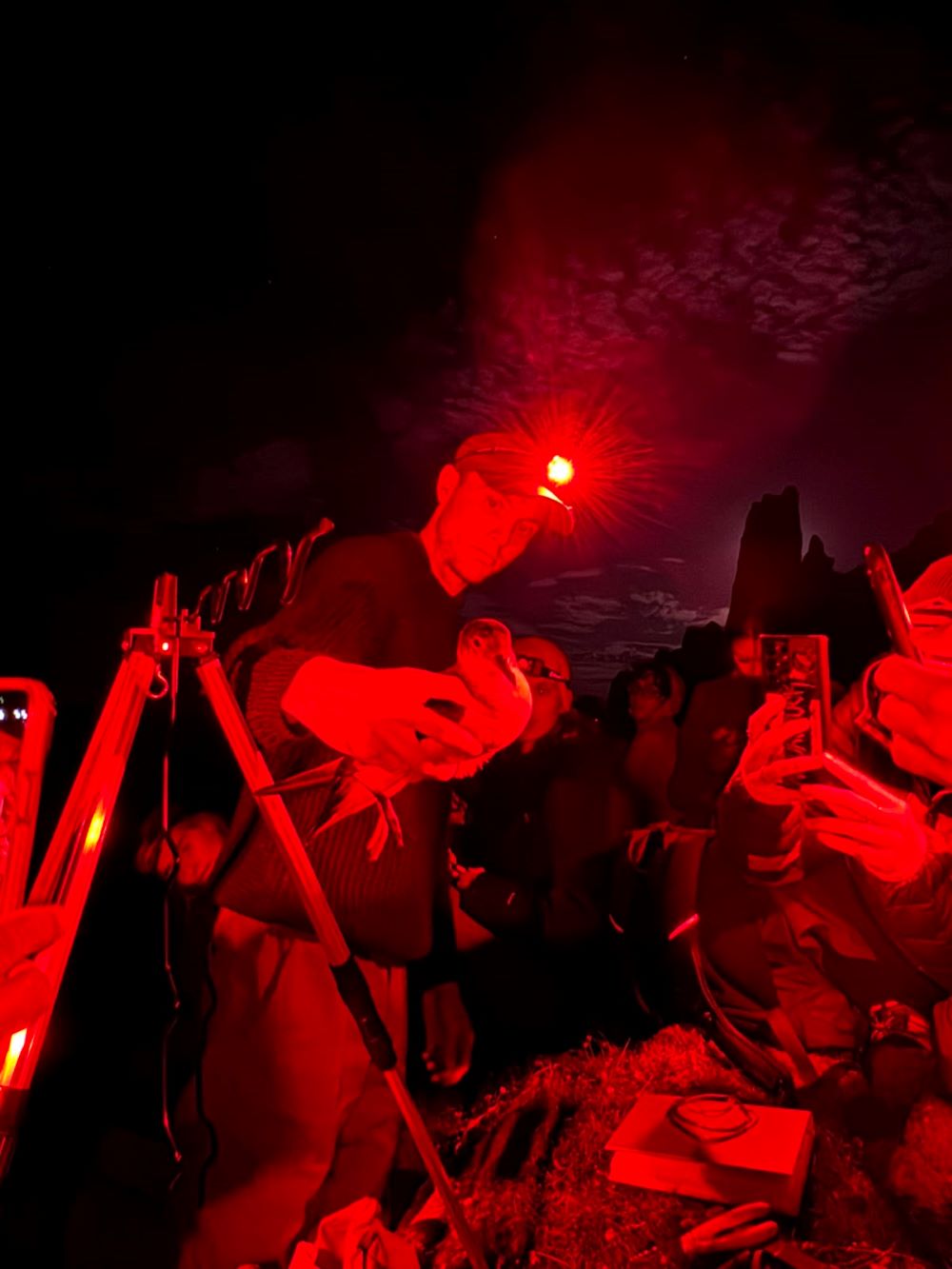 Manx Shearwater bycatch – by Thomas Weston
Once the mist-net was set, the team started to catch Storm Petrels returning. There was an initial rush ahead of the moon rising, with birds flying in and out of the colony. The later breeding season means the majority are now on chicks, but many of them are quite small and not big at all. However, we know there are some biggies out there! The risk of regurgitation is high when ringing, so we limit netting time with enough breaks in between sessions for birds to feed their chicks so we are not causing too much unnecessary disturbance. With the ringing data being collected towards a BTO Retrapping Adults for Survival (RAS) project for this species, it was great to ring a large number of birds, but also to catch birds with rings on already. It was amazing to see that the majority of birds were originally ringed elsewhere, and it will be great to see where these birds came from.
A few hours later and a long walk in the dark led to our bedtime being 2am this morning! As a result, the morning was spent sleeping. Eleanor's and my official day off was today, however Birders Week takes priority. Greg took charge of the moth trap again, but unfortunately due to some charging issues in the night, the light did not stay for long and the number of moths caught was only in single figures. Emma spent the morning completing admin ahead of her Seabird Productivity writeup and talk; fingers crossed it comes together nicely. And after a late night on the cliffs, Jessie had a slow start.
There was a buzz in the air in the morning, and even a little rain! The first for what feels like over a month-and-a-half for the island. Crazy. Coincidentially, there was a big push of hirundines arriving, flocks of Swallows were seemingly coming in off the sea and heading off near Benjamin's Chair; a flock of 70 Swifts appeared but headed out south and later replaced by another flock in the evening; 2 House Martins were super brief; and a Sand Martin joined the migration pulse. In the bushes things were quieter, and the plan for the early afternoon was to repair the Heligoland Trap on the Terrace.
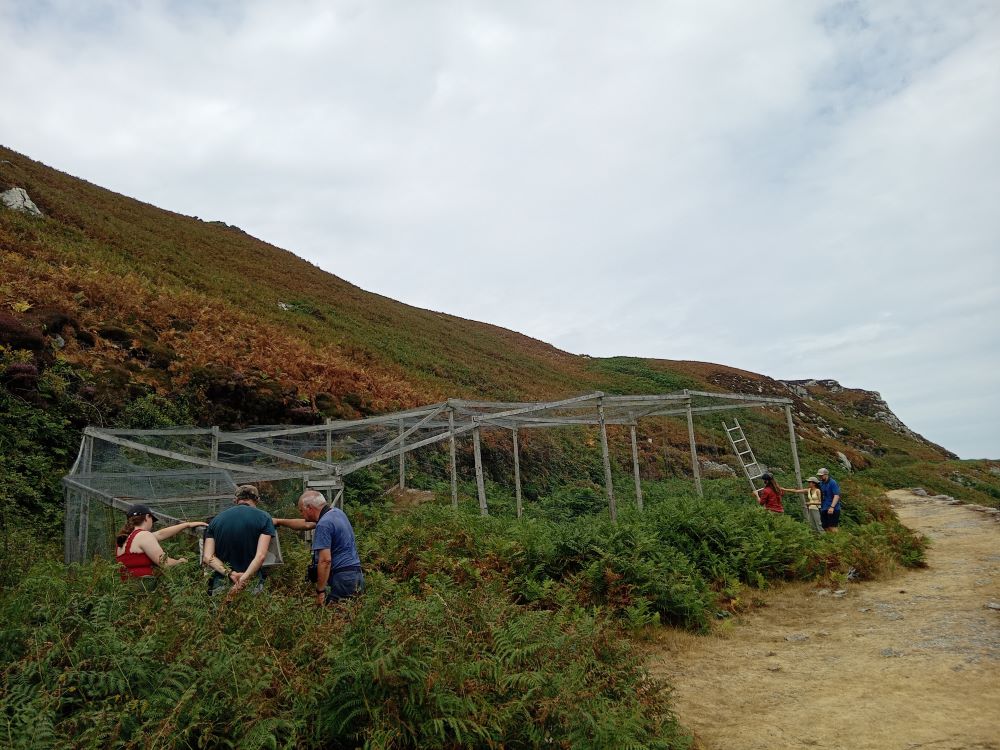 Heligoland Trap work – by Thomas Weston
Heligoland work was completed within a couple of hours, just in time for the Birders Week team to head on down for rockpooling with Jessie. The trap looks in a lot better shape, and we even caught a juvenile Linnet! It's always great when a plan comes together and works. Rockpooling went really well, but before the team knew it, it was time for the next bird related task.
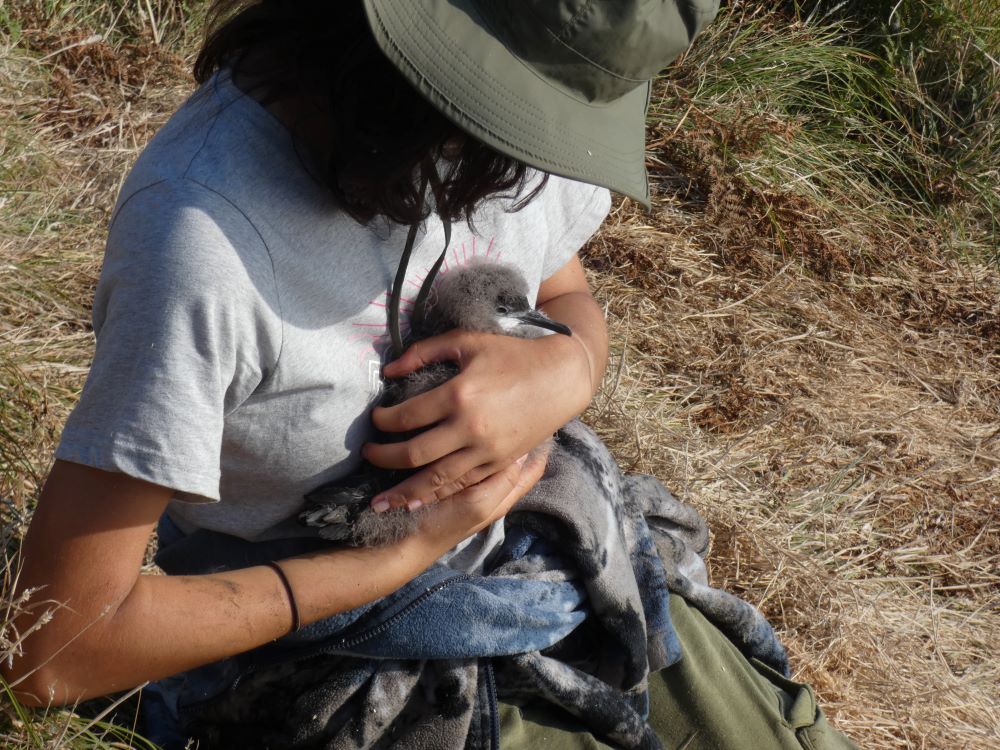 Weighing our Manx Shearwaters – by Thomas Weston
This involved checking our Manx Shearwater boxes to weigh the chicks. Weighing the chicks is an important technique to understand how well our chicks are gaining weight, as well as a good measure for survival too. Due to the number of chicks in the boxes, we almost had enough for one per person and so everyone got to experience holding a fluffy, big ball of Manx Shearwater in their hands.
We then got back to the Barn, just in time for Lucile's Lundy House Sparrow Project talk. An amazing overview of her PhD project and results so far, as well as the Lundy House Sparrow Project overall. Being her last night on the island until November, it was the last chance to wow the crowds with her knowledge and experience. The feedback was great and it is really good to host these evening 'lecture talks'.
Log was undertaken a little later, as some were having dinner, but an evening of Wheatear catching for the ringers, and bioluminescence for the rest of the team. Both sessions went well. We caught 8 out of 16 Wheatears and there was a good views of the bioluminescence and even 3 Common Sandpipers too.
A long but eventful day, back by midnight too!