


Bird Sightings
05/06/2026 – Heat, Habitat, and High Exposure - a guest blog by Jayden
By Jayden Parker
Hi all,
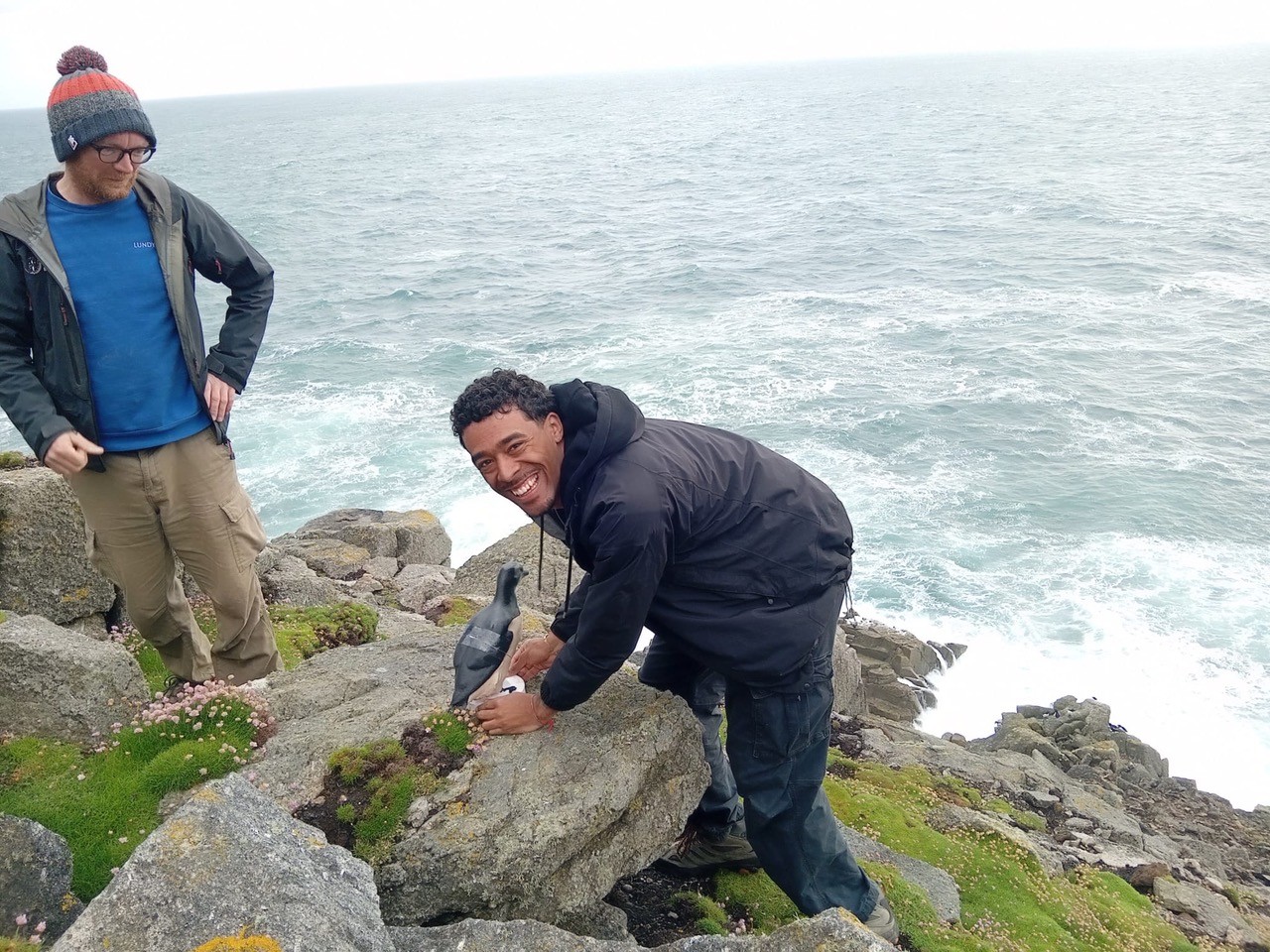 Me Setting up my first Guillemot model! By Thomas Weston
My name is Jayden Parker, and I’m a master’s student from the Royal Veterinary College, lucky enough to be doing a research project on Lundy! From the day I started this degree, the question of my thesis was always lurking in the back of my mind. Would I be able to find a supervisor with shared interests? Would we ever come up with an interesting question? Would fieldwork even be a possibility? Thankfully, the answer to all three questions - in my opinion - was yes.
Growing up in Bermuda, I began my conservation journey with the Bermuda Aquarium, Museum and Zoo at 14 years old. There, I had the pleasure of working with plenty of seabirds - namely the iconic White-tailed Tropicbirds and rarely the endangered Bermuda Petrel. I have also been lucky enough to do rehabilitation and conservation work in Borneo and the Galápagos Islands over the years! Given my interest in similar species, I thought I would seek out a project in a similar vein. My supervisor was quick to recommend Lundy Island. Due to his love for climbing, he had visited Lundy once before to traverse the most inhospitable cliffs the island had to offer. As such, he knew the island was home to an incredible array of seabirds - and thus began my path here!
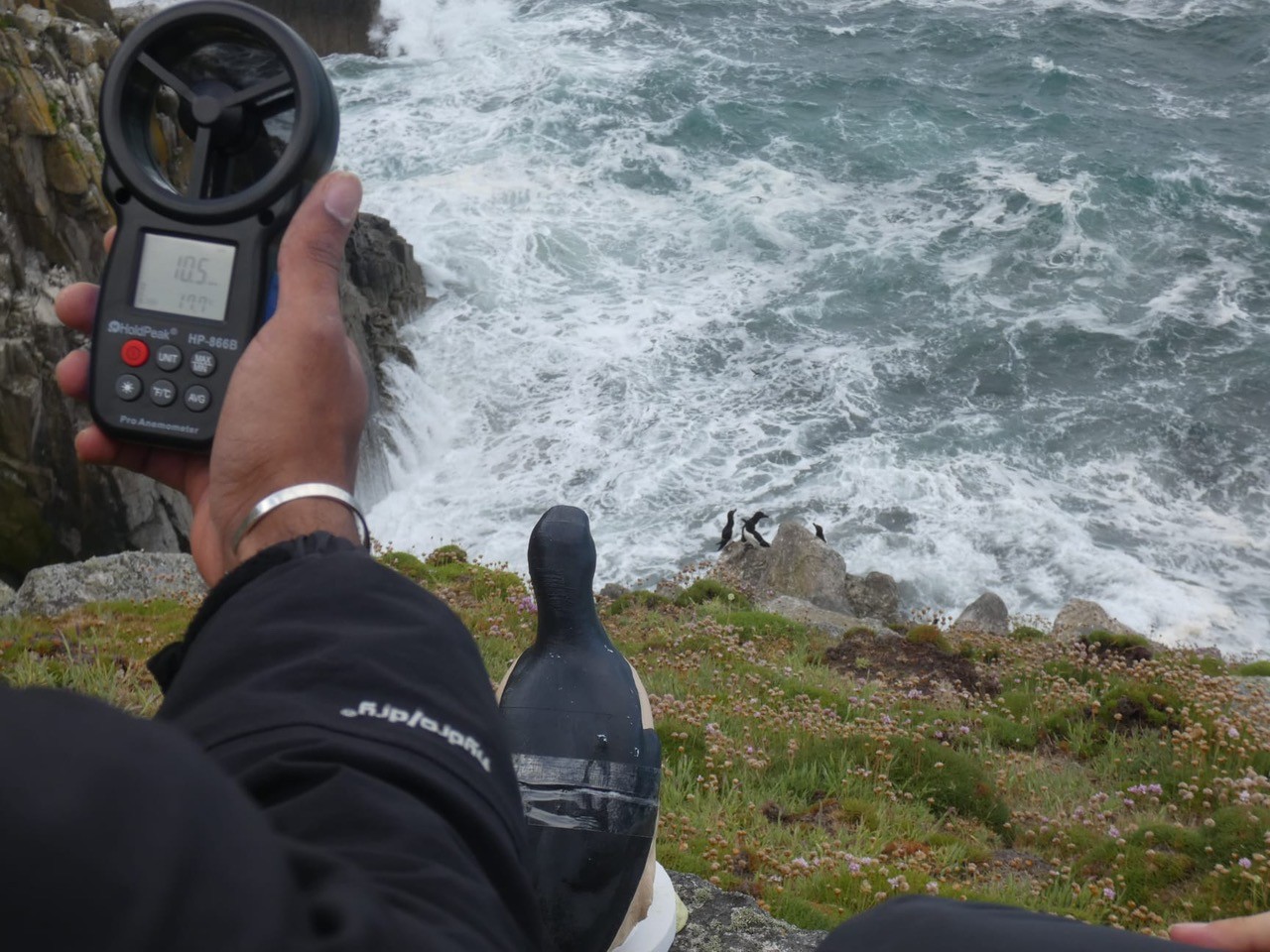 At each site, alongside temperature, testing the wind speed is essential! Pic by Thomas
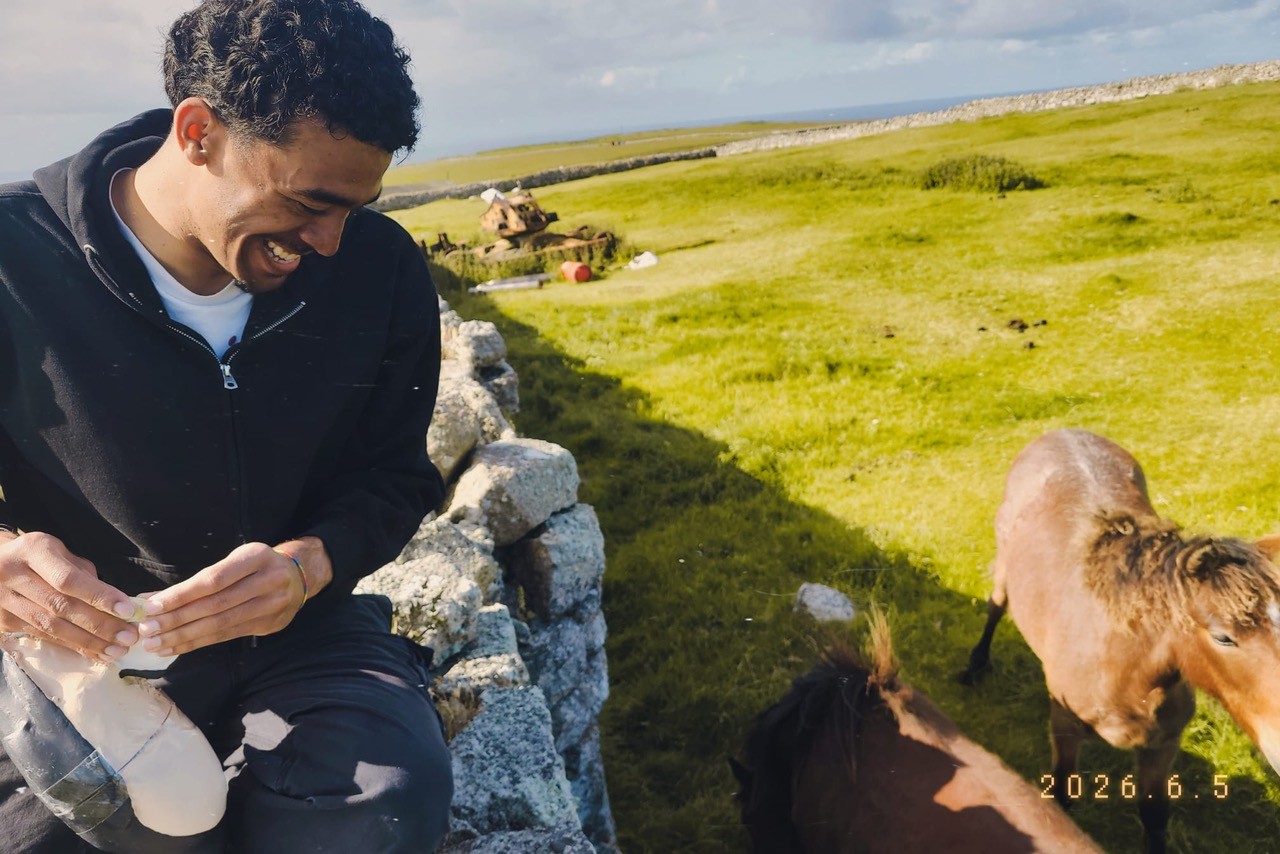 With a 'control' Guillemot set up everyday too!
Currently, I am working to investigate how Lundy’s seabirds are affected by the heat. Typical ambient air temperature measurements rarely tell the full picture. On granite cliff ledges, fully exposed to the hot sun, temperatures can significantly diverge from what the air temperature would suggest. This more representative temperature on the ground is known as the true ‘operative temperature’ experienced by these cliff-nesting seabirds. I am curious to find out how much these operative temperatures vary from standard air temperature measurements, and if slightly different cliff microhabitats play a role in the heat levels!
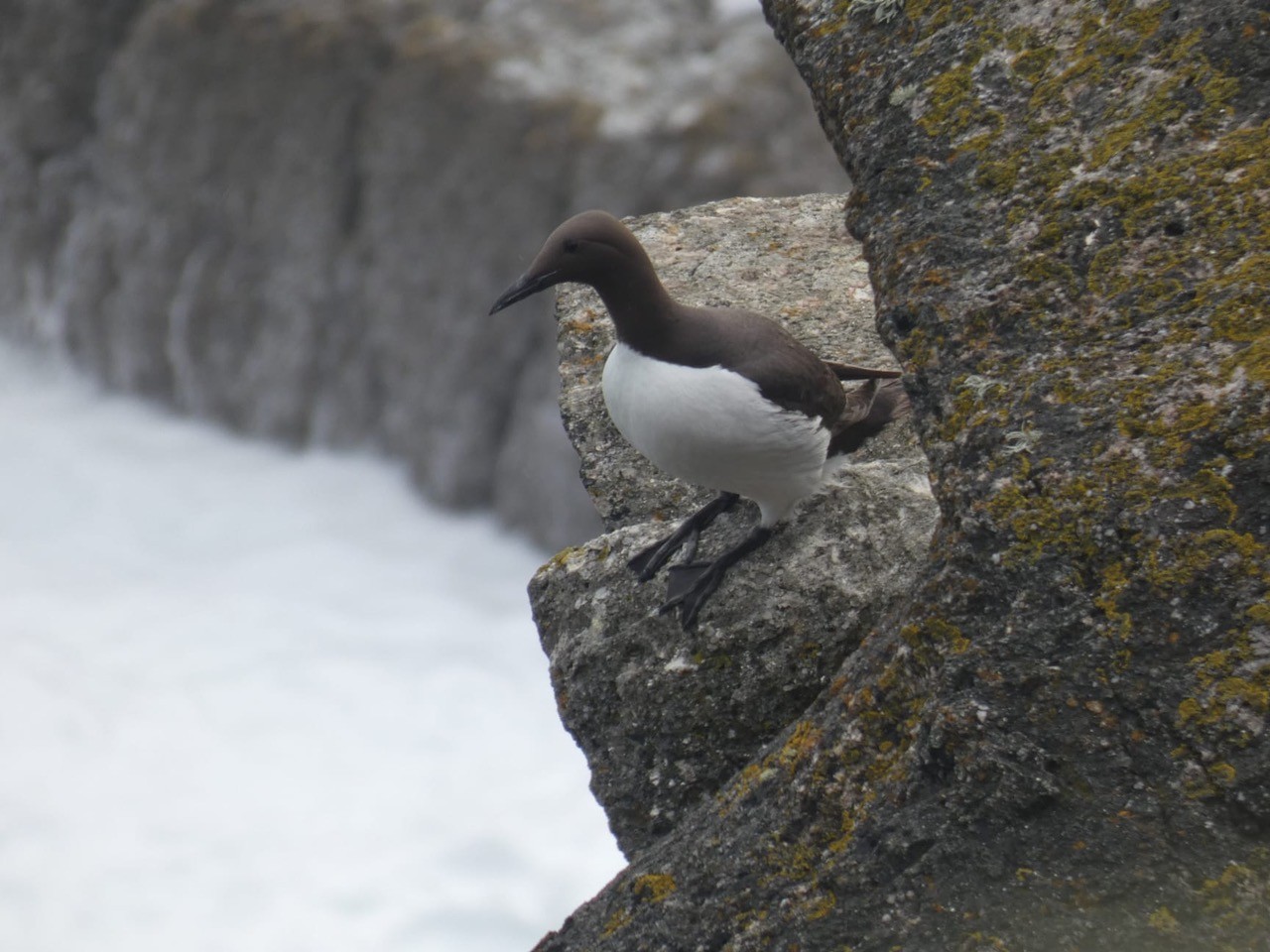 A Common Guillemot by Thomas
To do so, I have come to the island with four 3D-printed guillemot models. They are made from very specific materials and coated with very specific paint, all of which have been found to closely recreate the heat absorption levels of a Common Guillemot! Inside, I have a very hardy thermometer, and as of today, I have placed my first models along Lundy’s granite cliffs (see the pics above!). I plan to rotate them between different sites daily to get a better idea of exactly what temperatures these incredible seabirds are exposed to. As the climate continues to warm, research into the effects of heat on avian welfare and breeding success grows increasingly valuable. My work may also help validate the use of 3D-printed models for ecological thermal studies, and potentially to predict which areas might be most vulnerable to heat on warmer days.
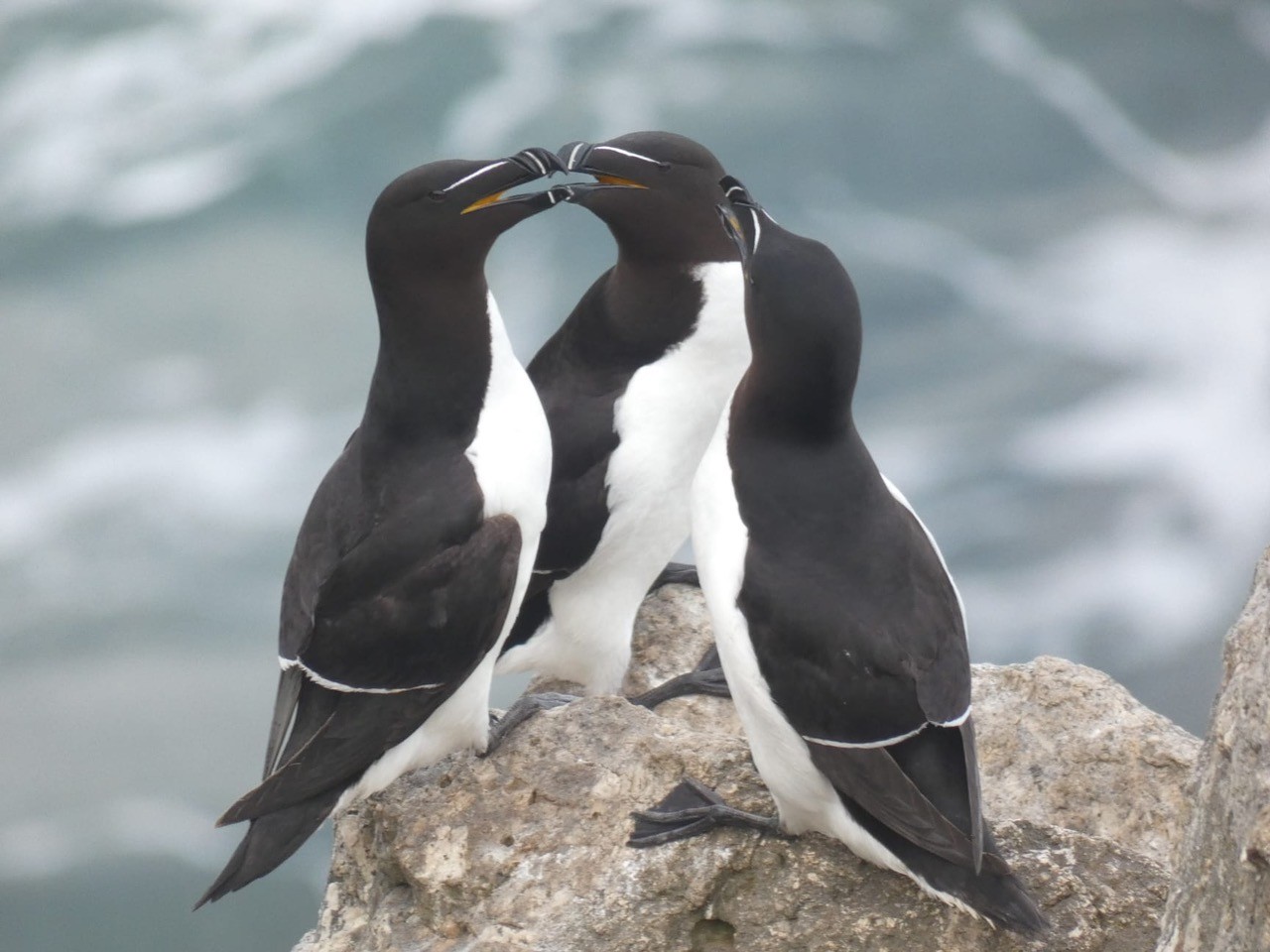 Some of the nosy neighbours who are also affected by temperature - the Razorbill. Pic by Thomas Weston
Outside of my research, I have been able to immerse myself in plenty of the activities that Lundy has to offer! I have spent a good amount of time trekking around the island, observing its incredible array of songbirds and seabirds (including Guillemots, Razorbills, Fulmars, Gannets, Shags, and, of course, Puffins), alongside the Sika deer, Soay sheep, and the ever wonderful Highland cows. It is quite like something out of a fairy tale! I even went for a swim in water far colder than I have ever dared touch before (in Bermuda, we rarely swim unless the water temperature is above 26 degrees).
Additionally, I have also been able to tag along with the volunteers during their duties. Some standout moments include helping with morphometrics on House Sparrows for the Sparrow Project, as well as catching Manx Shearwaters on the steep slopes after midnight for ringing! It was absolutely amazing, and unlike anything I’ve done before.
Overall, I have had nothing short of an incredible time here, and I am greatly looking forward to the next few weeks of my study!
04/06/2026 – Introducing Chloë
 Me and Emma at the Seabird Station. By Chloë
I’m Chloë a new volunteer assistant warden and I am extremely excited to be on Lundy island!
I have a varied background in conservation, ranging from researching sharks and manta rays in the Seychelles and South Africa and turtle and coral conservation in Malaysia, to working on a regenerative farming/renaturing project in Sussex and volunteering with the South Downs National Park.
This is my first time on Lundy and since arriving last Tuesday I can see what an amazing place it is! In my first week I have seen Puffins for the first time, enjoyed speaking with visitors at the seabird stations, done butterfly and bee transects, seen a Golden Oriole, and completed my first seal disturbance survey. On my days off I’ve started to explore all the exciting things the island has to offer, and I have been for some refreshing swims and had an incredible time snorkelling with Emma, Maddie and Lucile. We saw a few Spider Crabs, shoals of Sand Eels, Goldsinny Wrasse and lots of thriving marine flora.
Last night the weather was stormy with wind gusting 45mph, good weather for Manx Shearwaters. So while most people were cosy inside, we (the conservation team) headed out to ring some Manxies! For a few of us it was our first time out and it was such an amazing experience! Hearing their haunting calls over the howling wind was very surreal.
 Snakelocks Anemone Devil Kitchen by Chloë.
 Polycera Spp. in Devils Kitchen by Chloë.
Today Jessie and I had a wonderful time rockpooling down at Devils Kitchen on an outgoing tide. We found lots of pretty Beadlet, Snakelocks and Strawberry Anemones as well as some Gobies, a Montagu's Crab and tonnes of beautiful seaweed species. We also found a Polycera Spp., a Solar-powered Sea Slug and another sea slug Placida dendritica!
03/06/2026 – Westerly winds are blowing
By Greg Lee
The south-westerly winds ramped up in intensity, therefore curtailing all plans for fieldwork for the day including census. Nonetheless, a myriad of data-entry and office jobs needed attention in the morning. Once the rain had stopped, I did risk a nose outside to scope out the Starling nests around the Village. In a few short days, the noisy brown fledglings will be squeaking around the place and forming small flocks with the parent birds. It is also a good time for rogue pink-coloured Starlings to appear, so I am keeping an eye out, especially as a bird of such description was seen across the Bristol Channel last week.
I took the opportunity to also check the migration hotspots on the Lower East Side. Overall, it was relatively quiet although it was nice to see the various resident birds cracking on with their breeding season with Stonechats and Meadow Pipits carrying food, streaky young Linnets bothering their parents and demanding feeding and the male Whitethroats delivering their scratchy song from the various territories. The plateau itself was extremely windy, with most wildlife sensibly choosing the option to hide in cover. A Reed Warbler singing in Secret Garden was a nice migrant of the late spring migration season, a few seem to turn up later in the UK before presumably moving onwards. A Siskin lingering in Millcombe was also slightly unseasonal. Offshore, a stream of Manx Shearwaters was piling over the tempestuous seas, presumably waiting for darkness to fall to return to their colonies. They will be enjoying the conditions coming up.

02/06/2026 – Sand Eel Surprise
By Emma Abel
The day started early for me, heading out to Jenny's Cove at 5.30am for some morning monitoring. The sky was dramatic with the rising sun's rays shining down through the clouds over the sea. The Quail seen later on census must not have been an early riser as I didn't catch a glimpse of it on my walk past Quarry Cottages. However, I did spot a female Mallard sneaking her small brood of ducklings through the reeds at Pondsbury, a Great Black-backed Gull on the prowl nearby.
 Sunrise over Quarry Cottages by Emma A
On reaching Jenny's, I started to watch the Puffins coming in to their burrows and noting their behaviours. The most exciting behaviour being a couple of adults arriving with Sand Eels in their beaks. That classic image that springs to mind of a Puffin sitting with its bright orange beak filled with fish is a sign that deep within some burrows are some fluffy Pufflings. Despite their name, Sand Eels are not actually true eels but small fish with long eel-like bodies that many seabirds species rely on, especially around the breeding season. Over the next weeks the number of adults feeding returning with fish will increase as more chicks hatch and grow. Another fluffy sighting today included a Lesser Black-backed Gull chick popping up its spotty head between the adult's legs, obviously quite freshly hatched as its egg tooth was still present.
 First Puffin with Sand Eels through scope by Emma A
After my monitoring I set up my scope for Seabird Station, which was quite quiet as the westerly winds had started to pick up and Jenny's was in the firing line. Those who stuck around were treated with good views of puffins, especially when the sun came out and reflected off of their orange beaks and feet, and it was great to chat to everyone about the seabirds we have on the island. I chatted to some visitors who brought news of an exciting sighting from their walk further North, which was a Quail. I had to dispapoint them that they were not in fact the first sighting and Thomas had beaten them to it with a sighting of a separate individual that very morning, making theirs the fourth Quail of the year. They had been able to get a video of the bird flushing, meaning they got the fourth Quail, but the first footage!
Additionally a female Water Rail was heard calling from the Airfield scrub, which is the first any have been heard in a little while.
 Quail at Widow's Tenement by Chris S