


Bird Sightings
26/06/2026 – Snorkel Safari Report!
By Jessie Dermody
Although the day today started off pretty grey, it was lovely down by the water. The assistant warden team - Tara, Chloë and I had some snorkel safaris to run. They were all quite well attended, and we had some lovely crystal clear water. We always start out examining the columns of the jetty, as these act like artificial reefs and are teeming with wildlife. Some particularly charismatic residents are the Montagu's Blennies, small, territorial fish who will often pop out to try and scare you away from their patch. These fish have beautiful blue spots along their columns and a single red tuft on their heads. Two Spot Gobies are also very common around the columns of the jetty, and we saw several shoals of these tiny fish today.
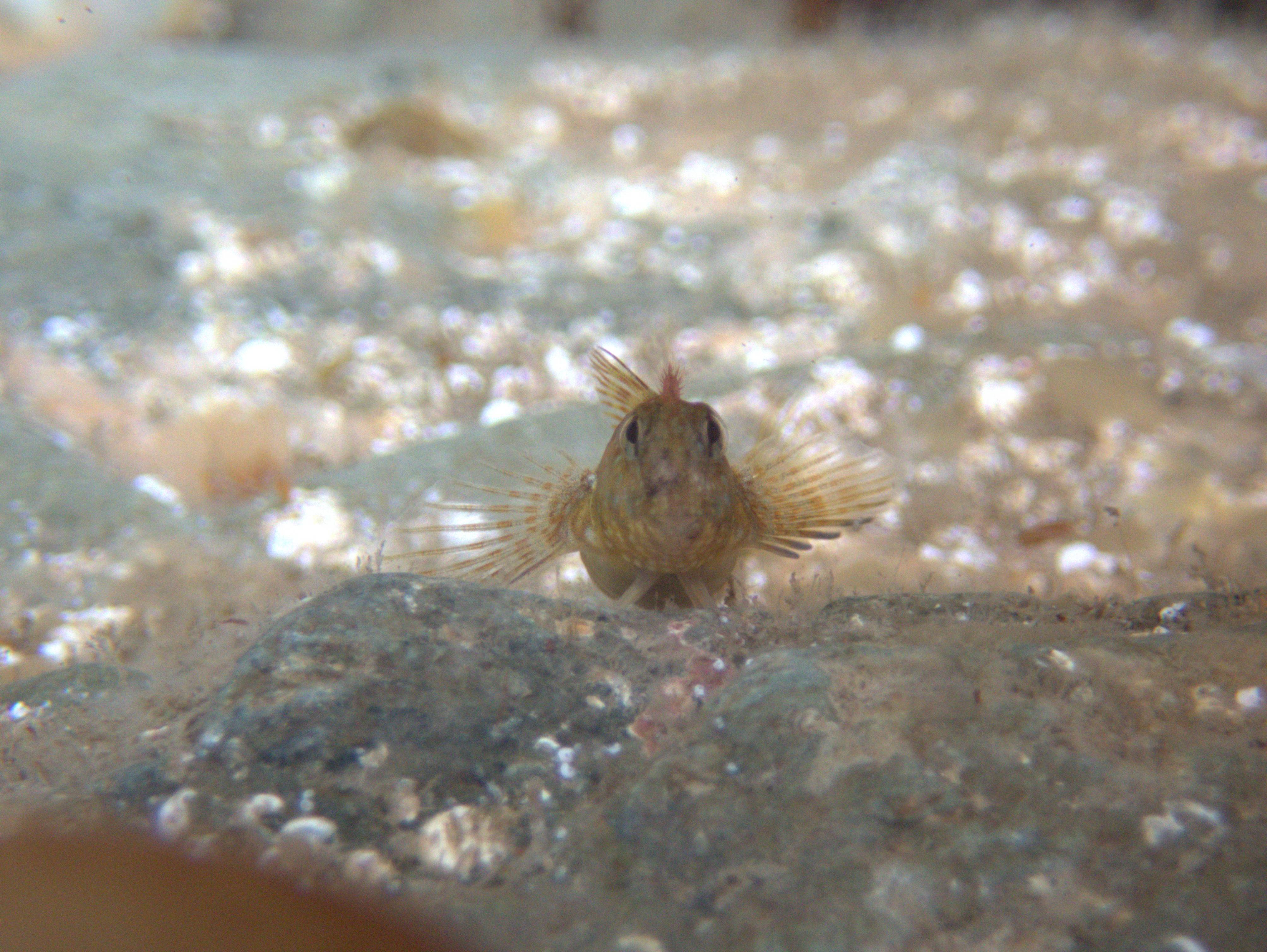 A Montagu's Blenny defending its territory in devils kitchen. By Jessie Dermody
These columns are also home to plenty of sea slugs! This is because they are covered in hydroids, bryozoans and sea squirts, which lots of sea slugs like to eat. We are now entering the sea slug section of the sightings report, so buckle up! We spotted four Facelina auriculata sea slugs on the columns today – a beautiful slug covered in pink and iridescent blue cerata. These were munching on the eggs of a Doto sp. sea slug. Nearby was a lovely Polycera capitata, and some Sea Lemon eggs! A Sea Lemon is another type of sea slug, a big slug that looks like a type of sponge.
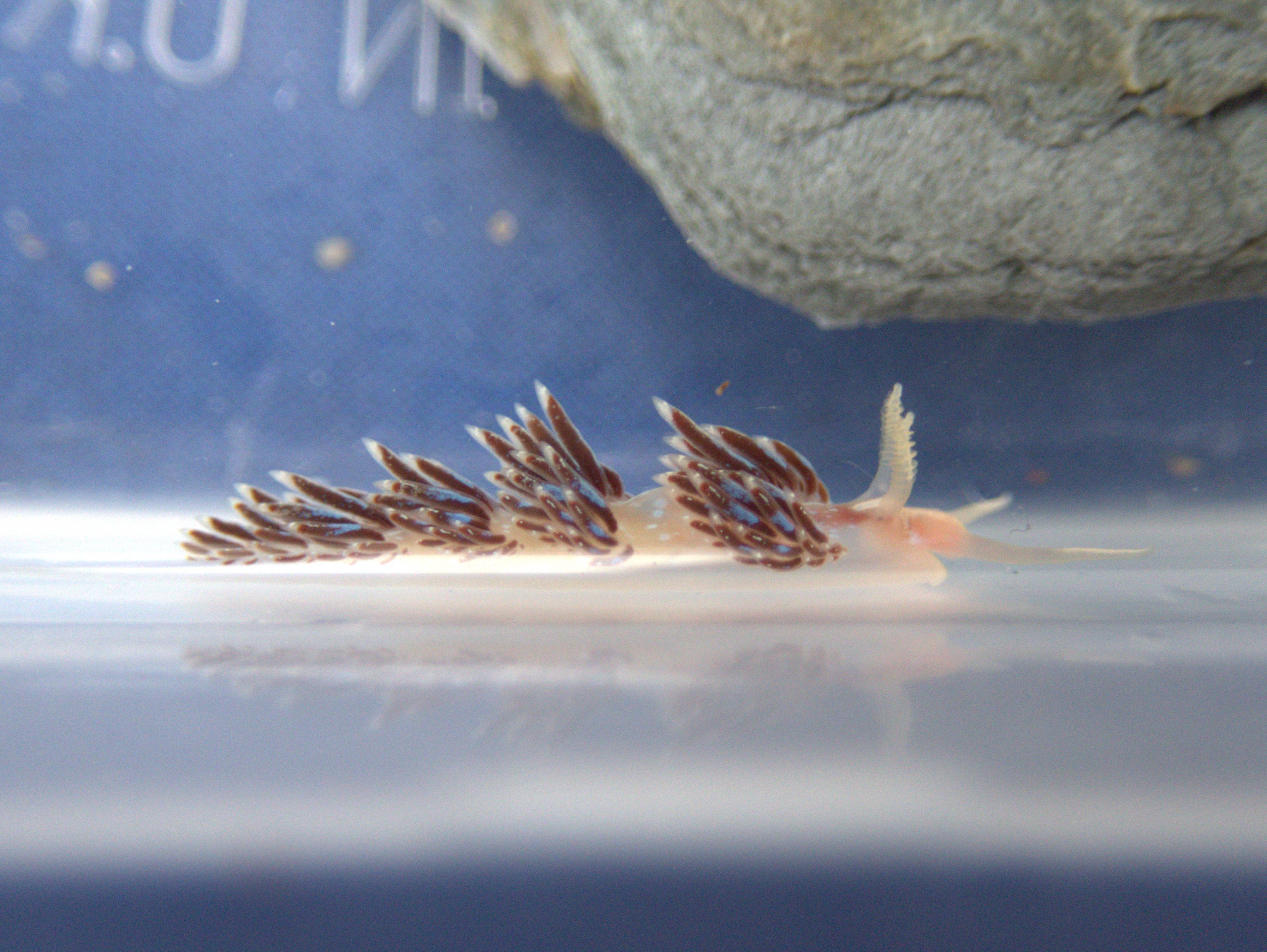 A Facelina auriculata sea slug by Jessie Dermody
Before we headed back to shore, we spotted a large Spiny Starfish crawling across the seabed beneath us. They move quite quickly as they have hundreds of tube feet beneath their bodies. As we moved over the seaweed of the rocky reefs, we saw lots of Ballan Wrasse and juvenile Pollack.
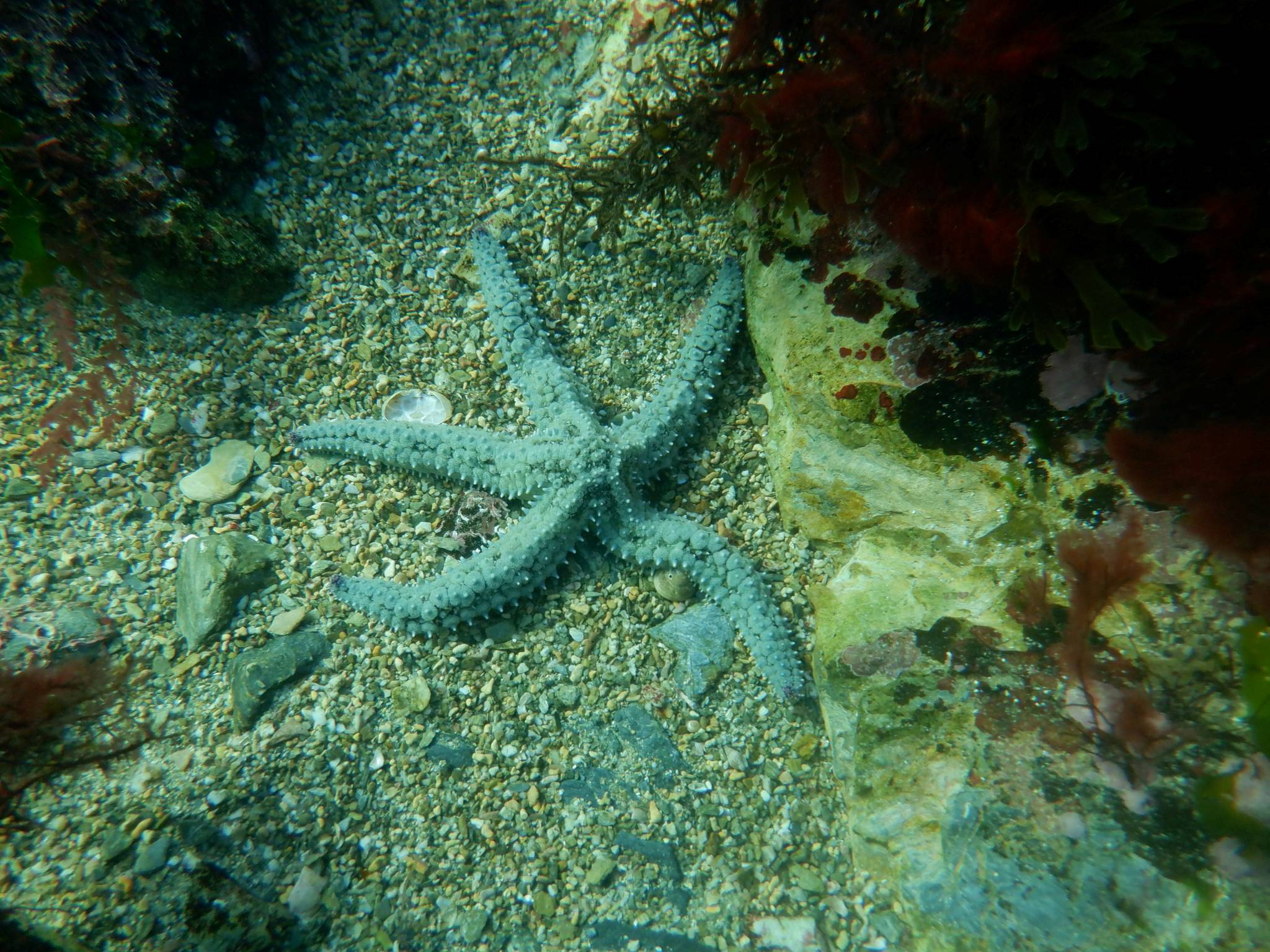 Spiny Starfish by Jessie Dermody
Once we got out of the water, we dried off and enjoyed some well deserved lunch at the tavern. After that I headed back down to the Landing Bay with the ‘rat pack’ to complete the important task of checking all the rat boxes. There are seventy of these boxes hidden around the island, and they help us ensure that the island is still rat free. Each box contains a bait made of chocolate and wax, which we need to check for teeth marks each months. If we did find any thick, rat like teeth marks, that would mean we would need to begin the process of extermination again. The island celebrated its 20th year of being 'rat free' last week, and we want to make sure it remains that way! Our ground nesting seabird colonies, like the Puffins and the Manx Shearwaters, would be put at risk if rats ever returned to the island. Thankfully, I have found no signs of rodents in the boxes this week.
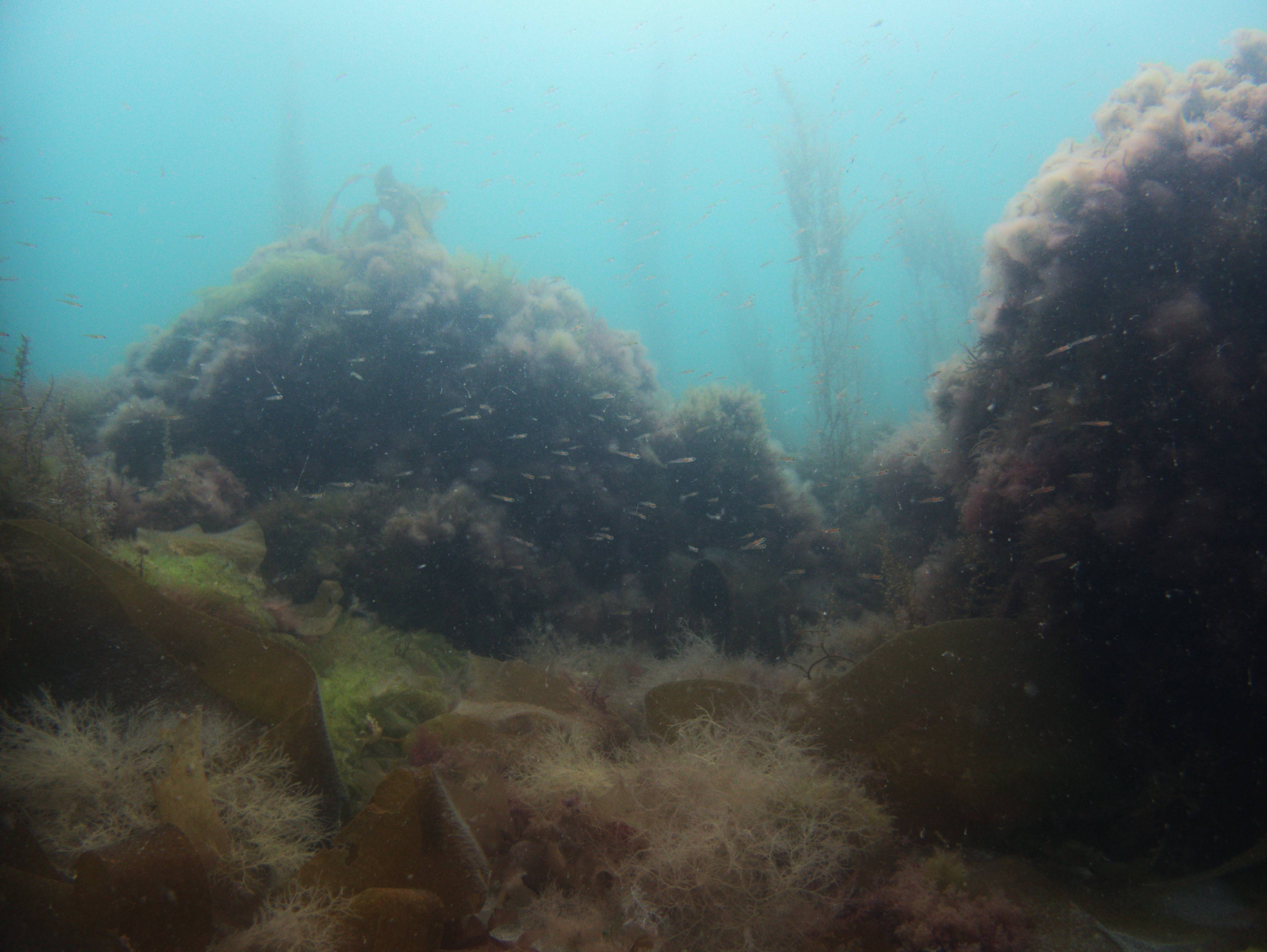 A shoal of tiny two-spot gobies within the rocky reef, By Jessie Dermody
After I’d finished rat boxing, I felt I deserved another dip in the sea! I enjoyed the feel of the water on my skin, and the reflection of the sunlight in the water. On my way back I found a lovely piece of Sea Beech growing out of a piece of kelp on the seabed. I often pick up and examine pieces of kelp that have broken away from their moorings, as this is a great way to spot sea slugs. No slugs today, but lots of sponges and parasitic sea weeds.
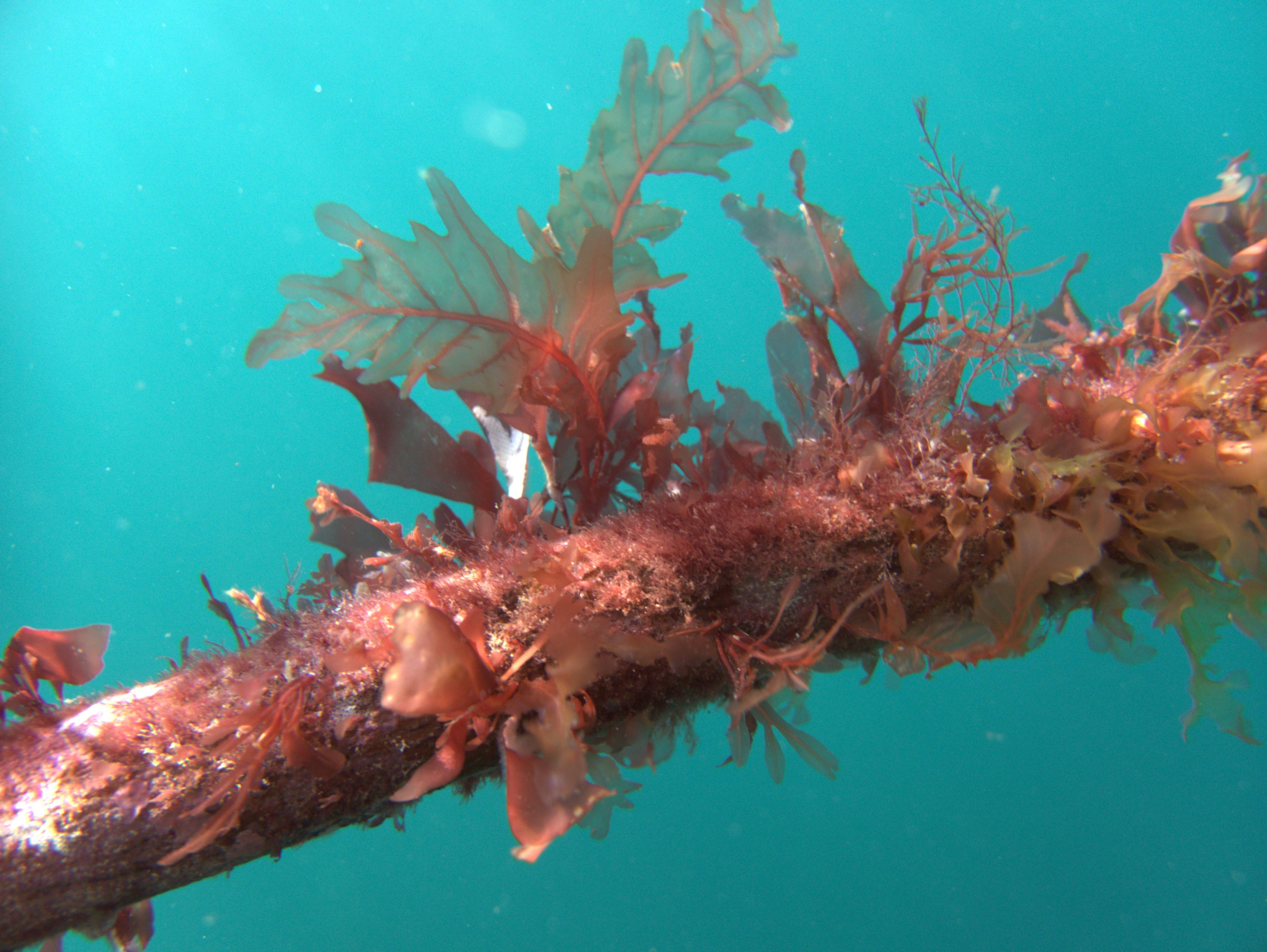 Sea Beech and other seaweeds growing out of an old piece of kelp. The Sea Beech is the longest of the seaweeds pictured here, and looks a bit like leaves. Photo by Jessie Dermody
Thanks for reading, see you next week!
25/06/2026 – The heatwave breaks
By Greg Lee
A scorching hot day on the island today, with the recent heatwave reaching its apex, though I'm sure those reading on the mainland will see the island high of 28.6 degrees and prefer that to what their own thermometer is reading!
I was out early with another survey of the Kittwakes and Guillemots at Aztec Bay. Even at 6:00am, the warm breeze was more than comfortable so I was not looking forward to the inevitable rise in the heat. Heading beyond Halfway Wall, I picked up a nice surprise flying over, a Redshank, no doubt an early migrant moving on after possibly failing to breed. Over the next few weeks, birders across the country will see an increase of this noisy wader on their wetland and estuary patches as young birds and postbreeding adults being to appear. They aren't quite so common on Lundy but perhaps a bird may appear on the rocks down in the Landing Bay.
The Guillemot chick numbers are increasing with a range of ages amongst the chicks, although some adults remain on their large eggs. Indeed some youngsters are now not far off jumping and gradually the ledges will begin to empty out of birds. Whilst doing my surveying, another sound and sign of the changing seasons caught my ear, the raucous and far-carrying call of a Sandwich Tern and sure enough, I spotted two birds diving and flying southwards. The tern migration in July and August is always an enjoyable experience for me and although I won't be sifting through large flocks of Sandwich Terns for other smaller species such as Black or Roseate whilst on Lundy, unlike at some other Observatories, any small signs of Tern passage will be greatly appreciated.
Once I'd finished my work for the day, I avoided the heat of the day and did some office-based jobs. Once the temperatures had somewhat repealed in the evening, I joined a few members of the Conservation Team for a swim off the Jetty. Usually, I'm often hesitant to get in and choose to slowly descend my way into the cold water. Today, I chose and different method and plunged straight in, which ultimately paid off.
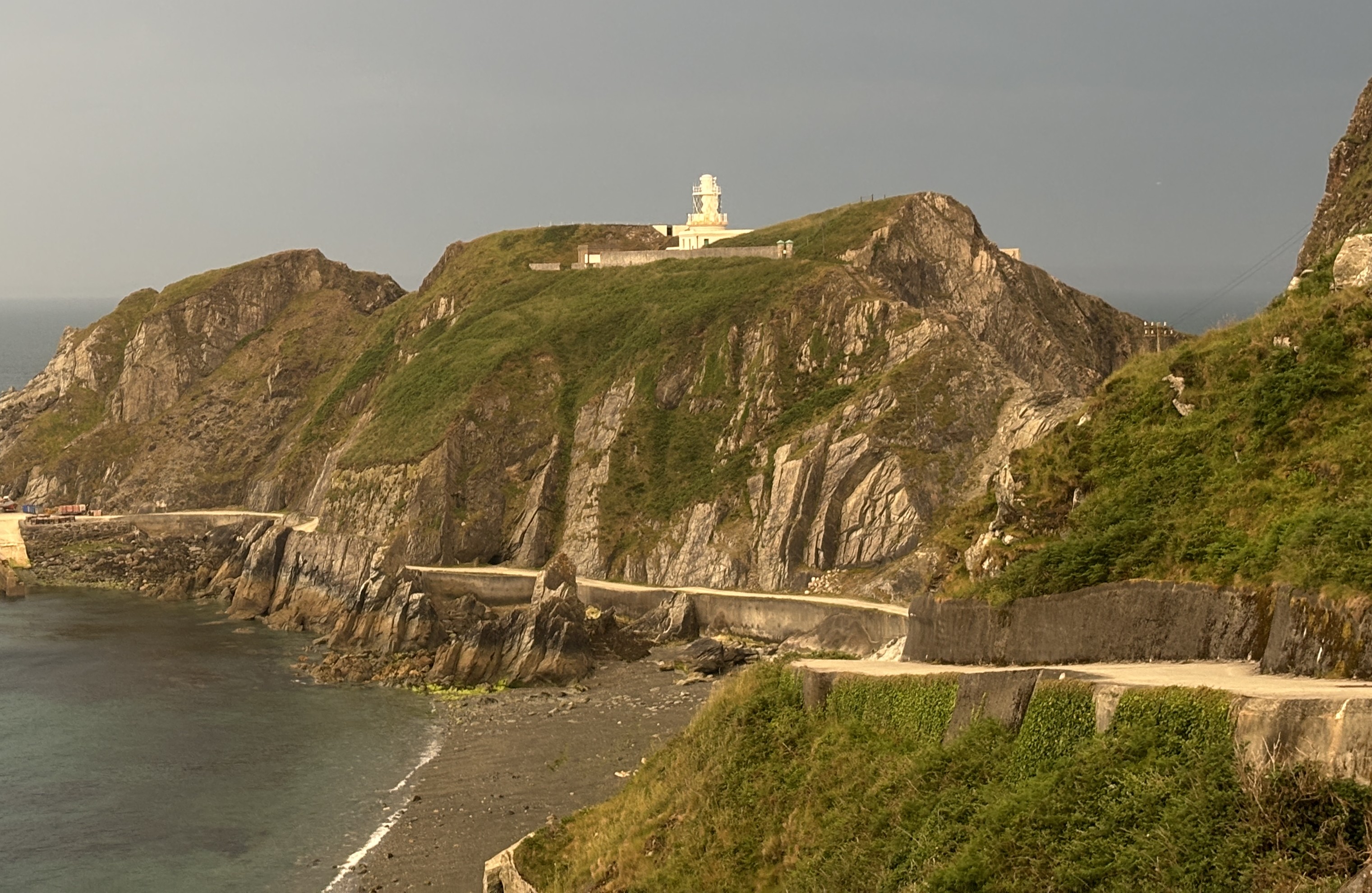 Storm clouds behind South Light by G.Lee
As darkness fell, so the storm clouds came and as dusk fell, great streaks of lightning flashed the sky from all angles. With the humidity so high and the clouds so dense, I optimistically set the moth-trap at Benjamin's Chair, hoping that the south-facing light may tempt some migrants in. Even within just a few minutes, it was clear the moths were very busy, with many insects coming into the light, so the optimism was high for a busy night in the trap!
24/06/2026 – Sunsets and Sweltering Heat!
By Chloë Langmead
Hiya everyone!
This morning started slower than usual as we had a late night out ringing. Last night Jessie, Tara and I went up to North Light earlier than the rest of the conservation team to have a beautiful sunset swim! The water was crystal clear and the sun sank beautifully into the ocean as Razorbill calls soundtracked our swim.
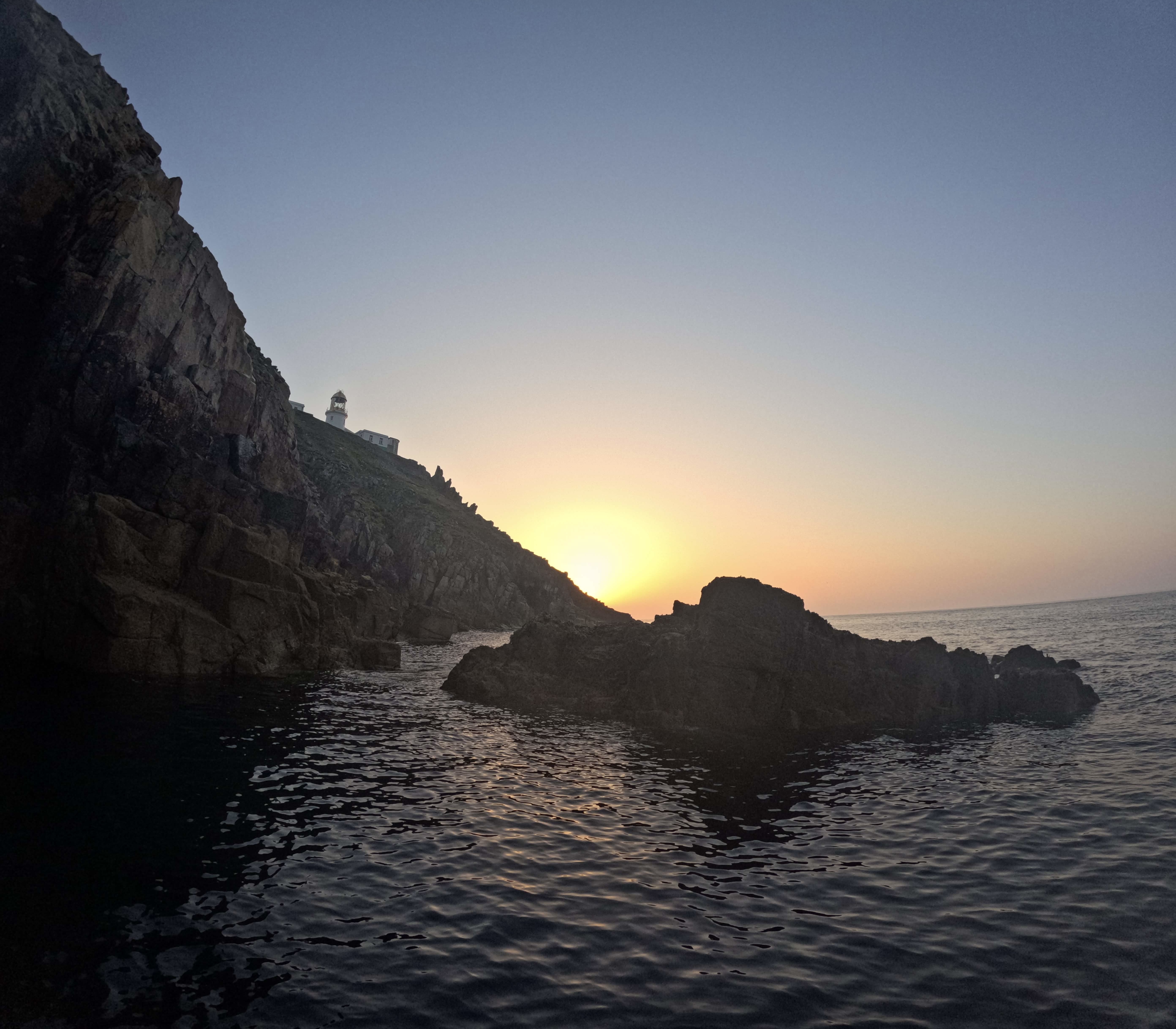
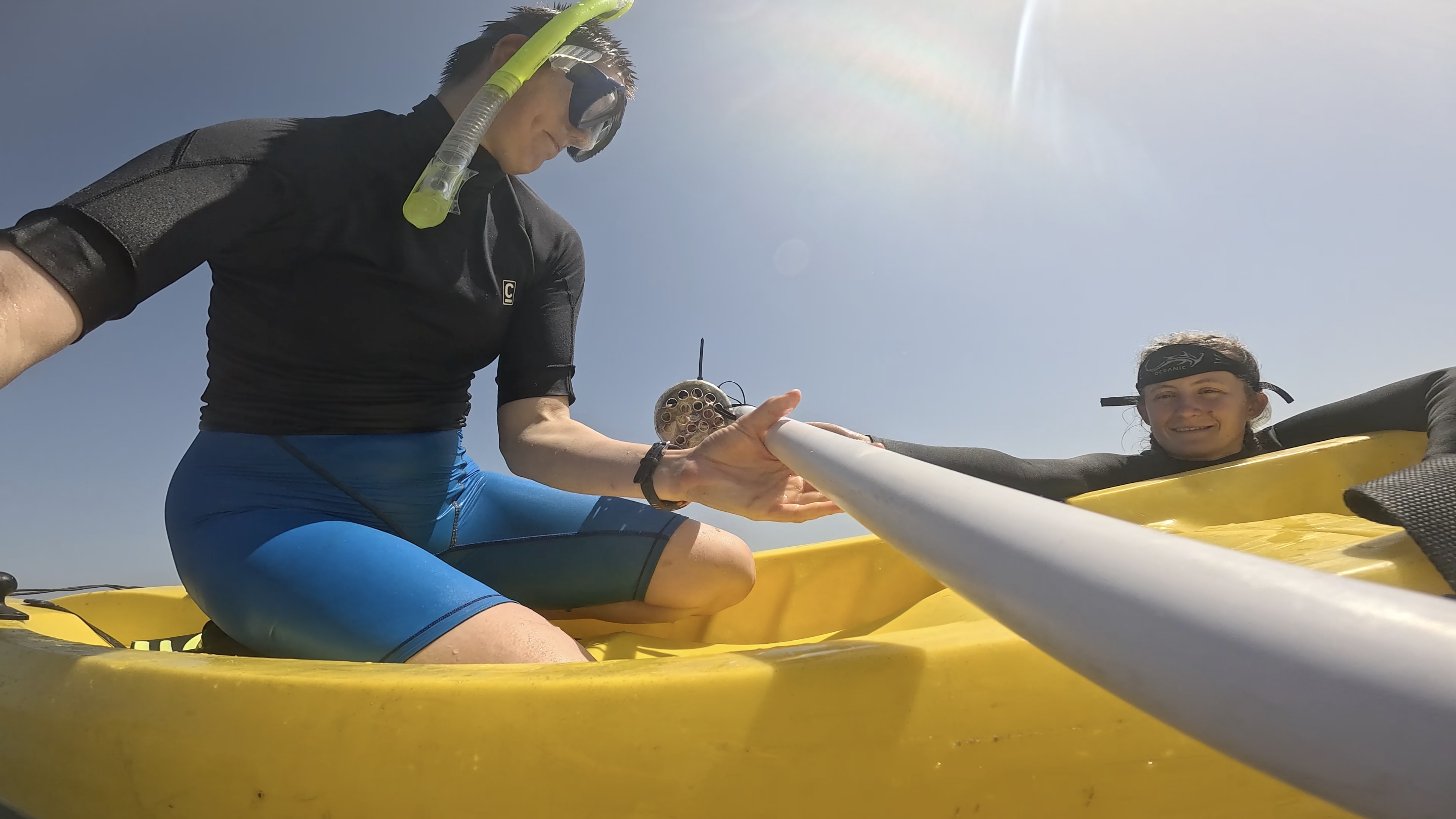
Despite our late night, this morning Tara, Jessie and I were soon wide awake due to the pungent smell of defrosted Pollock. We spent the morning preparing to deploy our BRUV (baited remote underwater video), starting with the task of preparing bait. Cutting and portioning fish is a messy job on a good day, but the intense heat today made it even more so!
We deployed the BRUV at the Devil's Kitchen today. It was high tide, so we floated the BRUV out on a kayak and pushed it along in the water. Once we picked a spot we dropped it down and left it for an hour. I then had to head up for a tavern shift, but Simon kindly stepped in to help with the retrieval, and it sounded like a proper operation hauling it up between two kayaks!
Unfortunately, there isn’t very much to see on the footage, other than the kelp swaying, but we did have a couple of passing jellyfish including some Blue Jellyfish. We are working on improving our deployment method and we will be shortening the BRUV, so it is closer to the seabed, trying different locations and bait types.
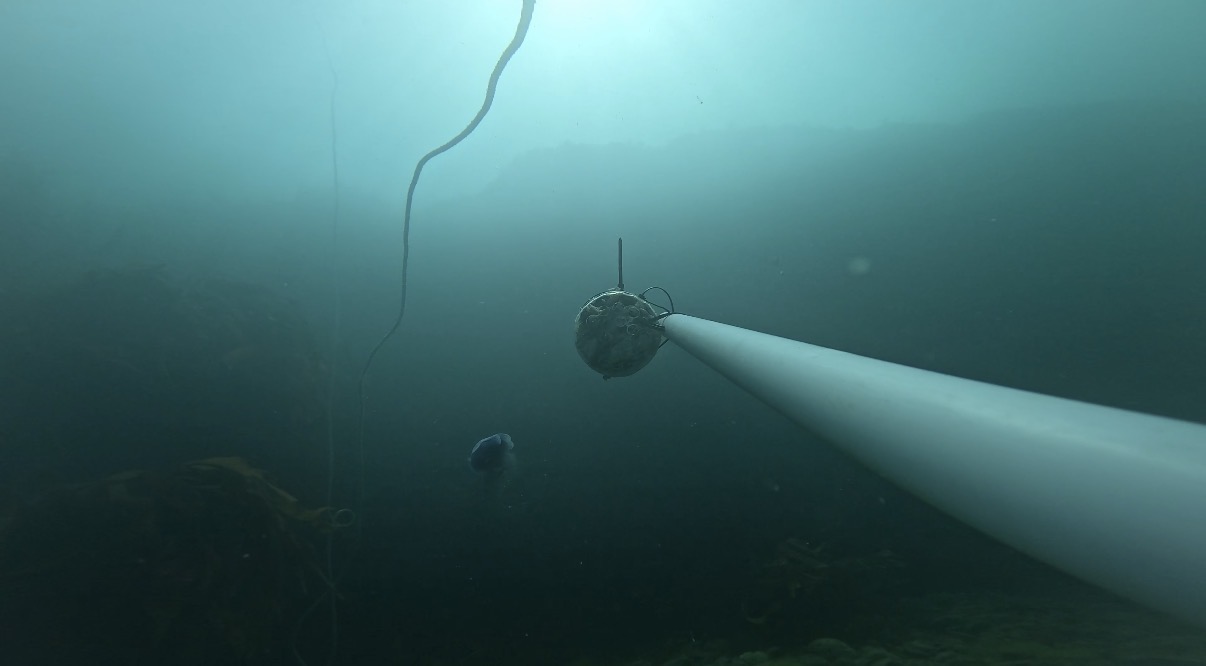
Blue Jellyfish seen on BRUV. Photo by Chloë
23/06/2026 – A Busy Bird Day
The day started with a travel day meeting as it was a boat day on a glorious day.
There were many tasks to get completed today, and even at the time of writing a lot of those tasks are still to be completed.
Firstly, a walk to North End was required to drop off some equipment. Eleanor and I started walking around 8am and made a slow wander north with the poles. We spotted around 60+ Painted Lady, a Black-tailed Skimmer and about 30+ Red Admirals along the main track. Skylarks and Meadow Pipits filled the sky with song, and the calls of Linnets could be heard too. When approaching Widow’s Tenement, we accidently flushed a Quail, this could well be a migrant or it could even be on territory as we have had a few records already this year in seemingly the same spot. The equipment was dropped off soon after and we spotted a few loafing Puffins, a flyby Small Tortoiseshell and had nice views of the seabirds.
A wander back and a trip down to see the boat in was required as we were celebrating both the 20yrs Rat Free Celebrations and the arrival of Emma and Nick who are here to help with some Gull/seabird ringing over the next couple of days, as well as some permit assessments for our trainees on the island. A sweltering trip up and down Millcombe was super sticky, and the highlights were the Song Thrush, Stonechat, our local breeding Starlings, and a few Shags in the Landing Bay.
After a well earned break and a lunch stop in the shade, we joined the celebrations and checked the Manx Shearwater boxes whereby we were able to show the group of leading experts, scientists, conservationists and landowners the true success of the Rat Eradication 20yrs ago. And what better to be shown then a very fluffy, a few day old Manx Shearwater chick! Something that was unimaginable over 20 years ago when rats ate and decimated the seabird colonies on the island.
After some much needed admin, some food was had and then an evening of Storm Petrel catching resulted in 50 birds being caught including 34 new and 16 retrap.