


By Simon Parker
Something a bit different today... I've been away in Wales for the past couple of weeks, spending some time in the mountains and generally avoiding work. One of the things I do miss about island life are the mountains, I've always been drawn to mountain communities and North Wales is one of my favourites. There's something about the vastness and freedom to roam, it could also be a kick back from growing up in the famously mountainous region of North East Lincolnshire, but I always aim for the mountains on my time off.
On the way back down South, I managed to sneak a small stop on Flat Holm Island. Flat Holm is the most Southerly point in Wales, you can visit from Cardiff bay. I spent two years here as warden and it was good to pop back and see some of my old volunteers. The island is tiny compared to Lundy, a circular lump almost exactly one mile in circumference. It's packed with historical buildings, heavily fortified in the Napoleonic era to fend off French and Russian invaders, then again in WW2 as an anti aircraft/shipping fortress. The island bears the scars of industrial fortification with 350 men packed on in WW2. One of my favourite aspects is called Bengers Goalpost, named after the islands commanding officer - David Benger. Benger designed a simple scaffold goalpost to stop the gunners blowing the top off the lighthouse when they were rotating quickly, they would hit the post with their barrels and have to go up and over the goalpost which ensured the survival of the lighthouse.
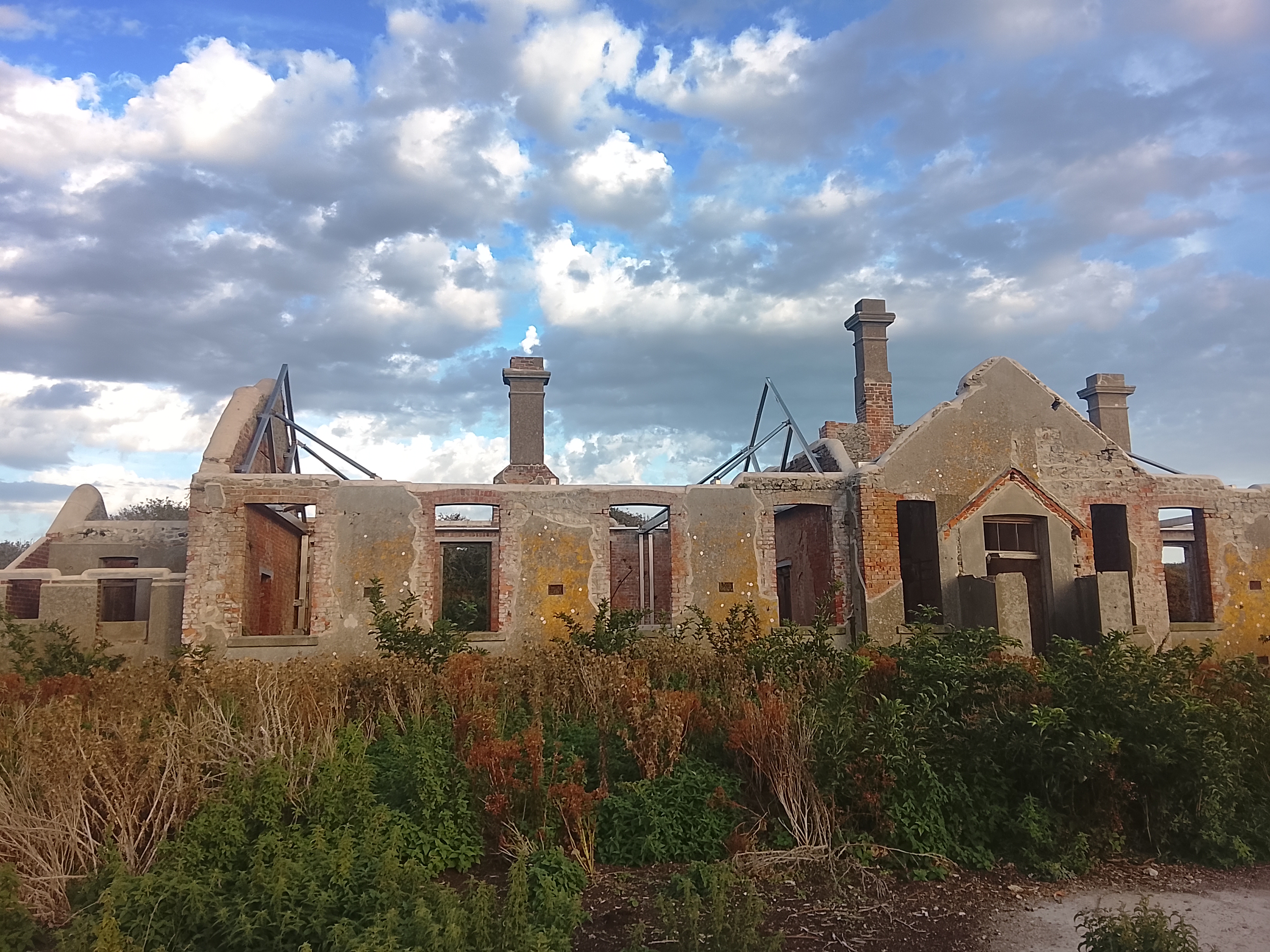 Flat Holms Cholera Hospital
These days, the island is a large Gull colony and nature reserve with a small tourist attraction. It's a much, much smaller and very basic version of Lundy. There's no tavern or shop here, power is solar generated mostly and supplies are hard to transport. There's no Oldenburg, the island relies on small ribs doing all the logistics.
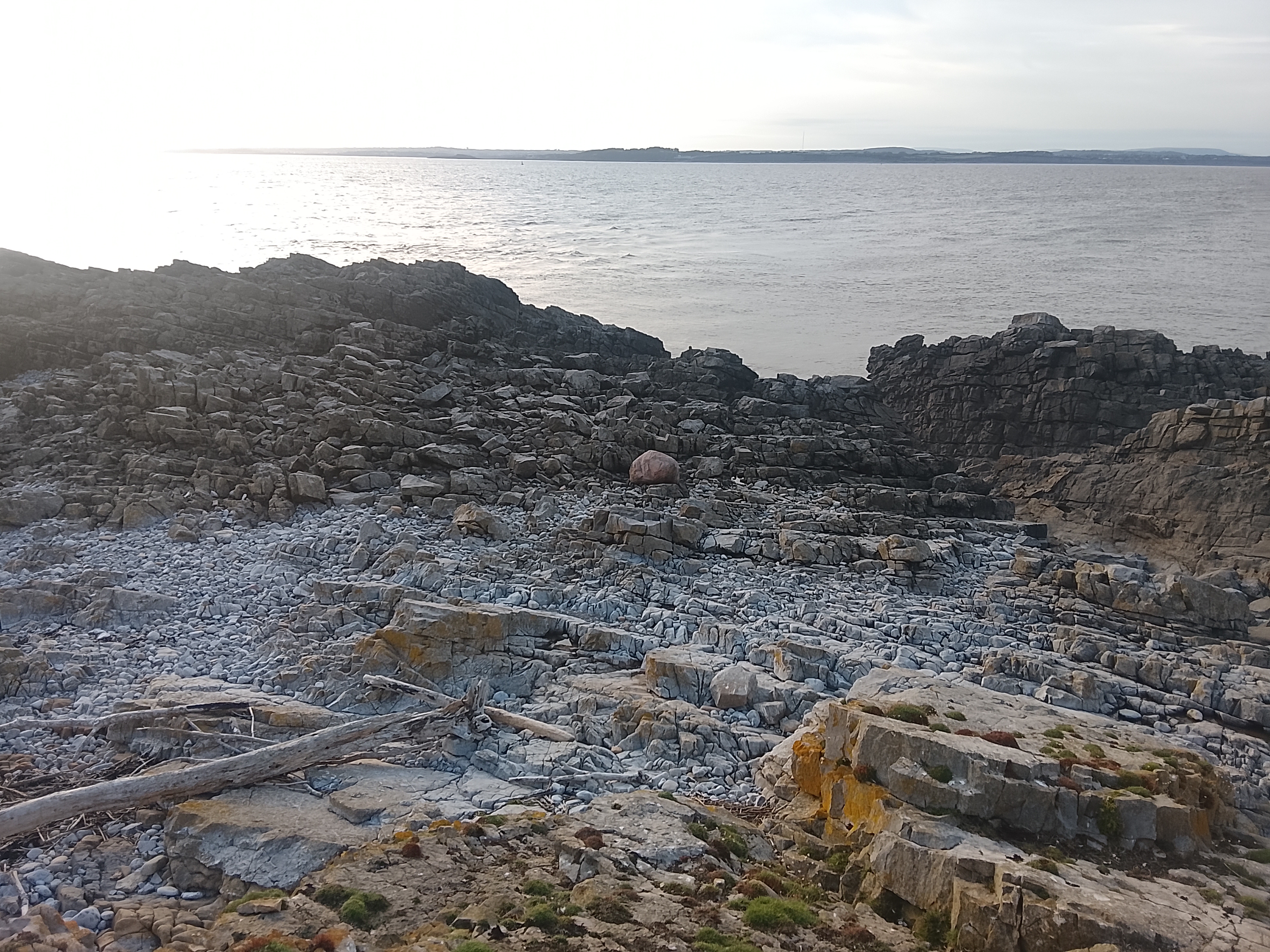 Flat Holms famous pink rock, deposited during the last ice age
Bird wise, being closer to the mainland it has more of the garden variety birds. Robin, Blackbird, Wren, Greenfinch, Goldfinch, Dunnock are present all year round in good numbers. Water Rail have started to nest in the scrub over the past few years and they can be heard constantly screeching away. Shelduck and Oystercatcher nest here too, the former being heavily predated by the gulls and unlikely to be productive. In total, the gulls numbers around 3000 birds. Between the months of April and August, it's dominated by the Lesser Black Backed and Herring Gull colony and can be an intimidating place to be if you're not familiar with their protective parenting. This time of the year it's very peaceful, the gulls have finished nesting and the Lessers have started migrating South to Spain, Portugal and North Africa.
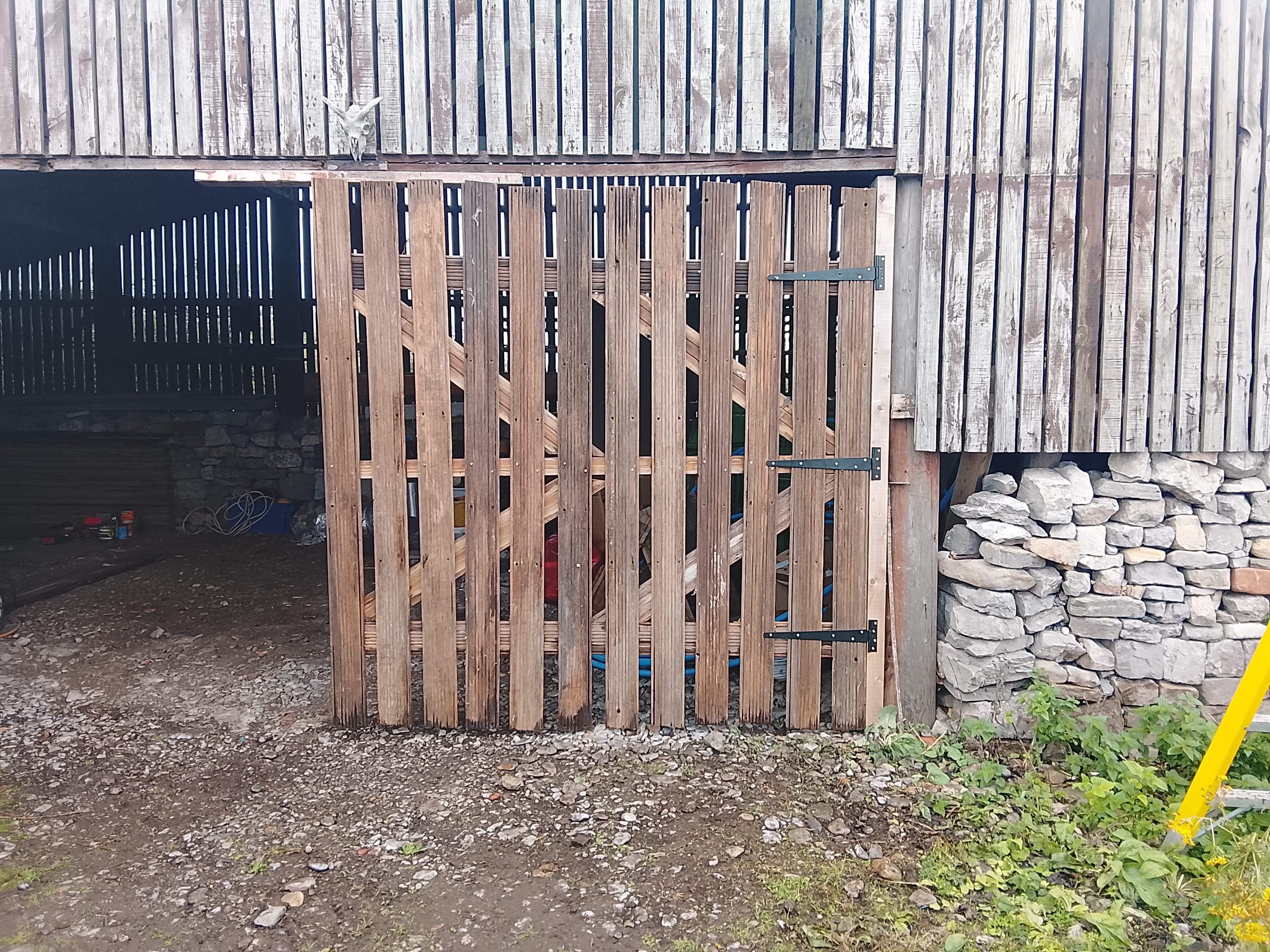 Building the new Barn door
Back on Lundy, before I tackled the email inbox I did manage to get out and do census. Notable sightings were an influx of Meadow Pipit, large numbers of Carrion Crow have arrived. Linnet are still here in big numbers, the super flock is between 250-300 birds. The Wryneck down around the quarries was spotted and three Lapland Bunting were at the top of Benjamins chair. There's a lot of fog forecast over the next few days, I expect the bird sightings will be quite meagre but hopefully that fog will translate to water as the Island is still in desperate need for a downpour.